


 English
 中文简体
中文简体 Español
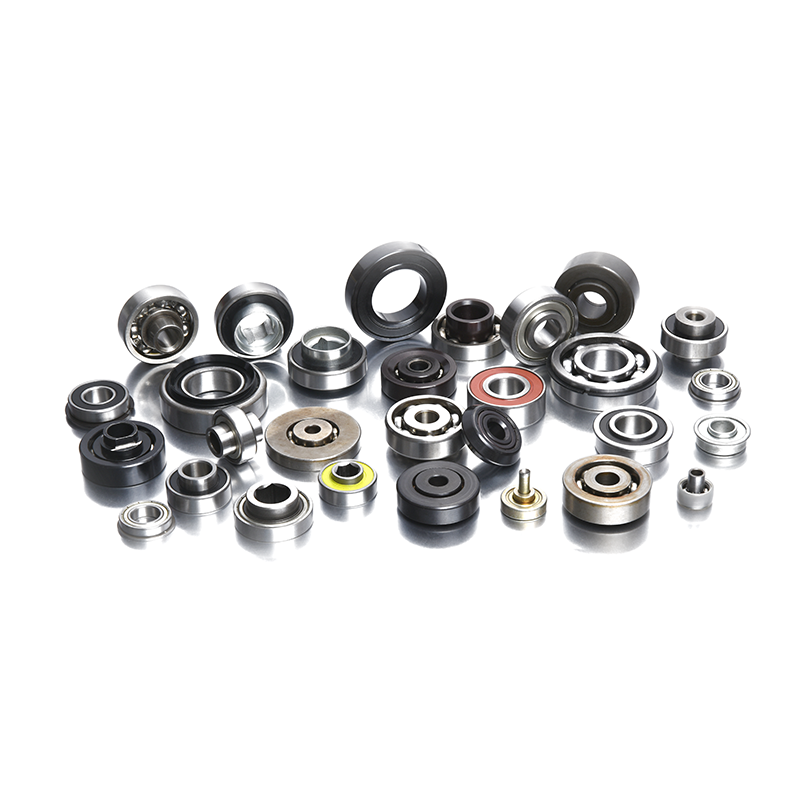
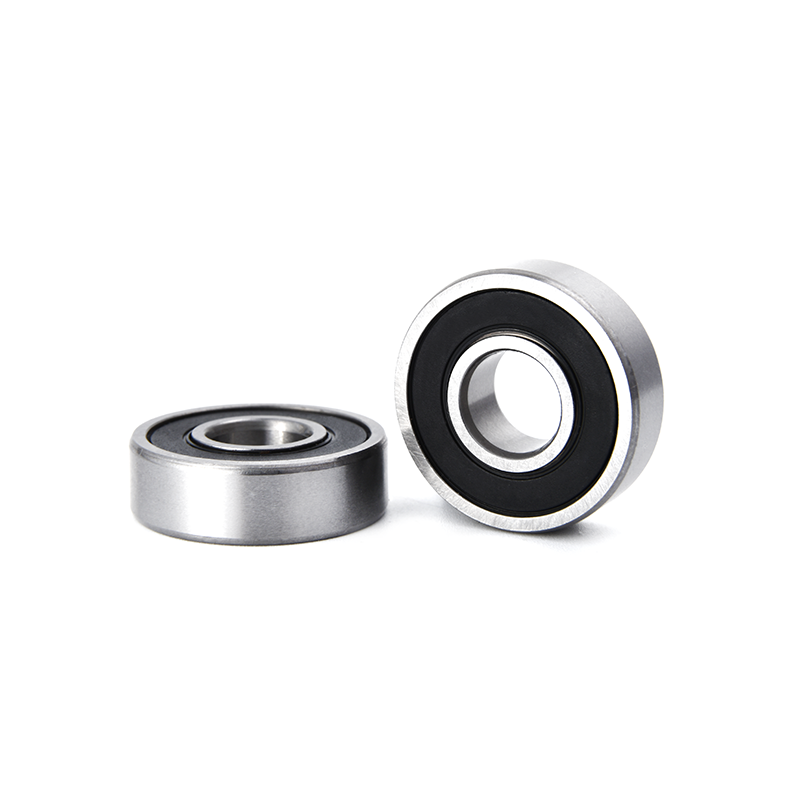
608 bearings are single-row deep groove ball bearings with an 8 mm bore, 22 mm outer diameter, and 7 mm width — and they are the single most widely manufactured bearing size on the planet, found in everything from inline skates and skateboards to industrial motors, 3D printers, and fidget spinners. Their combination of compact dimensions, high rotational speed capability, low friction, and exceptional affordability makes them the default choice for engineers and hobbyists across virtually every industry. This article explains exactly how they work, which variants to choose, how they compare, and what you need to know before buying.
Content
- How Do 608 Bearings Work?
- Which 608 Bearing Variant Should You Choose?
- What Are 608 Bearings Used For?
- How Do 608 Bearings Compare Across Materials and Precision Grades?
- Why Do 608 Bearings Fail and How Can You Prevent It?
- How to Install 608 Bearings Correctly
- What Lubrication Do 608 Bearings Need?
- Frequently Asked Questions About 608 Bearings
- Conclusion: Why 608 Bearings Remain the Universal Standard
How Do 608 Bearings Work?
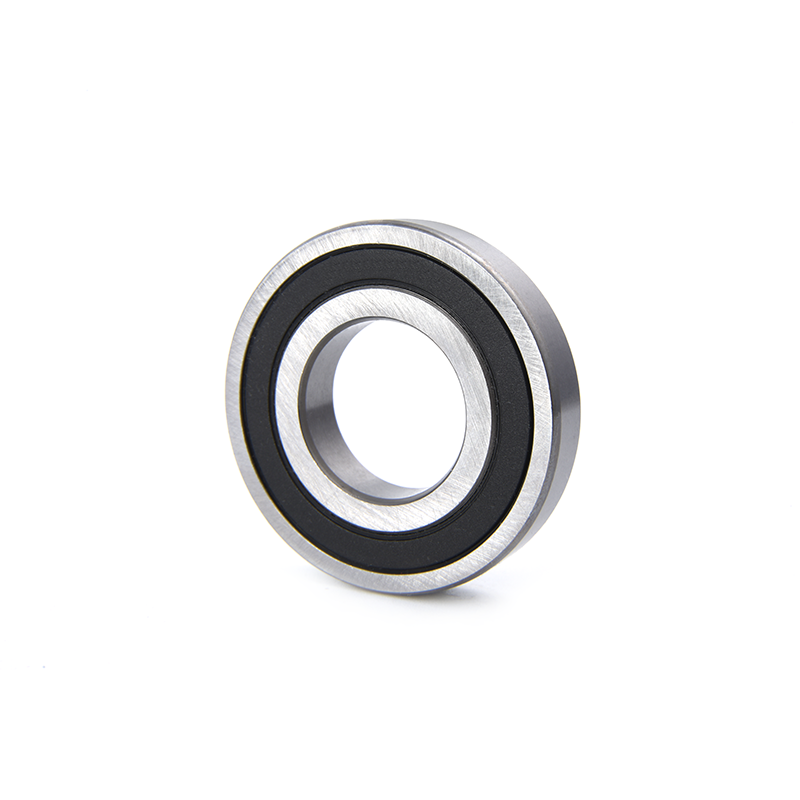
608 bearings reduce friction between a rotating shaft and a stationary housing by replacing sliding contact with rolling contact through a set of precisely ground steel balls. The bearing consists of an inner ring (race) pressed onto the rotating shaft, an outer ring held in the housing, a complement of steel balls running in machined grooves on both races, and a cage that keeps the balls evenly spaced to prevent contact and maintain smooth rotation.
When the shaft rotates, the balls roll along the inner and outer raceway grooves simultaneously, transmitting both radial loads (forces perpendicular to the shaft) and modest axial loads (forces along the shaft axis). This deep groove geometry — where the raceway curvature closely matches the ball diameter — is what gives the 608 bearing its ability to handle combined loading without requiring a separate thrust bearing in most light-duty applications.
Core Dimensional Specifications
- Bore diameter (d): 8 mm
- Outer diameter (D): 22 mm
- Width (B): 7 mm
- Dynamic load rating (Cr): typically 3.45 kN to 3.6 kN
- Static load rating (C0r): typically 1.37 kN to 1.6 kN
- Maximum speed (open / grease lubricated): 32,000 RPM open; 20,000 RPM sealed
- Weight: approximately 12 grams per bearing
- Number of balls: 7
Which 608 Bearing Variant Should You Choose?
The right 608 bearing variant depends entirely on your environment, lubrication access, speed requirements, and load conditions — choosing the wrong suffix can cut bearing service life in half or introduce contamination damage within weeks.
608 Bearing Suffix Guide
| Designation | Sealing Type | Lubrication | Best For | Max Speed |
| 608 (open) | None | User-applied oil or grease | Clean, high-speed environments | 32,000 RPM |
| 608Z | One metal shield | Factory-packed grease | Light dust protection, one side | 24,000 RPM |
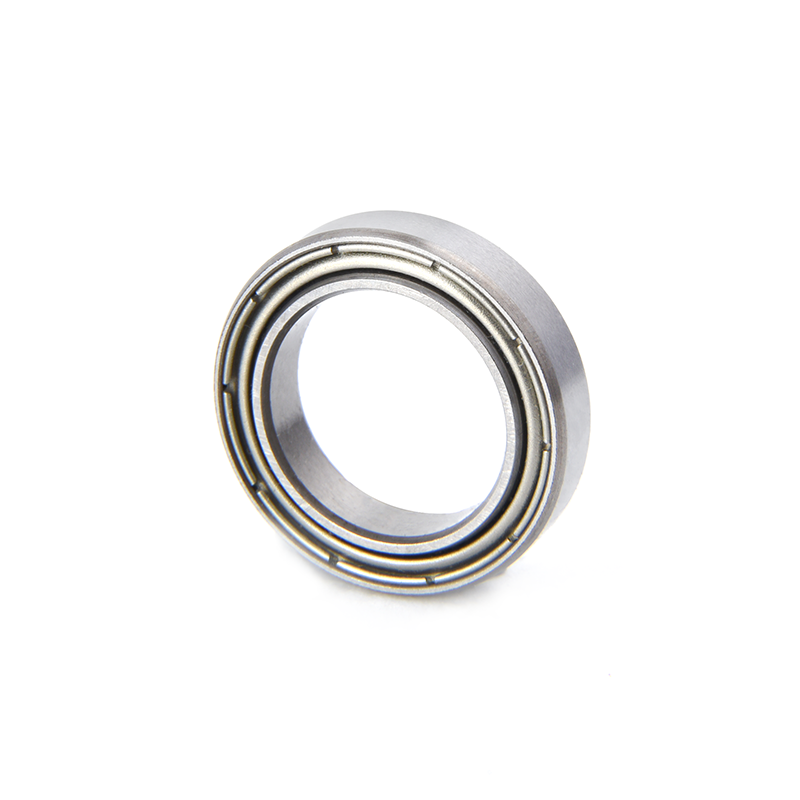
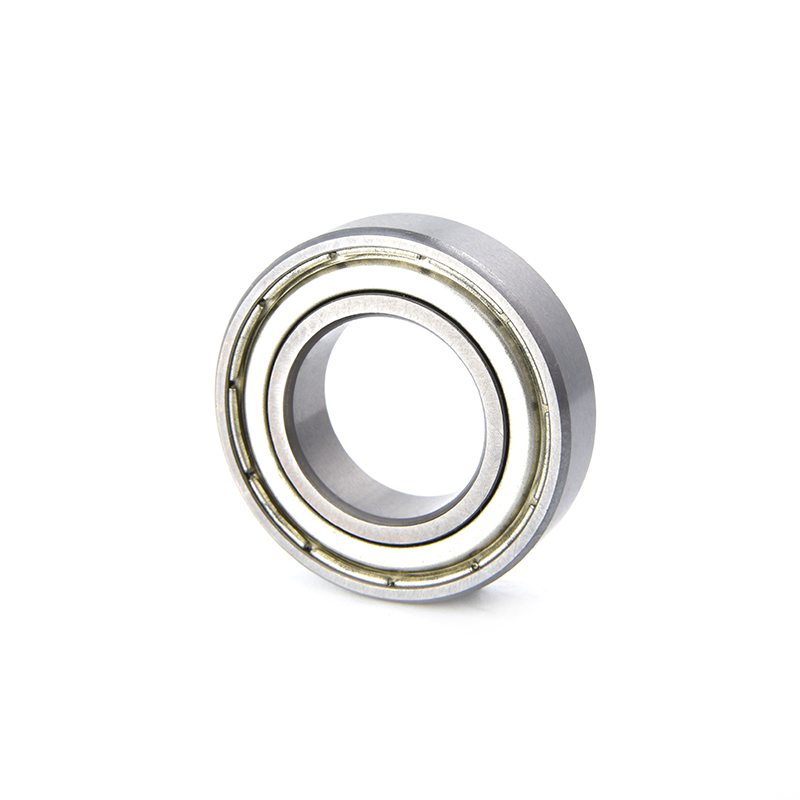
| 608ZZ | Two metal shields | Factory-packed grease | General purpose, most applications | 22,000 RPM |
| 608RS | One rubber contact seal | Factory-packed grease | Moisture and dust protection, one side | 20,000 RPM |
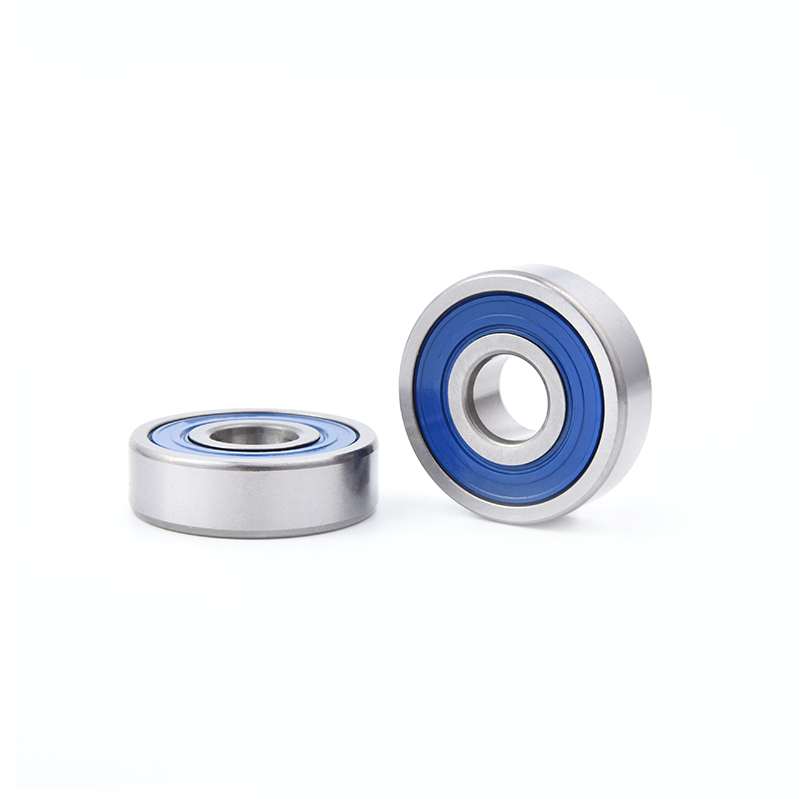
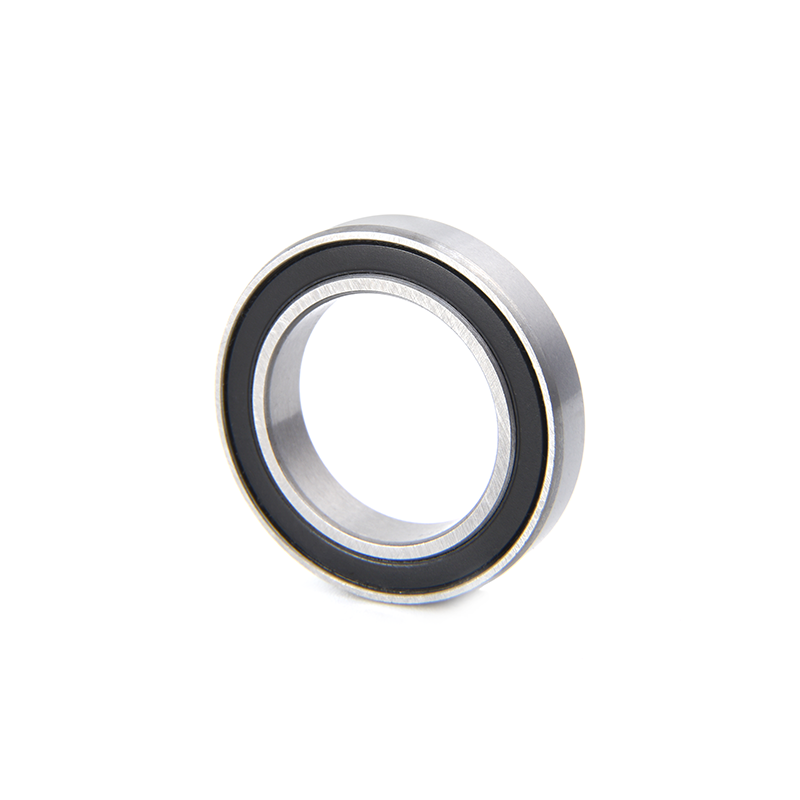
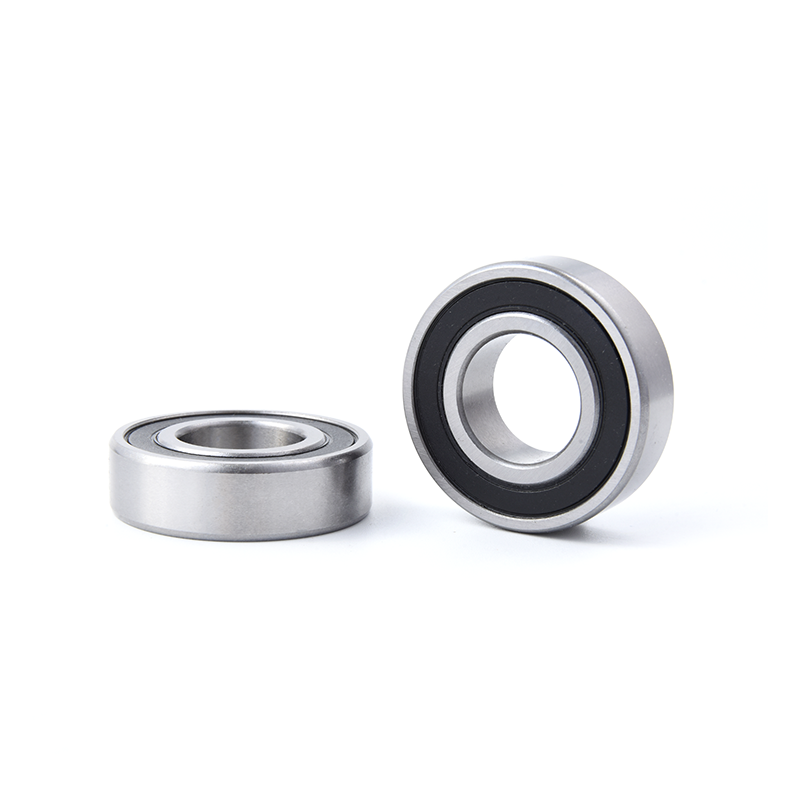
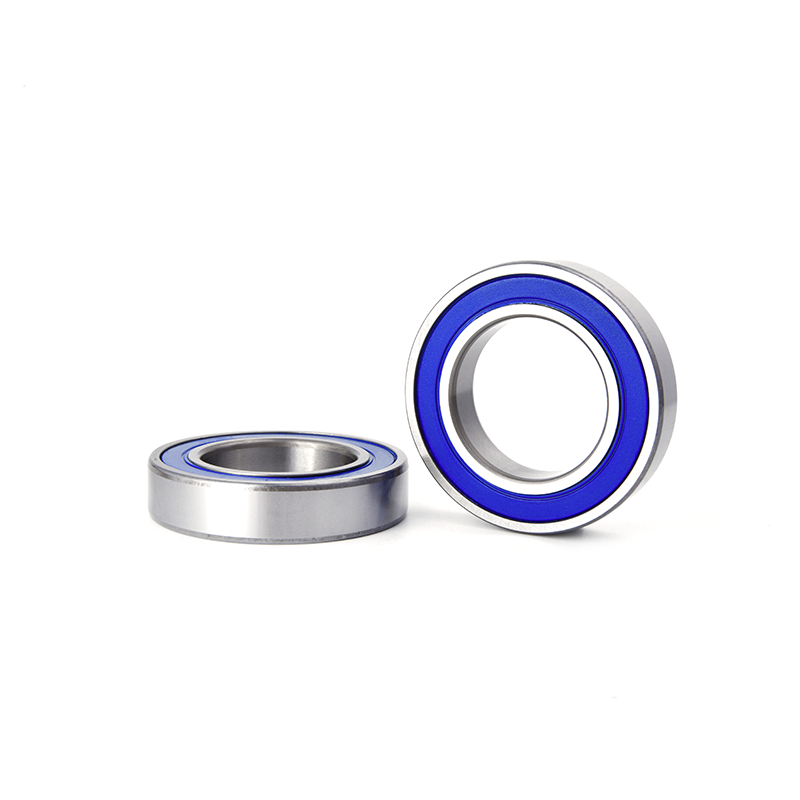
| 608-2RS | Two rubber contact seals | Factory-packed grease | Wet, dusty, or food-grade environments | 18,000 RPM |
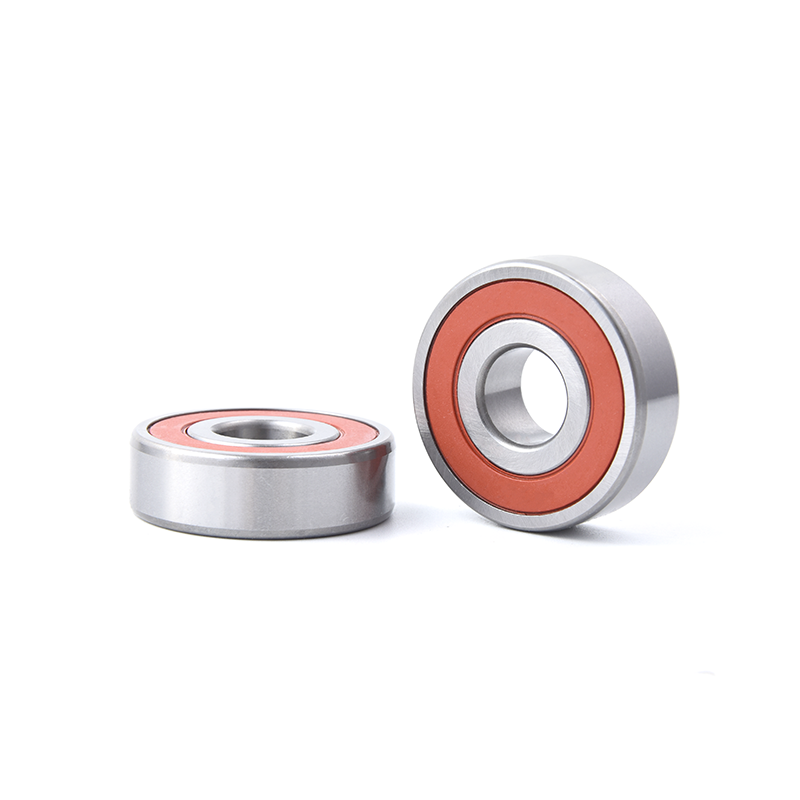
| 608-2RZ | Two low-friction rubber seals | Factory-packed grease | Moderate speed + contamination balance | 20,000 RPM |
Table 1: Common 608 bearing suffix designations, sealing type, lubrication method, recommended applications, and maximum speed ratings.
For the vast majority of applications — 3D printers, skateboards, small motors, power tools — the 608ZZ or 608-2RS is the correct choice. The ZZ metal shields are non-contact and allow slightly higher speeds with lower torque drag, while the 2RS rubber seals provide superior contamination exclusion at a small speed penalty. In wet environments such as food processing or outdoor equipment, always specify 608-2RS.
What Are 608 Bearings Used For?
608 bearings appear in an extraordinarily broad range of products because their 8 mm bore is the standard shaft diameter across dozens of consumer and industrial product categories. Their dimensional standardization under ISO 15 and ABEC tolerance classes means a 608 bearing made anywhere in the world will fit any housing or shaft designed for the same size.
Application Overview by Industry
| Industry / Application | Specific Use | Recommended Variant | Key Requirement |
| Skateboarding / Inline Skating | Wheel axle bearings | 608ZZ or 608-2RS | ABEC-7 or ABEC-9 precision |
| 3D Printing | Idler pulleys, extruder shafts | 608ZZ | Low noise, precise rotation |
| Power Tools | Motor shaft support | 608ZZ or 608-2RZ | High speed, heat resistance |
| RC Cars / Drones | Wheel hubs, motor bearings | 608ZZ | Light weight, low drag |
| Food Processing Equipment | Conveyor rollers, mixers | 608-2RS (stainless) | Washdown resistance |
| Office Equipment | Printer rollers, copiers | 608ZZ | Quiet operation, long life |
| Electric Bicycles / Scooters | Motor and pivot bearings | 608-2RS | Water and mud resistance |
| Medical Devices | Lab equipment, pumps | 608 open (ceramic) | Non-magnetic, clean-room |
Table 2: 608 bearing applications across industries, including specific uses, recommended variants, and key performance requirements.
How Do 608 Bearings Compare Across Materials and Precision Grades?
The material and precision grade of a 608 bearing have a dramatic effect on noise level, service life, maximum speed, and cost — and selecting the wrong grade for a demanding application is one of the most common engineering mistakes in bearing selection.
Steel vs. Ceramic 608 Bearings
| Property | Chrome Steel (52100) | Stainless Steel (440C) | Full Ceramic (Si3N4) | Hybrid Ceramic |
| Hardness (HRC) | 60 – 64 | 58 – 62 | 78 (Vickers) | 60 – 64 rings / 78 balls |
| Corrosion resistance | Low (requires lubrication) | High | Excellent | Good (steel rings corrode) |
| Max operating temp | 120°C | 120°C | 800°C+ | 150°C (ring limited) |
| Weight | ~12 g | ~12 g | ~7 g | ~11 g |
| Electrical conductivity | Conductive | Conductive | Non-conductive | Insulating (balls only) |
| Typical cost per bearing | $0.50 – $3 | $1.50 – $6 | $15 – $60+ | $8 – $30 |
| Lubrication required | Yes | Yes | Can run dry | Reduced need |
Table 3: Material comparison for 608 bearings — chrome steel, stainless steel, full ceramic, and hybrid ceramic across key performance properties.
ABEC Precision Grades Explained
The ABEC (Annular Bearing Engineers Committee) tolerance system classifies 608 bearing dimensional accuracy. Higher ABEC grades have tighter tolerances on runout, bore, and outer diameter — but they are not always necessary or beneficial. Here is what each grade means in practice:
- ABEC-1: Standard commercial grade. Suitable for low-speed, low-precision applications such as conveyor rollers and general machinery. Bore tolerance: ±8 microns.
- ABEC-3: Improved accuracy for moderate-speed applications. Bore tolerance: ±6 microns.
- ABEC-5: High precision. Suitable for most power tools, 3D printers, and quality inline skate wheels. Bore tolerance: ±5 microns.
- ABEC-7: Very high precision for demanding applications — high-speed spindles, quality skateboard wheels, precision instruments. Bore tolerance: ±4 microns.
- ABEC-9: Ultra-precision, used in aerospace, dental drills, and top-tier skate racing. Bore tolerance: ±2.5 microns. Meaningfully more expensive.
For most everyday applications of 608 bearings — including 3D printers, RC vehicles, and skateboarding — ABEC-5 offers the best balance of performance and cost. Specifying ABEC-9 for a hobby application adds cost without measurable benefit.
Why Do 608 Bearings Fail and How Can You Prevent It?
The leading cause of 608 bearing failure is improper lubrication — either insufficient lubricant, the wrong lubricant type, or contamination of the existing grease — accounting for approximately 36% of all premature bearing failures according to industry maintenance studies. Understanding the full failure spectrum prevents unnecessary downtime and replacement costs.
Failure Modes and Prevention
| Failure Mode | Root Cause | Symptoms | Prevention |
| Lubrication starvation | Grease degraded or insufficient | Noise, heat, pitting | Regrease at intervals; use correct grease type |
| Contamination | Dust, metal particles, moisture | Rough rotation, scoring | Use 2RS sealed bearings; clean installation |
| Overload | Load exceeds C0r rating | Brinelling (indentations) on race | Verify load calculation; upsize if needed |
| Misalignment | Shaft not concentric with housing | Uneven wear, vibration | Precision shaft and housing tolerances |
| Improper installation | Force applied to wrong ring | Immediate race damage | Press on inner race only; use bearing press tool |
| Corrosion | Moisture ingress, wrong material | Red/brown staining, pitting | Specify stainless or 2RS in wet environments |
| Electrical erosion | Stray current through bearing | Fluting pattern on raceways | Use ceramic or insulated bearing; ground the shaft |
Table 4: 608 bearing failure modes, root causes, symptoms, and recommended prevention strategies.
How to Install 608 Bearings Correctly
Correct installation of a 608 bearing is critical — improper fitting practice is the most common cause of premature failure that is entirely preventable. Always apply installation force to the ring being press-fitted, never through the balls.
- Check shaft and housing tolerances: For a press fit on the shaft (rotating inner ring), the shaft should be machined to j5 or k5 tolerance for a 8 mm diameter. Housing bore for light-duty should be H7 tolerance (loose fit allowing the outer ring to be stationary).
- Clean all surfaces: Remove machining oil, chips, and debris from the shaft and housing bore before installation. Contamination introduced at this stage will shorten bearing life significantly.
- Use a bearing press or fitting sleeve: Apply force squarely and evenly to the inner race only when pressing onto a shaft. Using a socket or tube that contacts the outer race while pressing onto a shaft will damage the balls and races immediately.
- Do not use heat on sealed bearings: If thermal fitting is needed for a tight fit, open bearings can be heated to a maximum of 80°C (176°F) in an oil bath or induction heater. Never heat sealed 608-2RS bearings, as this degrades the rubber seals and grease.
- Verify axial positioning: Ensure the bearing seats fully against any shoulder or retaining feature — a partially seated bearing will rock under load and fail rapidly.
- Check rotation after installation: Spin the bearing by hand. It should rotate smoothly and quietly with no rough spots or binding. Any noise or resistance indicates a problem before the machine is even powered on.
What Lubrication Do 608 Bearings Need?
Pre-sealed 608ZZ and 608-2RS bearings come factory-packed with grease and require no additional lubrication for typical service lives. Open 608 bearings need user-applied lubrication, and the choice of lubricant significantly affects performance.
- Light machine oil (ISO VG 10–22): Ideal for high-speed open bearings in spindles and precision instruments. Offers minimum drag torque but evaporates and requires regular reapplication.
- Lithium-based grease (NLGI Grade 2): The standard lubricant used in factory-packed 608ZZ bearings. Suitable for temperatures from -20°C to +120°C and speeds up to 20,000 RPM in this bearing size.
- PTFE (Teflon) grease: Low noise, chemically inert, excellent for food-grade and clean-room applications. Compatible with plastic cages and non-metallic components.
- Molybdenum disulfide (MoS2) grease: For very high load, low-speed applications. Not recommended for high-speed 608 bearing use — MoS2 particles increase rolling element wear at high RPM.
- Grease fill level: For open bearings being manually packed, fill only 30–50% of internal free space. Overfilling generates excessive heat and can cause the bearing to run hotter than necessary.
Frequently Asked Questions About 608 Bearings
Are all 608 bearings the same dimensions worldwide?
Yes. The 608 bearing designation follows ISO 15 and ABMA standards, which specify identical dimensions (8 mm bore, 22 mm OD, 7 mm width) universally. A 608 bearing manufactured in Japan will fit a housing or shaft designed in Germany or the United States without modification. This interchangeability is precisely why the 608 has become so globally ubiquitous.
What is the difference between 608ZZ and 608-2RS?
608ZZ uses two non-contact metal shields that keep grease in and large particles out, but allow air and fine dust to enter — making it better for high-speed, lower-contamination environments. 608-2RS uses two rubber contact seals that press against the inner ring, providing a far better barrier against water, fine dust, and contamination — but with slightly higher drag torque (typically 1.5 to 2 times more starting torque) and a lower maximum speed. For wet or dirty environments, always choose 608-2RS.
Can 608 bearings be washed and relubricated?
Open 608 bearings can be cleaned in a solvent bath, dried thoroughly, and repacked with fresh grease — a common practice in skateboarding. Sealed 608ZZ and 608-2RS bearings technically can be cleaned by removing the shield or seal, cleaning, and resealing, but the seal integrity after removal is compromised. Given the very low cost of a new 608 bearing (often $0.50 to $3 each), replacement is almost always more practical and cost-effective than seal removal and relubricating.
How do I know if my 608 bearing is worn out?
The three primary indicators of a worn 608 bearing are: (1) audible noise — a new bearing should spin nearly silently; grinding, clicking, or rumbling indicates raceway or ball damage; (2) rough rotation — hold the outer ring and spin the inner ring with a finger; any roughness or intermittent resistance suggests pitting or contamination; (3) play — a properly fitted bearing should have no perceptible radial or axial looseness by hand. Any wobble in the shaft suggests the bearing is worn beyond service limits.
What is the load rating of a standard 608 bearing?
A standard chrome steel 608 bearing has a dynamic radial load rating (Cr) of approximately 3.45 kN (775 lbf) and a static load rating (C0r) of approximately 1.37 kN (308 lbf). These are catalog values from which bearing L10 life (the life at which 90% of a batch of bearings will survive) can be calculated using the standard bearing life formula: L10 = (Cr/P)^3 × 10^6 revolutions, where P is the equivalent dynamic load in kN.
Are ceramic 608 bearings worth the extra cost for skateboarding?
Ceramic 608 bearings offer genuine advantages for skateboarding: lower rolling friction (smoother roll), longer service life, and resistance to moisture damage. However, the performance difference at typical skating speeds (under 2,000 RPM at the wheel bearing) is measurably small — studies comparing roll distances show a difference of approximately 2–5% in maintained speed. For recreational skaters, a quality steel ABEC-7 608ZZ bearing is the most practical choice. Ceramic makes most sense for competitive downhill or speed skating where every percentage point of rolling resistance matters.
Conclusion: Why 608 Bearings Remain the Universal Standard
No other bearing size in history has achieved the global reach and cross-industry adoption of the 608 bearing. Its 8 mm bore, 22 mm outer diameter, and 7 mm width hit a precise sweet spot between compactness and load capacity that serves an extraordinary range of applications — from the wheels of a child's skateboard to the spindle of a precision instrument.
The key to selecting the right 608 bearing lies in understanding the suffix (open, ZZ, 2RS), the material (steel versus ceramic), and the precision grade (ABEC-1 through ABEC-9) appropriate for your specific operating conditions. Pair the correct specification with proper installation technique and appropriate lubrication, and a 608 bearing will deliver smooth, reliable performance through tens or hundreds of millions of revolutions.
Whether you are sourcing 608 bearings in quantities of one or ten thousand, the principles of selection, installation, and maintenance remain the same — and investing a few minutes in understanding them pays dividends in longer service life, quieter operation, and significantly lower total cost of ownership across whatever machine or product you are building.



Contact Us