


 English
 中文简体
中文简体 Español
The 6205 bearing dimensions are standardized globally under ISO 15:2017: inner diameter (bore) 25 mm, outer diameter 52 mm, and width 15 mm. These three core measurements make the 6205 one of the most widely used deep groove ball bearings in the world, appearing in electric motors, pumps, agricultural equipment, conveyors, gearboxes, and countless other rotating machinery applications. The dynamic load rating is 14.0 kN and the static load rating is 7.80 kN in the standard open configuration.
This guide covers every dimension of the 6205 bearing, compares all major suffix variants (ZZ, 2RS, C3, NR, and more), explains how to choose the right configuration, and answers the most common technical questions engineers and maintenance professionals ask about this bearing.
Content
- What Are the Full 6205 Bearing Dimensions?
- How to Read the 6205 Bearing Designation Code
- Which 6205 Bearing Variant Is Right for Your Application?
- How Do 6205 Bearing Dimensions Compare to Adjacent Series?
- Why the C3 Internal Clearance Designation Matters for 6205 Bearings
- How to Calculate 6205 Bearing Life Using the L10 Formula
- What Are the Correct Shaft and Housing Tolerances for 6205 Bearing Dimensions?
- Where Are 6205 Bearing Dimensions Used? Common Applications
- FAQ: 6205 Bearing Dimensions and Selection
- Conclusion: Why Getting 6205 Bearing Dimensions Right Is the Starting Point, Not the End
What Are the Full 6205 Bearing Dimensions?
The 6205 bearing conforms to ISO dimensional series 02 (narrow series), and every manufacturer producing this bearing to ISO standards delivers identical boundary dimensions regardless of brand or country of origin.
The complete dimensional specification for the standard 6205 bearing is as follows:
| Dimension / Parameter | Value (Metric) | Value (Imperial) | Notes |
| Inner Diameter (Bore, d) | 25 mm | 0.9843 in | Shaft fit surface |
| Outer Diameter (D) | 52 mm | 2.0472 in | Housing bore surface |
| Width (B) | 15 mm | 0.5906 in | Axial space required |
| Ball Diameter | 7.938 mm | 5/16 in | Rolling element size |
| Number of Balls | 9 | 9 | Standard complement |
| Pitch Circle Diameter (Dpw) | ~38.5 mm | ~1.516 in | Ball center circle |
| Corner Radius (r min) | 1.0 mm | 0.039 in | Min shaft/housing fillet |
| Dynamic Load Rating (C) | 14.0 kN | 3,147 lbf | Open / ZZ / 2RS same |
| Static Load Rating (C₀) | 7.80 kN | 1,754 lbf | Open / ZZ / 2RS same |
| Reference Speed (grease) | 14,000 rpm | 14,000 rpm | 2RS variant: 10,000 rpm |
| Limiting Speed (grease) | 17,000 rpm | 17,000 rpm | Open bearing, optimal lube |
| Mass (approx.) | 0.130 kg | 0.287 lb | Open, steel cage |
Table 1: Complete dimensional and performance specifications for the standard 6205 deep groove ball bearing per ISO 15:2017.
How to Read the 6205 Bearing Designation Code
The designation "6205" follows the ISO deep groove ball bearing numbering system, where each digit carries specific dimensional meaning that allows engineers to immediately identify bore size, series, and basic type from the part number alone.
- "6" — Bearing Type: The leading digit "6" identifies this as a single-row deep groove ball bearing — the most common bearing type in industrial use worldwide, capable of handling both radial and moderate axial (thrust) loads in both directions.
- "2" — Dimension Series (Width × Diameter Series): The digit "2" indicates the 02 series — a narrow-width, medium-diameter series. This is the most widely produced series, balancing load capacity with compact dimensions. Contrast with the "3" series (6305) which has the same bore but a larger outer diameter and higher load rating.
- "05" — Bore Code: For bore codes of 04 and above, the bore diameter equals the code multiplied by 5. Therefore: 05 × 5 = 25 mm inner diameter. This is one of the five most common bore sizes in industrial bearings globally (alongside 20 mm, 30 mm, 35 mm, and 40 mm).
Suffixes added after "6205" — such as ZZ, 2RS, C3, NR, or M — modify specific design features without changing the core 6205 bearing dimensions. Understanding these suffixes is critical to selecting the correct variant for your operating conditions.
Which 6205 Bearing Variant Is Right for Your Application?
The most important variant decision for the 6205 bearing is the sealing configuration — open, ZZ (metal shielded), or 2RS (rubber sealed) — because it directly determines lubrication requirements, speed capability, and contamination resistance.
| Designation | Seal Type | Max Speed (rpm) | Lubrication | Best Application | Relative Price |
| 6205 (Open) | None | 17,000 | External (oil/grease) | Gearboxes, oil-bath systems | Lowest |
| 6205-Z | 1 metal shield | 17,000 | External (one side) | Semi-protected environments | Low |
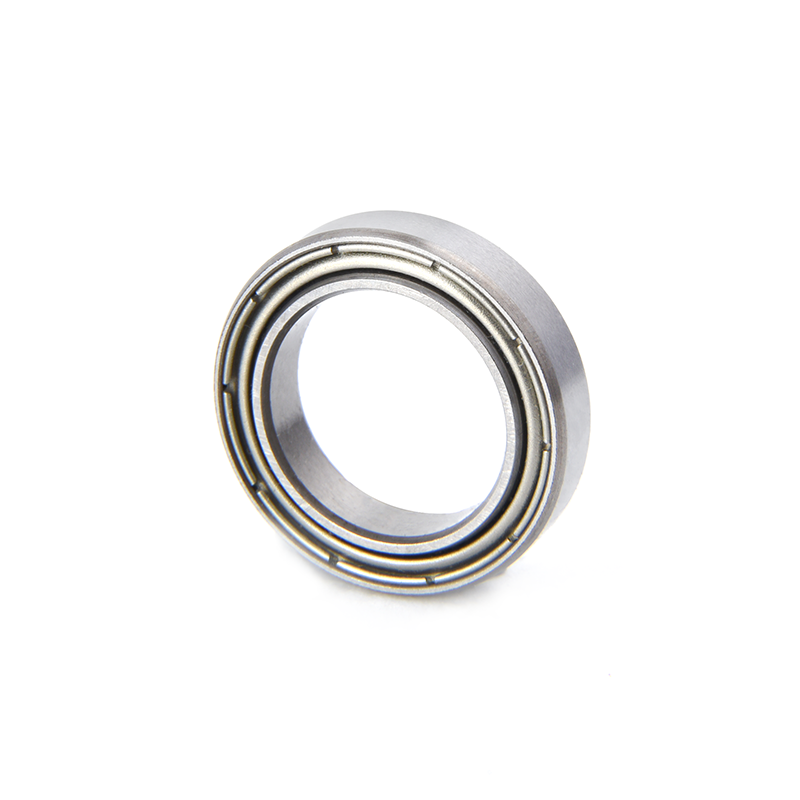
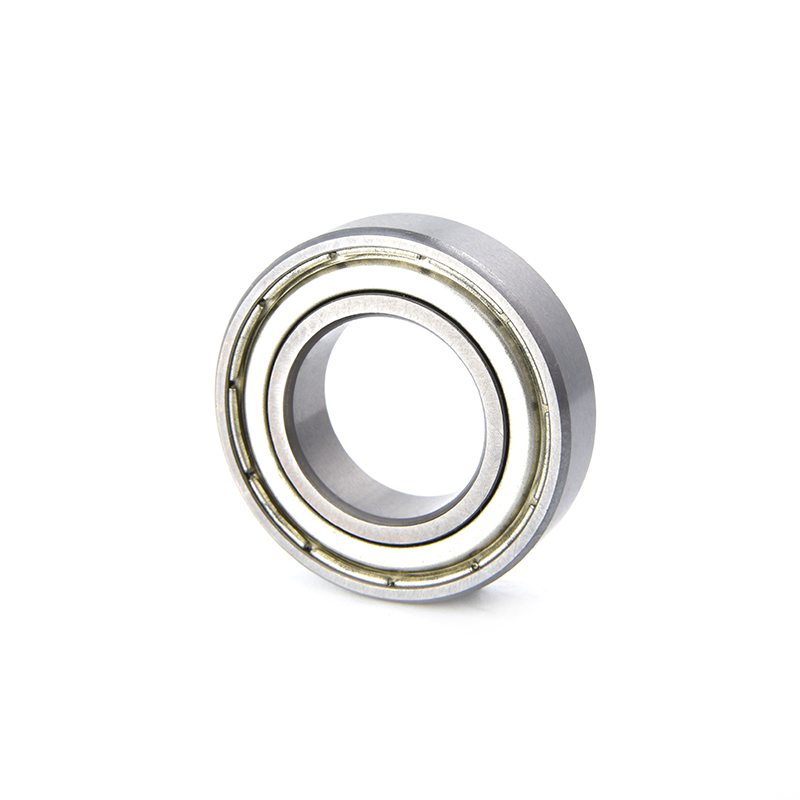
| 6205-ZZ | 2 metal shields | 17,000 | Grease-packed (factory) | Motors, fans, general machinery | Low–Medium |
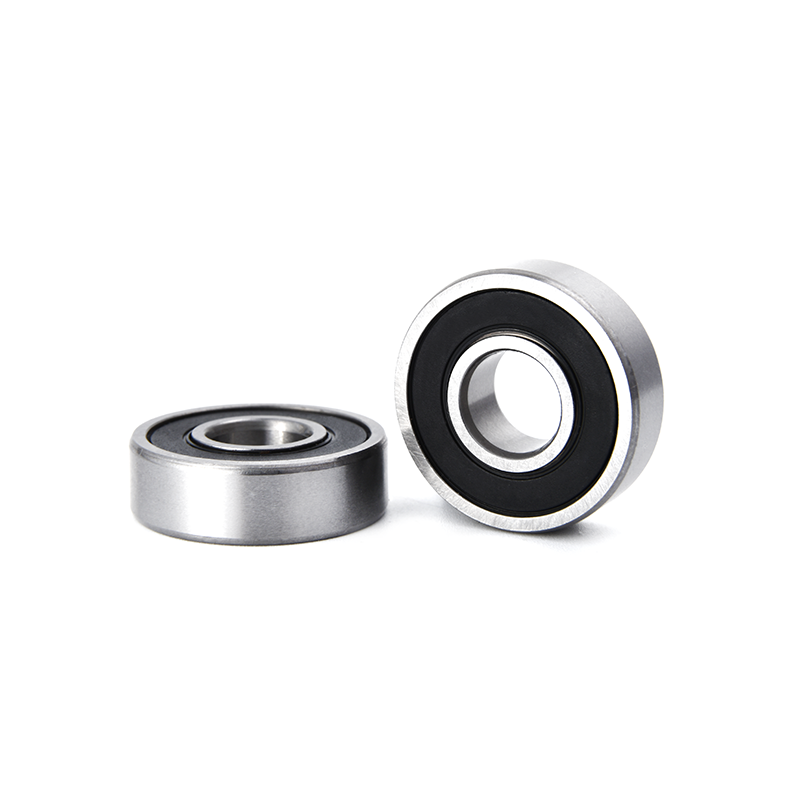
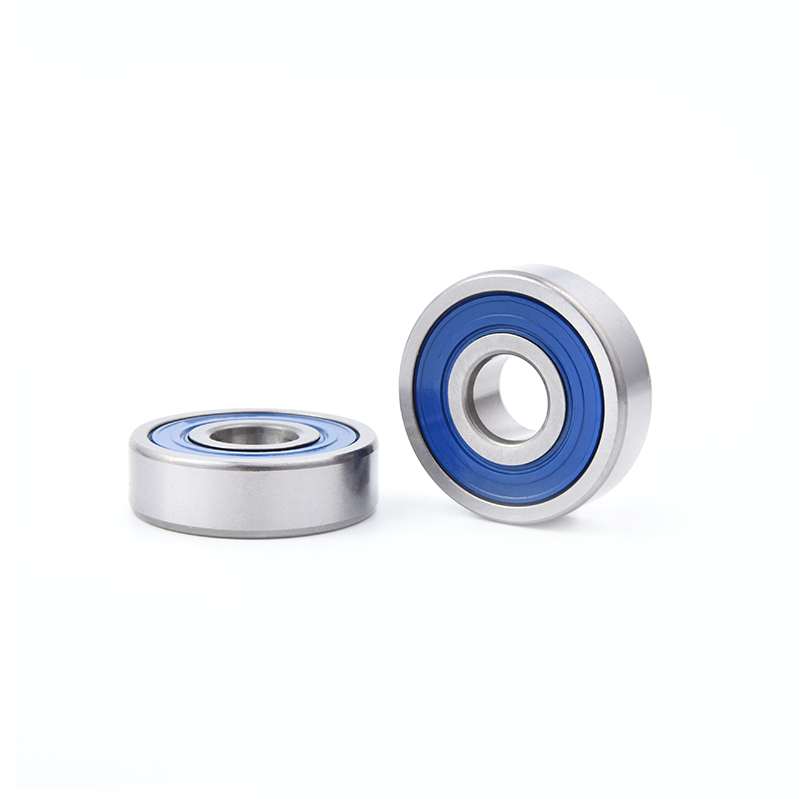
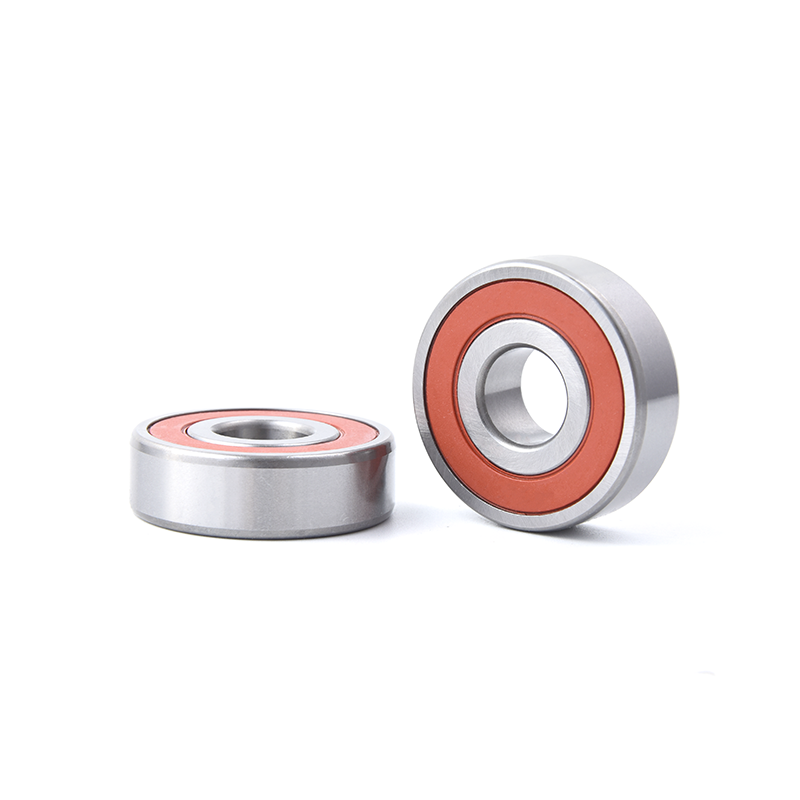
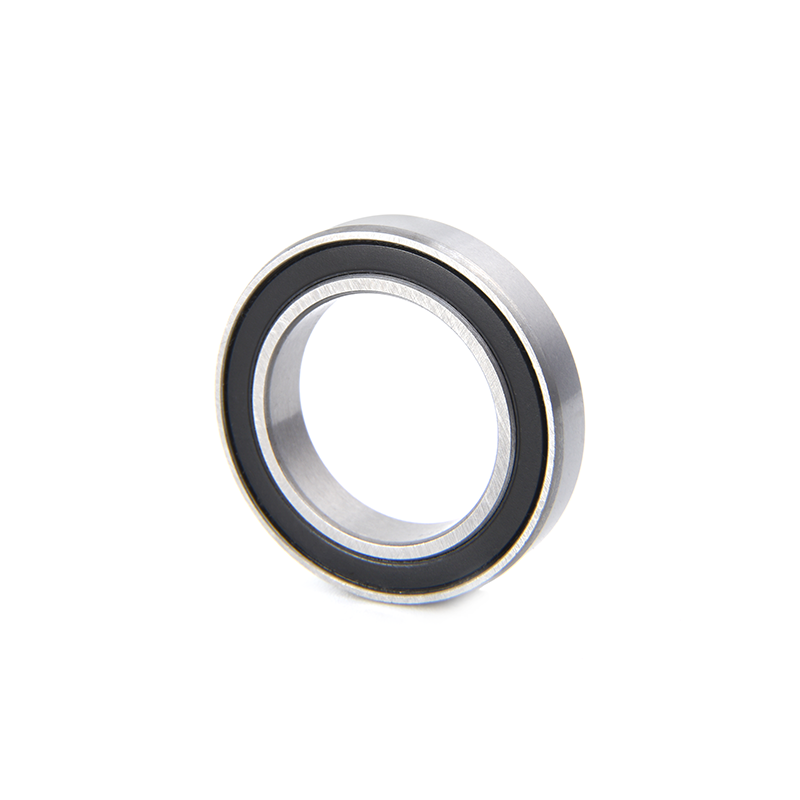
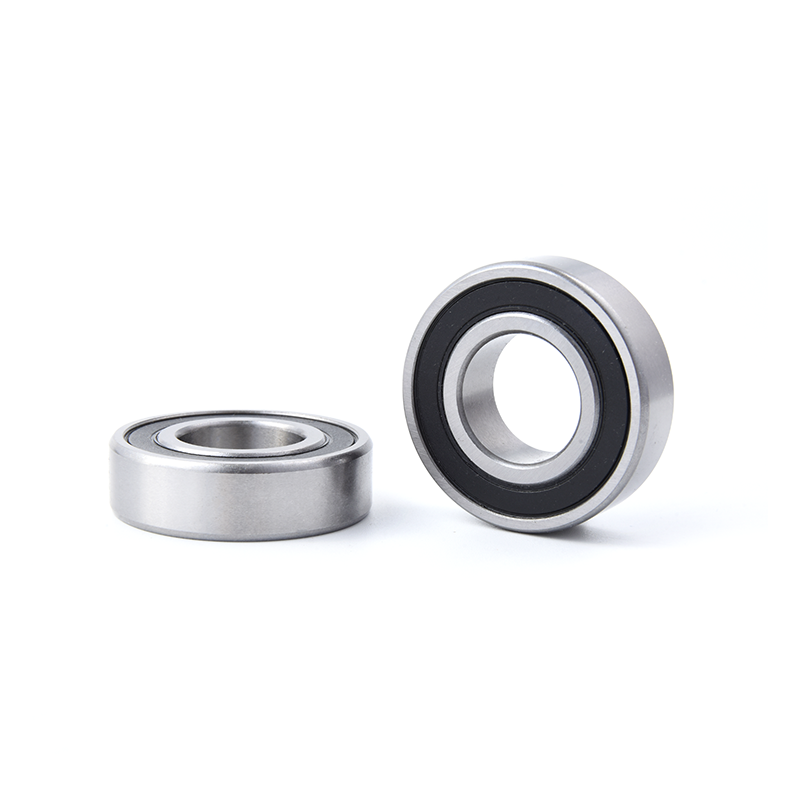
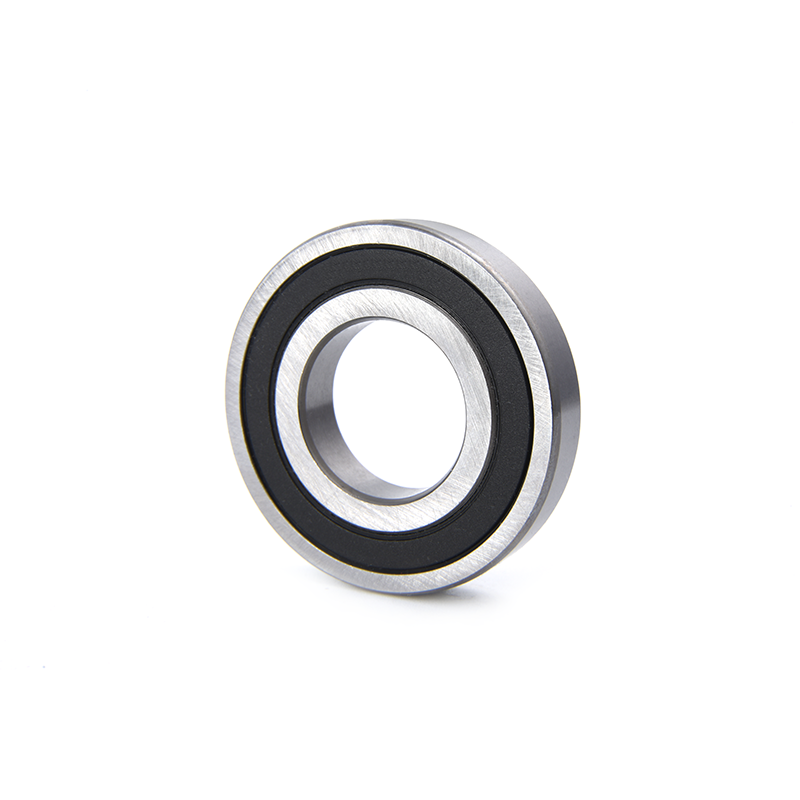
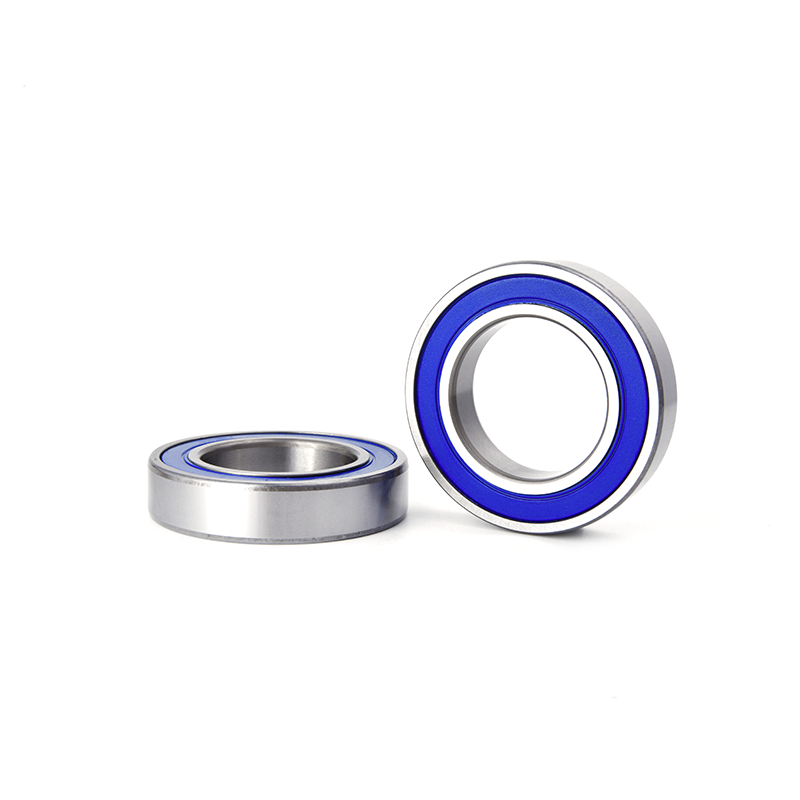
| 6205-2RS | 2 rubber lip seals | 10,000 | Grease-packed (factory) | Pumps, agri equipment, wet enviro | Medium |
| 6205-2RSL | 2 low-friction rubber seals | 12,000 | Grease-packed (factory) | High-speed with contamination risk | Medium–High |
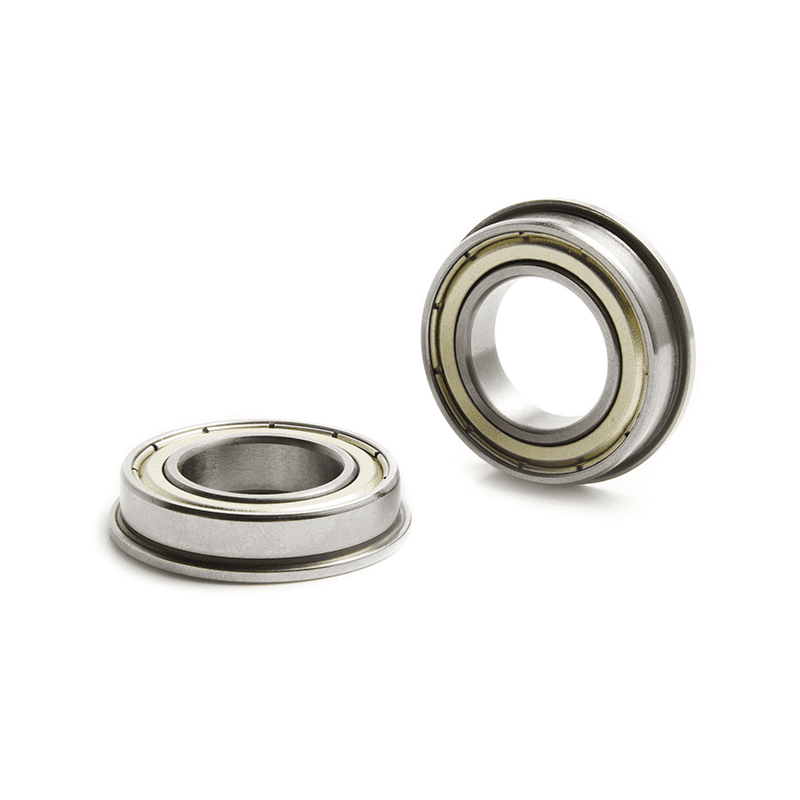
| 6205-NR | Open + snap ring groove | 17,000 | External | Axial location without housings | Medium |
| 6205-2RS/C3 | 2 rubber seals | 10,000 | Grease-packed | High-temp / loose-fit applications | Medium |
| 6205-M | Open (brass cage) | 20,000+ | External (oil) | High-speed precision spindles | High |
Table 2: Comparison of all major 6205 bearing variants by seal type, maximum speed, lubrication method, ideal application, and relative cost.
How Do 6205 Bearing Dimensions Compare to Adjacent Series?
The 6205 bearing sits in the middle of the 25 mm bore family — choosing between a 6005, 6205, 6305, or 6405 depends entirely on load requirements and available housing space, since all share the same 25 mm inner diameter but differ in outer diameter and width.
| Bearing Number | Bore d (mm) | OD D (mm) | Width B (mm) | Dyn. Load C (kN) | Static C₀ (kN) | Series |
| 6005 | 25 | 47 | 12 | 11.2 | 5.85 | Extra light (00) |
| 6205 | 25 | 52 | 15 | 14.0 | 7.80 | Light (02) |
| 6305 | 25 | 62 | 17 | 22.5 | 11.4 | Medium (03) |
| 6405 | 25 | 80 | 21 | 35.8 | 19.6 | Heavy (04) |
Table 3: Dimensional and load rating comparison of all 25 mm bore deep groove ball bearings across the 00, 02, 03, and 04 series (subject bearing).
Key selection guidance based on this comparison:
- Choose 6005 when housing space is critically limited and loads are light — the 5 mm smaller OD (47 mm vs. 52 mm) can be decisive in compact motor designs.
- Choose 6205 for the majority of general industrial applications — it represents the optimal balance of load capacity, size, availability, and cost. This is why it is the default choice for engineers when no overriding constraint exists.
- Choose 6305 when the radial load exceeds 12–14 kN, when shock loads are frequent, or when the application involves heavy belt tension (e.g., conveyor drives, fan shaft bearings). The 60% higher dynamic load rating justifies the larger housing bore.
- Choose 6405 only for very heavy radial loads or severe duty cycles — the 80 mm outer diameter requires a significantly larger housing and adds weight and cost that is rarely justified unless load analysis demands it.
Why the C3 Internal Clearance Designation Matters for 6205 Bearings
Internal clearance — the small gap between balls, raceways, and cage — is one of the most critical and most overlooked parameters when specifying a 6205 bearing, because the wrong clearance class causes premature failure through either excessive heat generation or unacceptable vibration.
The ISO clearance classes for the 6205 bearing are:
- C2 (tighter than Normal): Radial internal clearance of 3–18 µm. Used where precise shaft positioning is required or where the bearing operates under preload conditions. Not suitable for high-temperature applications — thermal expansion can eliminate clearance and cause seizure.
- CN (Normal / Standard): Radial internal clearance of 7–23 µm. The default for most applications. A 6205 bearing without a clearance suffix is always CN. Correct for moderate shaft interference fits at ambient temperatures.
- C3 (greater than Normal): Radial internal clearance of 13–28 µm. Required when: the bearing operates at elevated temperatures (above 60–70°C continuous); the shaft interference fit is heavy (k6, m6 tolerances); or thermal differential between inner and outer ring is significant. The 6205-2RS/C3 is the most commonly specified variant for electric motors in warm or variable-temperature environments.
- C4 (greater than C3): Radial internal clearance of 23–41 µm. Used in high-temperature applications above 120°C or with very heavy interference fits. Less common for 6205 but available for special industrial applications.
A practical rule: if the bearing housing will reach 70°C or above in service, specify C3 clearance. For every 10°C rise in operating temperature above ambient, approximately 1–2 µm of radial clearance is consumed by differential thermal expansion between the inner and outer ring — making C3 essential in motor and pump applications.
How to Calculate 6205 Bearing Life Using the L10 Formula
With the 6205 bearing's dynamic load rating of 14.0 kN, you can calculate the theoretical L10 bearing life in millions of revolutions using the standard ISO 281 formula: L10 = (C/P)³ × 10⁶, where P is the equivalent dynamic load in kN.
Worked examples at common load levels:
- Light load — P = 1.0 kN: L10 = (14.0 / 1.0)³ × 1 = 2,744 million revolutions. At 1,500 rpm, this equals approximately 30,489 hours — well beyond typical service intervals.
- Moderate load — P = 3.5 kN: L10 = (14.0 / 3.5)³ × 1 = 4³ × 1 = 64 million revolutions. At 3,000 rpm, this equals approximately 356 hours — appropriate for heavily loaded industrial machinery requiring planned maintenance intervals.
- Heavy load — P = 7.0 kN (50% of C): L10 = (14.0 / 7.0)³ × 1 = 2³ × 1 = 8 million revolutions. At 1,500 rpm, this equals approximately 89 hours — indicating the 6205 is undersized for this application and a 6305 or 6405 should be considered.
These calculations use the basic L10 formula. In practice, ISO 281 modified rating life (Lnm) also applies life modification factors for lubrication condition (aISO) and reliability factor (a1) — which can multiply basic L10 life by factors of 0.1× to 50× depending on lubricant film thickness and cleanliness. Proper grease selection and contamination control are therefore as important as bearing size selection for achieving design life.
What Are the Correct Shaft and Housing Tolerances for 6205 Bearing Dimensions?
Achieving the specified 6205 bearing dimensions in service requires correct shaft and housing bore tolerances — an incorrectly fitted bearing loses clearance (causing overheating) or spins on its seat (causing fretting damage) regardless of bearing quality.
| Fit Condition | Shaft Tolerance (25 mm) | Housing Tolerance (52 mm) | Typical Application |
| Normal rotating inner ring | k5 or k6 | H7 | Electric motors, pumps, fans |
| Light rotating inner ring | j5 or j6 | H7 | Household appliances, light loads |
| Heavy/shock rotating inner ring | m5 or n5 | H7 | Agricultural, heavy conveyors |
| Stationary inner / rotating outer | g6 or h6 | N7 or M7 | Wheel bearings (non-driven) |
| Axially free (sliding) outer ring | k5 or k6 | G7 or H8 | Non-locating bearing position |
Table 4: Recommended shaft and housing bore tolerances for the 6205 bearing (25 mm bore / 52 mm OD) under different loading and rotation conditions per ISO 286.
Where Are 6205 Bearing Dimensions Used? Common Applications
The 6205 bearing is one of the five most commonly stocked bearings in the world precisely because its 25 mm bore, 52 mm OD, and 15 mm width match the design constraints of an enormous range of standard industrial machinery.
- Electric motors (IEC frame 90 and 100): The 6205-ZZ or 6205-2RS is the standard bearing for the drive-end of IEC 90 and 100 frame motors (0.37–2.2 kW). Tens of millions of these bearings are installed in pumps, fans, compressors, and general industrial motors globally.
- Agricultural equipment: Combine harvesters, seed drills, and irrigation pumps use 6205-2RS bearings in shaft supports throughout the machine. The sealed variant withstands dust, crop debris, and occasional water ingress without requiring re-greasing in the field.
- Conveyor systems: The 6205 is widely used in conveyor roller shafts, particularly in food processing, packaging, and logistics where the 25 mm shaft is a common standard size and frequent replacement is anticipated.
- Washing machine drums: Sealed 6205-2RS bearings appear in the inner tub support shaft of top-load and front-load washing machines. Their sealed design tolerates the detergent-laden steam environment in the drum cabinet.
- Power tools: Angle grinders, drills, and circular saws use 6205 bearings in motor armature and spindle support positions. The high limiting speed (17,000 rpm for open/ZZ) matches the operating speeds of 50 Hz and 60 Hz single-phase tool motors.
- Water pumps and centrifugal pumps: The 6205-2RS is a standard bearing for small centrifugal pump shaft support, with the sealed design preventing water ingress from shaft seal leakage while the 15 mm width fits compact pump casings.
- Automotive alternators and accessories: The 6205 bearing appears in alternator rotor support, water pump auxiliary drives, and small engine accessories where the 25 mm shaft is the design standard.
FAQ: 6205 Bearing Dimensions and Selection
Q: Are 6205 bearing dimensions the same from all manufacturers?
A: Yes — the boundary dimensions (25 × 52 × 15 mm) are identical across all ISO-compliant manufacturers worldwide. Internal geometry such as ball diameter, raceway curvature, and cage design may vary slightly between manufacturers, affecting performance at extreme speeds or loads. However, any ISO 6205 bearing is dimensionally interchangeable as a replacement for any other, making it straightforward to cross-reference between suppliers. Always verify the suffix (ZZ, 2RS, C3, etc.) matches the original specification, as these do affect performance.
Q: What is the difference between 6205-ZZ and 6205-2RS?
Both are pre-greased and factory-sealed, but they differ significantly in performance trade-offs. The 6205-ZZ uses non-contact metal shields that allow the bearing to run at up to 17,000 rpm with minimal friction, but offers less protection against liquid and fine particle ingress. The 6205-2RS uses rubber lip seals that contact the inner ring, providing superior contamination resistance but limiting maximum speed to approximately 10,000 rpm and generating slightly more friction heat. Choose ZZ for high-speed dry environments; choose 2RS for wet or dusty environments at moderate speeds.
Q: Can I replace a 6205 bearing with a 6205-C3 — are they the same size?
Yes — the external dimensions are identical: 25 × 52 × 15 mm. The "C3" suffix refers only to internal radial clearance, which is slightly larger than the standard CN clearance. The C3 variant is a direct dimensional substitute and is in fact the preferred replacement in many electric motor and pump applications where the original specification was CN, because C3 compensates for thermal expansion in service and often extends bearing service life in warm environments.
Q: What grease quantity should be used when repacking a 6205 open bearing?
For a 6205 open bearing in a sealed housing, fill the bearing cavity with grease to approximately 30–50% of free internal volume — roughly 1.5–2.5 grams for this size. Overpacking (above 60% fill) causes churning, elevated operating temperature, and accelerated degradation of the grease. Under-packing causes starvation and surface fatigue. For sealed 6205-ZZ or 6205-2RS variants, the factory grease charge is already optimized and does not need supplementing unless the bearing is being washed and repacked as part of a rebuild.
Q: What is the equivalent Imperial or ABEC designation for the 6205 bearing?
The 6205 has no direct inch-series equivalent with the same dimensions, as it is a metric design. In North American industrial practice, the closest AFBMA (American) designation is also "6205" — the ISO number is universally adopted. Regarding precision grade: a standard 6205 corresponds to ABEC-1 (P0) tolerance class. Higher precision grades are available — ABEC-3 (P6), ABEC-5 (P5), ABEC-7 (P4) — with progressively tighter dimensional tolerances on bore, OD, width, and runout, used for precision spindle and instrument applications. Standard industrial replacements are always ABEC-1/P0.
Q: How do I identify a 6205 bearing without markings?
Measure the three boundary dimensions with a caliper: if you measure 25 mm bore, 52 mm outer diameter, and 15 mm width, you have a 6205 regardless of any missing markings. The ball count of 9 balls per row and the ball diameter of approximately 7.94 mm (5/16 inch) further confirm the identification. If the bearing has a snap ring groove on the outer ring, add the "NR" suffix to the order. If the bearing has shields or seals, identify ZZ (metal) or 2RS (rubber lip) accordingly.
Conclusion: Why Getting 6205 Bearing Dimensions Right Is the Starting Point, Not the End
Confirming the 6205 bearing dimensions — 25 mm bore, 52 mm OD, 15 mm width — is only the first step in a correct specification. The dimensional interchange is guaranteed across all ISO manufacturers; the performance differences emerge from the choices that follow: sealed or shielded, standard or C3 clearance, steel cage or brass cage, standard grease or specialty lubricant.
For the majority of general industrial applications — motors, pumps, fans, conveyors, agricultural machinery — the 6205-2RS/C3 is the safest default specification: sealed against contamination, C3 clearance for thermal tolerance, and universally available from every bearing distributor worldwide. For high-speed precision or oil-bath applications, the open 6205 or 6205-ZZ with standard clearance delivers the highest speed capability.
Understanding not just the 6205 bearing dimensions but the complete specification — clearance, sealing, cage material, precision grade, and fit tolerances — is what separates a bearing that performs reliably for its design life from one that fails prematurely and causes costly unplanned downtime.



Contact Us