

 English
 中文简体
中文简体 Español
Call us
0086-574-62812860
0086-574-62811929

Our team is proud to offer on time guarantee and product guarantee to customer satisfaction.
Read MoreContent
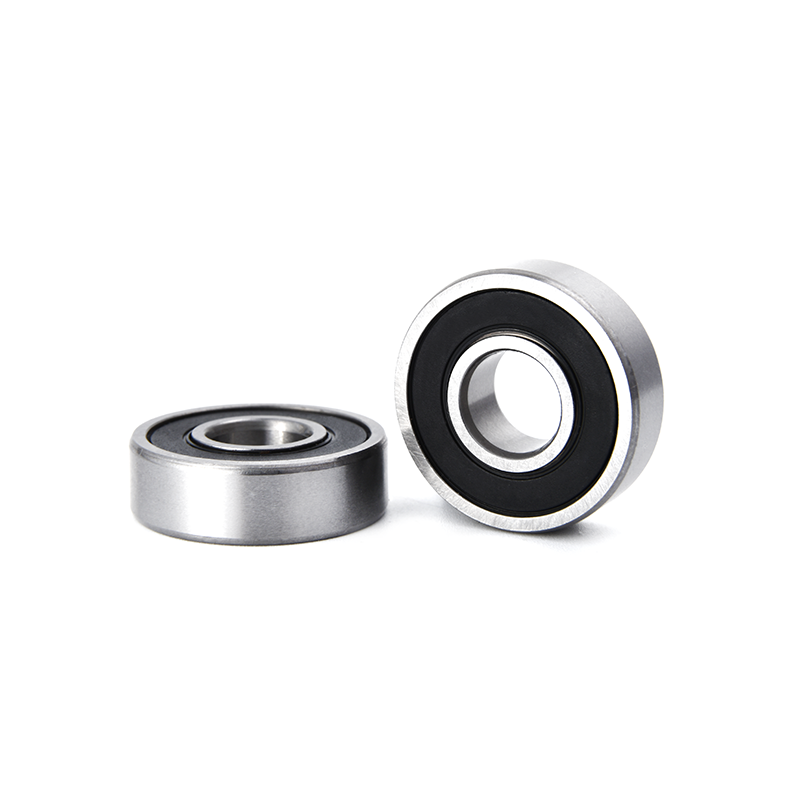
A bearing design that refuses to become obsolete. Single row deep groove ball bearings dominate the rotating equipment world because their structure solves a fundamental engineering problem with elegant simplicity: supporting radial and axial loads simultaneously while minimizing friction. Unlike cylindrical roller bearings that predominantly handle heavy radial forces, or angular contact bearings designed for single-direction axial thrust, a single row deep groove ball bearing uses a continuous raceway groove whose radius closely matches the ball radius. This geometry is deliberate. It creates a conforming contact path that naturally accepts combined loading without requiring complex assembly or preload adjustments.
The assembly itself consists of four precision components—an inner ring, an outer ring, a complement of steel or ceramic balls, and a cage that spaces those balls evenly. The “deep groove” refers to raceway depth relative to ball diameter. A deeper groove increases the contact area and axial load capacity compared to older shallow-groove designs, which is precisely why this configuration displaced earlier bearing types in mid-range machinery. The result is a bearing that starts with low torque, runs at high speeds, and maintains performance with minimal maintenance intervention.
This is also the highest-volume rolling bearing category in global industry. If you are specifying components for an electric motor, a pump, a gearbox, or a wheel hub, you are almost certainly evaluating a single row deep groove ball bearing. Understanding the engineering trade-offs behind series selection, seal configuration, and internal clearance is what separates a reliable long-term design from a repetitive failure point. To see the full scope of configurations manufactured under this principle, you can explore our deep groove ball bearing product range.
The reason purchasing engineers default to this bearing type is not habit—it is statistical reliability under predictable operating conditions. The deep groove raceway profile distributes contact stress across the ball circumference more evenly than a point-contact alternative, which translates directly into lower running noise, reduced frictional heating, and better tolerance for slight misalignment during installation. These characteristics make the bearing suitable for everything from high-precision machine tool spindles to vibration-prone agricultural equipment.
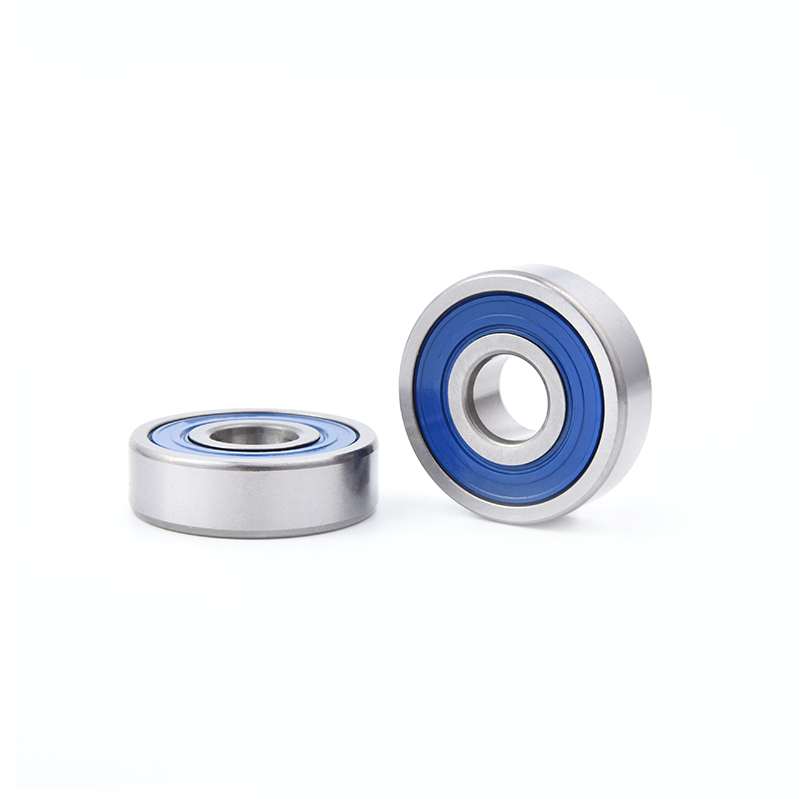
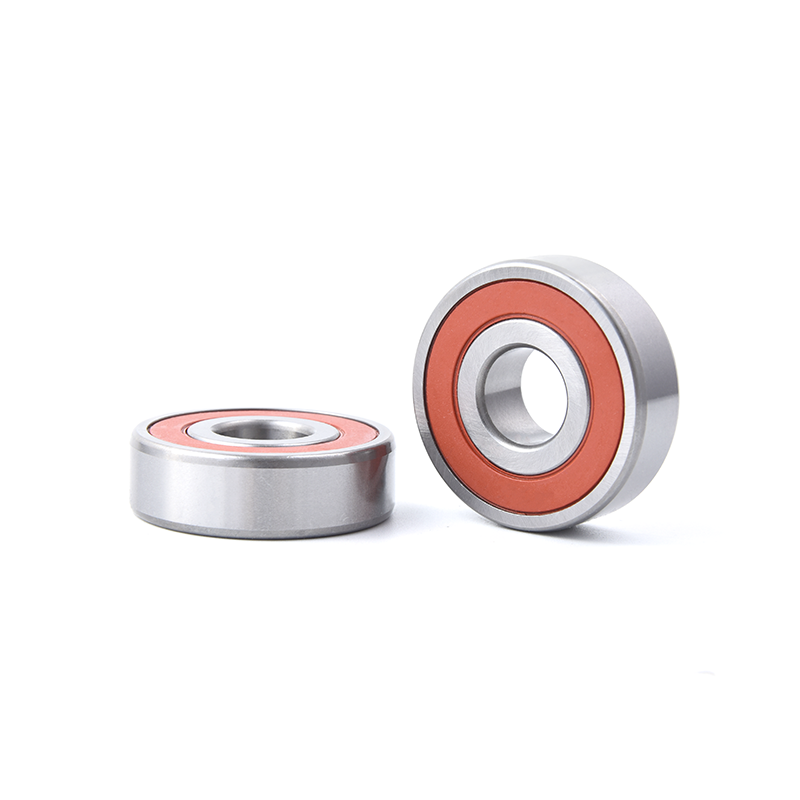
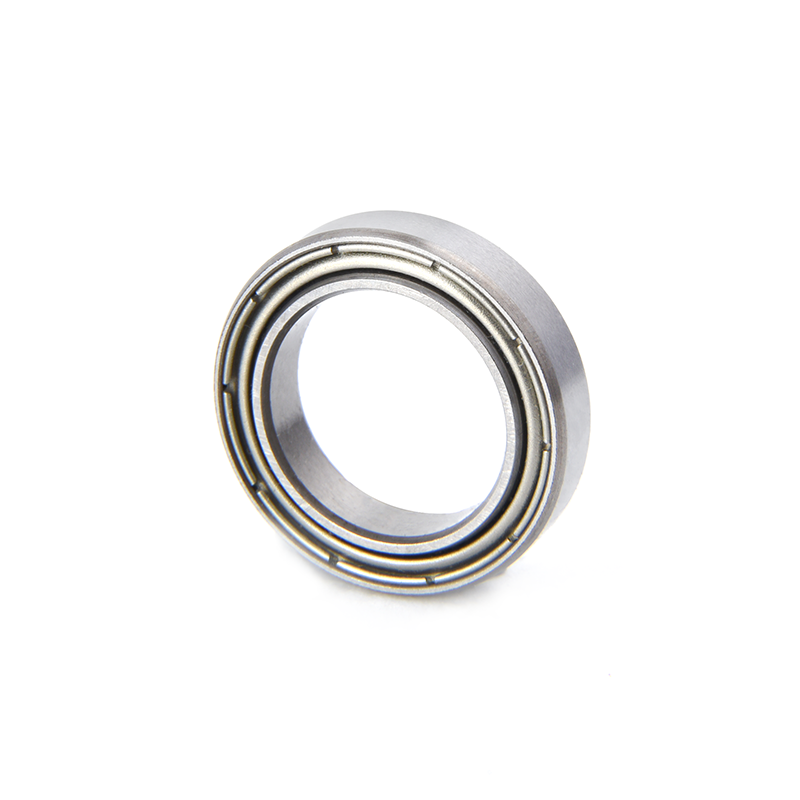
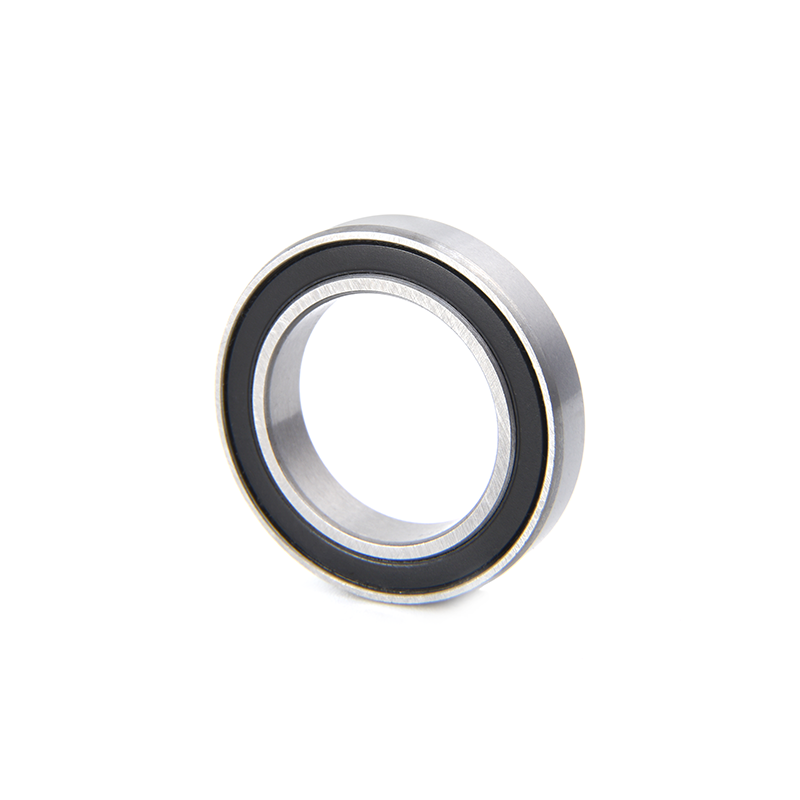
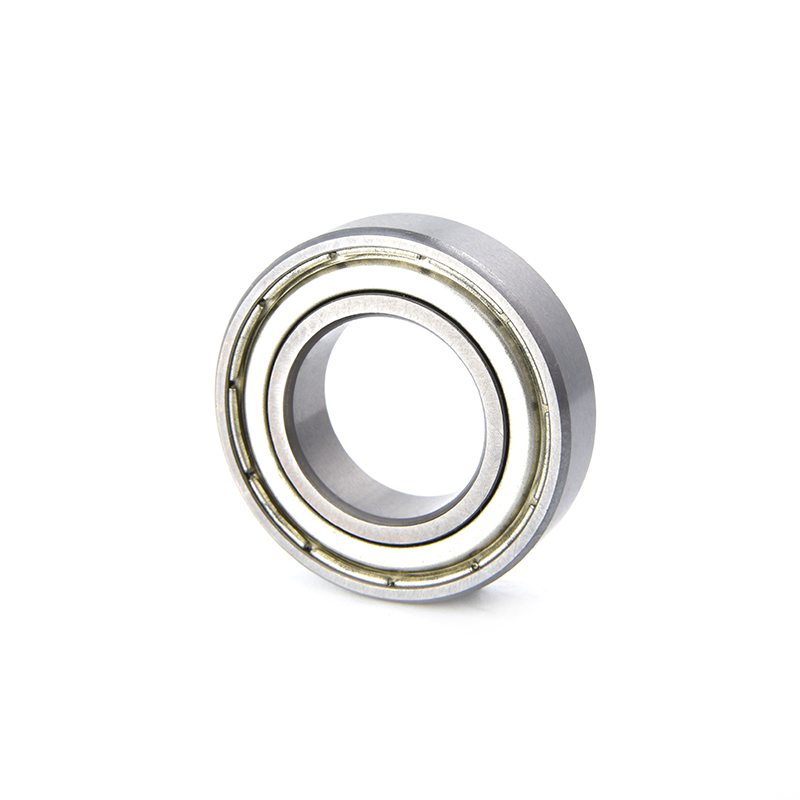
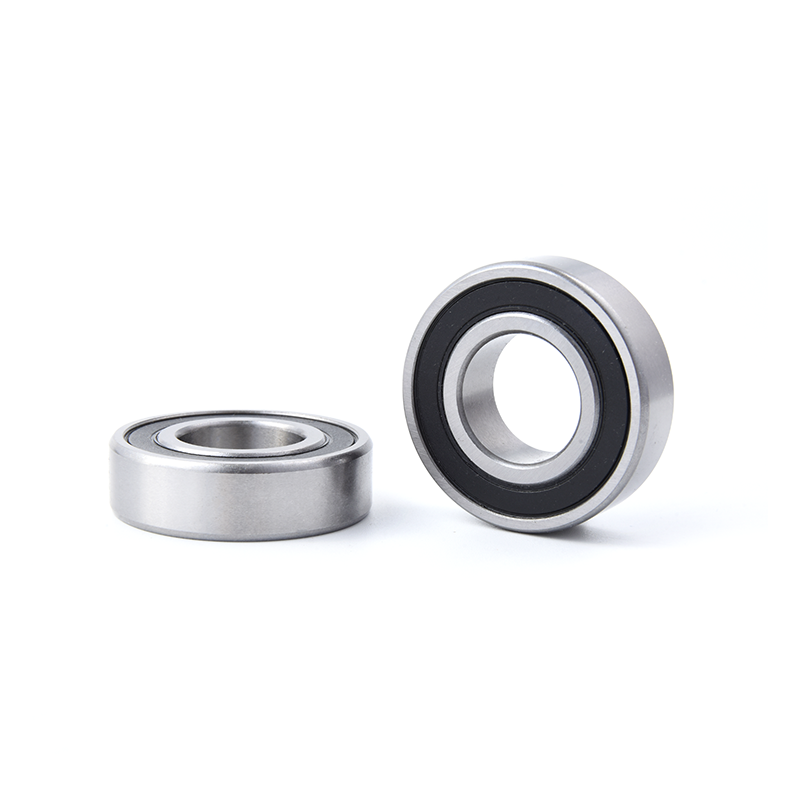
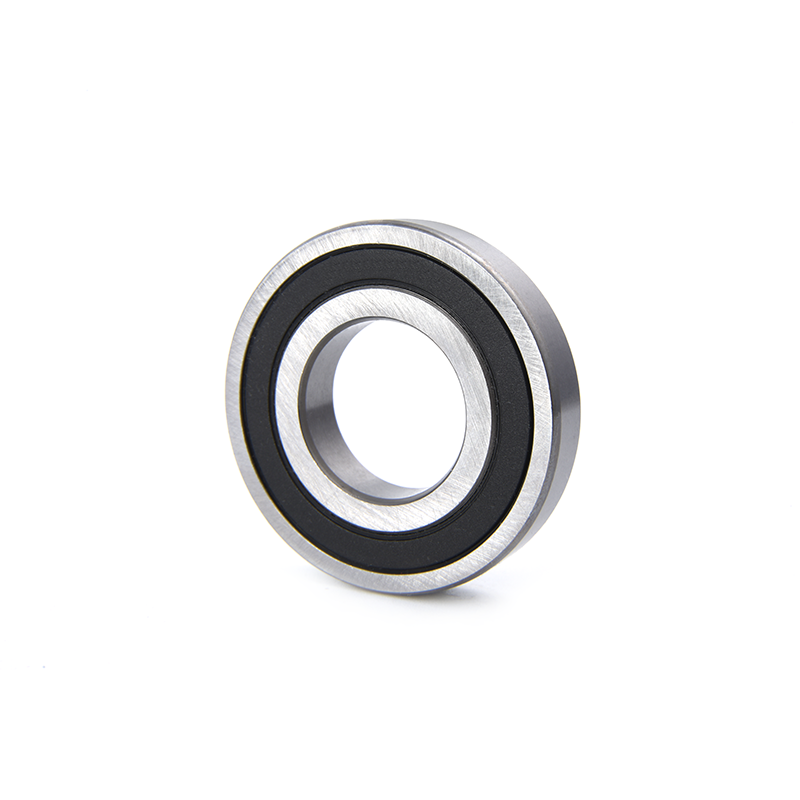
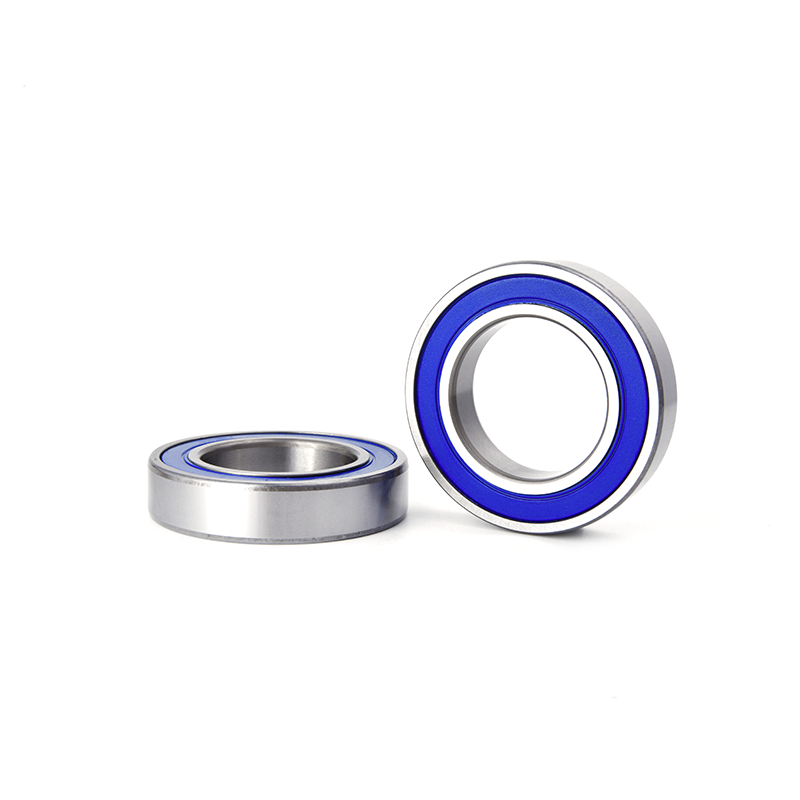
Sealing options further define how a bearing performs in the field. An open bearing offers the lowest running torque and is ideal for oil-bath or circulating lubrication systems, but it demands a clean environment. A metal-shielded design (often designated ZZ or 2Z) provides non-contact protection against moderate contamination ingress at negligible torque penalty, making it a common choice for electric motors. Rubber contact seals (2RS) trade slightly higher friction for aggressive exclusion of moisture and fine particulates, which is critical in material-handling or outdoor applications. The selection of precision grade—P0, P6, or P5—then determines the radial runout and vibration class, directly affecting the service life of connected components like shafts and housings.
The following table summarizes the core performance dimensions that differentiate configuration choices:
| Performance Dimension | Engineering Significance | Selection Driver |
|---|---|---|
| Radial Load Capacity | Primary load direction; determined by ball size, number, and internal geometry | Heavy shaft weight, belt tension, or gear reaction forces |
| Axial Load Tolerance | Bidirectional, limited by raceway shoulder height and contact angle shift under load | Thrust forces from helical gears, vertical mounting, or thermal shaft expansion |
| Speed Capability | Defined by the limiting speed where lubrication stability and heat dissipation remain adequate | High-speed spindles, turbo-machinery, cordless tool motors |
| Sealing Effectiveness | Trade-off between contamination exclusion and frictional drag | Environment dust level, moisture exposure, and re-lubrication access |
| Precision Grade | Controls radial runout, axial runout, and noise level in the final assembly | Machine tool spindle versus conveyor idler |
A single row deep groove ball bearing is designed primarily as a radial load-bearing element. The deep raceway grooves engage approximately 30-40% of the ball circumference, which spreads radial force across a larger contact ellipse and reduces subsurface shear stress compared to shallow-groove or full-complement designs without cages. In practice, this means the bearing carries the weight of a horizontal shaft, the tension of a belt drive, or the electromagnetic radial pull of an air-gap motor without approaching the material fatigue limit prematurely.
Axial capacity is a secondary—but essential—capability. Because the raceway shoulders on both the inner and outer rings are taller than on older Conrad-type assemblies, a single row deep groove bearing can accept thrust loads in either direction without added thrust washers or pairing. The general engineering guideline is that the axial load-carrying ability sits below roughly one-third of the radial dynamic load rating, though the exact margin depends on the specific internal clearance and the angle of contact under load. When pure or predominantly axial loads dominate, angular contact bearings or thrust ball bearings become the proper design choice. For a deeper explanation of these load interactions, the article on how deep groove ball bearings handle radial and axial loads covers the failure modes and design limits in detail.
Speed rating is not merely a catalog number; it is a thermal budget problem. As rotational speed increases, bearing friction—dominated at low loads by lubricant churning and cage drag—converts mechanical energy into heat. The deep groove architecture helps here because its precision-ground raceways and controlled ball curvature minimize spin-to-roll ratios and surface slip. A properly selected bearing stabilizes at a steady-state temperature where heat generation matches dissipation through the housing and shaft. Break that equilibrium, and the lubricant film thickness collapses.
For applications pushing above 60-70% of the listed limiting speed, oil lubrication or specialized low-viscosity greases become mandatory. Some high-speed designs also specify phenolic or PEEK cages instead of stamped steel to reduce inertial drag. The single most common mistake in this domain is over-greasing, which causes churning losses that increase temperature immediately. If your application sits near the thermal boundary, the bearing precision grade and internal radial clearance work together to either stabilize or destabilize the running accuracy under thermal expansion.
The decision between single row and double row deep groove ball bearings often feels like a load capacity question, but it is actually a packaging and cost negotiation. A double row design essentially packs two single row bearing trackways into a single ring set, roughly doubling the radial capacity in the same bore and outside diameter envelope. The surface finish quality and the roundness of the rolling elements then become even more critical because any irregularity creates cross-talk between the two rows. Yet that capacity gain arrives with penalties that rule out double row designs in many of the most common applications.
The following comparison organizes the trade-offs across the dimensions that matter during assembly design and procurement:
| Decision Factor | Single Row | Double Row |
|---|---|---|
| Radial Load Capacity (same bore) | Baseline for the shaft diameter | Significantly higher; approximately 1.5–2× the radial rating |
| Axial Load Capacity | Bi-directional, moderate | Bi-directional, higher magnitude but still limited by the axial clearance |
| Axial Space Requirement | Narrow width; ideal for compact assemblies | Wider cross-section; may force housing or shaft redesign |
| Permissible Speed | Higher limiting speed due to lower thermal mass and drag | Lower limiting speed; more balls generate more frictional heat |
| Cost per Assembly | Lower unit cost, lower inventory complexity | Higher unit cost; only justified when space restricts two separate single row bearings |
| Installation Complexity | Simple press-fit or adapter-sleeve mounting | Requires careful axial location to avoid preloading both rows unevenly |
The default engineering position is clear: select a single row design unless you can demonstrate that the shaft diameter cannot be increased, that two separate single row bearings cannot fit axially, and that the cost premium is acceptable. In most electric motors, pumps, conveyors, and portable tools, single row bearings meet the life requirement with margin to spare.
The numbering system for deep groove ball bearings is not arbitrary—it encodes dimensional series that directly determine the bearing's load capacity relative to its envelope. The first digit after the type code refers to the width series, and the second digit refers to the diameter series. Together they define a cross-section that engineering teams match to the space and load constraints of the assembly. Ignoring this logic leads to overspecification, wasted space, or premature fatigue spalling.
The 60 series presents a narrow-width, light-cross-section profile intended for applications where the predominant force is moderate radial load and the available axial and radial space is restricted. They are common in fractional-horsepower motors and light-duty gearboxes. The 62 series is the workhorse. Its moderate cross-section balances load capacity and speed capability across the widest range of industrial machinery. If you are not certain which series to start with, this is where the analysis should begin. You can review the specifications directly on the 62 series deep groove ball bearings page.
 Wholesale Deep Groove Ball Bearing 62 Series Suppliers, OEM/ODM CompanyKangtian Bearing Co., Ltd is a China Deep Groove Ball Bearing 62 Series suppliers and Deep Groove Ball Bearing 62 Series company, We spec...View Product →
For heavy radial loads—belt-driven pulleys, large fan shafts, or industrial gear reducers—the 63 series increases the cross-section substantially, accommodating larger balls with higher static load ratings. The trade-off is a lower limiting speed and a higher mass that affects acceleration performance. Engineers evaluating this series for severe-duty equipment should consult the 63 series bearings for heavy-load applications. At the other end of the spectrum, the 68 and 69 series compete for space-constrained applications such as bicycle hubs, robotic joints, and compact medical devices. These thin-section bearings reduce weight and rotational inertia but demand more precise housing tolerances and offer lower absolute load ratings. The 68 series thin-section deep groove ball bearings are particular candidates where diameter must be maximized within a tight radial envelope. The 67 series pushes even thinner for ultra-compact designs, while the MR series scales the same engineering principle down to miniature diameters for instrumentation and micromotors.
Wholesale Deep Groove Ball Bearing 68(618) Series Suppliers, OEM/ODM CompanyKangtian Bearing Co., Ltd is a China Deep Groove Ball Bearing 68(618) Series suppliers and Deep Groove Ball Bearing 68(618) Series compan...View Product →Wholesale Deep Groove Ball Bearing 63 Series Suppliers, OEM/ODM CompanyKangtian Bearing Co., Ltd is a China Deep Groove Ball Bearing 63 Series suppliers and Deep Groove Ball Bearing 63 Series company, We spec...View Product →Bearing life calculations assume clean, properly lubricated contact surfaces. The operating environment disagrees. Selecting the right sealing configuration is the first line of defense against the primary cause of premature failure: contamination. An open bearing performs well inside a gearbox with filtered circulating oil, but the same bearing installed in an exposed conveyor pulley without seals will fail within days or weeks. A ZZ metal-shielded design retains grease and blocks coarse particles while contributing almost no frictional torque, making it the default choice for horizontally mounted electric motors in relatively clean indoor environments. When water spray, cement dust, or agricultural chaff is present, 2RS rubber contact seals are mandatory, even though they increase running temperature. The article on sealing technology for long-term stable operation walks through the failure mechanisms that different seal types prevent.
Lubrication selection must match the speed and temperature envelope. Grease is the standard solution for the majority of deep groove ball bearing applications because it simplifies housing design and provides a long service interval. However, grease has a finite service life determined by base oil oxidation and thickener degradation. The relubrication interval shortens as speed increases. Oil lubrication—whether by bath, circulation, or oil-mist—transfers heat away more effectively and is essential for high-speed spindles. The precision grade (ABEC 1/3/5 or P0/P6/P5) then compounds with lubrication quality: a higher-grade bearing run with contaminated lubricant will fail faster than a standard-grade bearing run with clean, correct-viscosity oil.
Internal radial clearance is the other variable that causes field confusion. A C3 (greater than normal) clearance is not a "high-speed" clearance by default—it is a compensation for thermal expansion when the inner ring runs hotter than the outer ring. If the shaft fit is tight, the inner ring expands, consuming some of the internal room. Without sufficient remaining clearance, the bearing can preload itself and overheat. Specifying C3 when the housing cools uniformly and the shaft fit is loose introduces unnecessary radial play that generates vibration and false brinelling.
The application landscape for these bearings is not a technical niche; it is a map of rotating machinery itself. In automotive and motorcycle production, single row deep groove bearings support alternators, starter motors, water pumps, tensioner pulleys, wheel hubs, and transmission shafts. The engineering demands here center on consistency across high volumes and reliable sealing against road spray and temperature swings. Household appliances—washing machine drums, air conditioner fan motors, vacuum cleaner impellers—add an unforgiving noise requirement, because end-users associate bearing sound with product quality. In these cases, the grease fill and raceway surface finish become as commercially important as the fatigue life rating.
Industrial electric motors and pumps form the largest single consumption block. The bearing must survive continuous running at fixed speed, often with radial belt load, while maintaining alignment in a cast iron housing over tens of thousands of hours. Automation and power tool applications invert the priority: lightweight design, intermittent high-speed bursts, and impact resistance dominate the selection logic. Agricultural machinery pushes bearings into a different stress regime entirely, where contamination, shock loading, and infrequent maintenance define the operational reality. For a more specific framework on matching bearing features to these industrial requirements, the guide on choosing the right bearing for industrial machinery provides additional application-specific selection logic.
When the product specifications from two different suppliers appear identical on paper, the difference in field performance will trace back to manufacturing consistency and quality infrastructure. An ISO 9001 certificate is a baseline requirement, not a differentiator. The more meaningful indicators are production scale—which drives process repeatability—and investment in in-process gauging rather than end-of-line sampling. A manufacturer running millions of units per year with automated optical inspection at multiple production stages will deliver tighter lot-to-lot variation than one performing only final audit checks.
For OEM procurement teams, the manufacturer's willingness and ability to execute non-standard specifications is often the deciding factor. Standard catalogs cannot cover every speed, load, and geometry combination that modern equipment demands. This is where access to custom non-standard bearing solutions enables design engineers to optimize the entire assembly rather than force-fitting a standard component. Evaluate whether the supplier operates their own heat treatment and grinding facilities or outsources these steps—vertical integration correlates strongly with delivery certainty. Environmental certification to ISO 14001 indicates management discipline that usually extends to production planning and export logistics. A consistent export history across multiple regions also confirms that the manufacturer's documentation, packaging, and corrosion protection meet international transit standards, not only local distribution requirements.
The decision path is straightforward once you strip away catalog clutter. Define the radial and axial loads, the shaft diameter and available envelope, the operating speed, and the environmental contaminants present. Match those to a dimensional series: 62 as the universal starting point, 63 for heavy radial needs, 68 or 69 for thin sections. Specify the seal type that excludes the specific contamination threat without exceeding the thermal budget. Select the precision grade and internal clearance that align with your fit conditions and expected thermal gradient. Finally, qualify the supply chain for process control, not just price. A bearing that fails in service costs orders of magnitude more than the unit price difference between a verified manufacturing source and an unchecked alternative.

0086-574-62812860
0086-574-62811929


West of Zhangting Industrial Zone, Yuyao, Ningbo City, Zhejiang Province, 315411, China
On weekdays, we will reply to you or call us within 12 hours of receiving the inquiry.

Contact Us