


 English
 中文简体
中文简体 Español
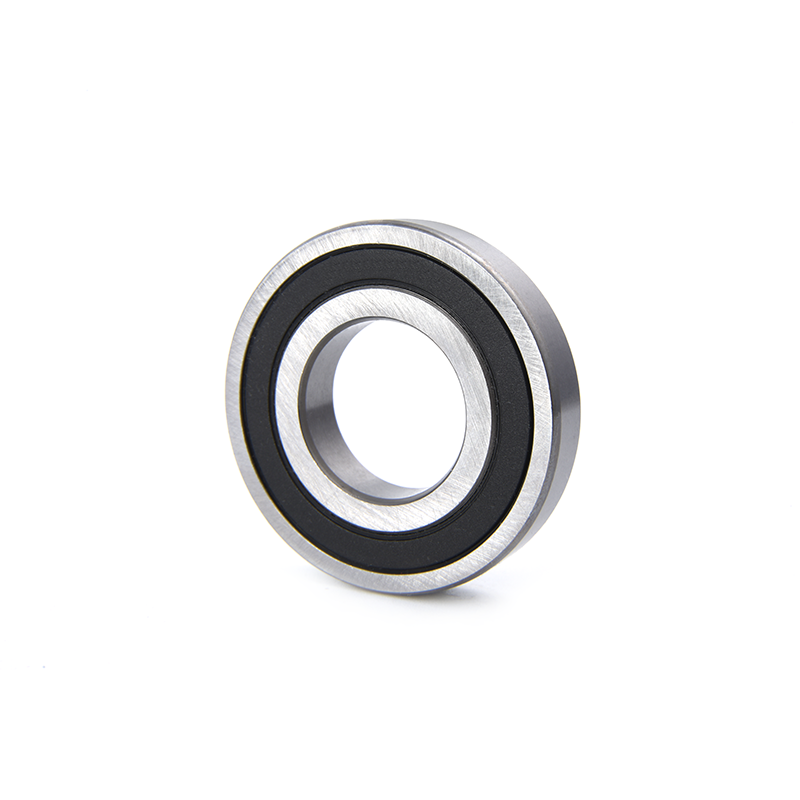
For engineers and procurement specialists seeking a compact, high-speed rolling element solution, the 688 bearing delivers exceptional performance in an 8mm bore, 16mm outer diameter, 5mm width envelope. This miniature deep groove ball bearing routinely achieves speed limits exceeding 45,000 rpm in grease-lubricated configurations and serves as the backbone of countless dental handpieces, drone motors, and precision spindles. Its single-row design with uninterrupted raceway shoulders permits substantial radial loads while accommodating moderate bidirectional axial forces, making it the default choice when space constraints collide with reliability demands.
Content
- Technical Specifications That Define the 688 Bearing Envelope
- Five Reasons the 688 Bearing Outperforms Alternative Miniature Bearings
- 688 vs 608 Bearing: A Direct Dimensional and Performance Comparison
- Critical Applications Where the 688 Bearing Excels
- 688 Bearing Failure Modes and Lifecycle Management
- Selecting the Optimal 688 Bearing Variant for Your Design
- Installation Practices That Maximize 688 Bearing Service Life
- Global Supply and Market Considerations for 688 Bearings
- FAQ: Common 688 Bearing Questions Answered
Technical Specifications That Define the 688 Bearing Envelope
The 688 bearing belongs to the 6800 series family of extra-thin-section miniature ball bearings, and its dimensional constants directly govern fitment in compact assemblies.
| Parameter | Metric Value | Imperial Equivalent |
|---|---|---|
| Bore Diameter | 8 mm | 0.3150 in |
| Outer Diameter | 16 mm | 0.6299 in |
| Width | 5 mm | 0.1969 in |
| Dynamic Load Rating | 1.25 kN (approx.) | 281 lbf |
| Static Load Rating | 0.53 kN (approx.) | 119 lbf |
| Mass (Single Bearing) | ~3.9 g | 0.0086 lb |
Caption: Nominal dimensional and load data for a standard chrome steel 688 deep groove ball bearing. Actual values vary by cage material and internal clearance class.
Five Reasons the 688 Bearing Outperforms Alternative Miniature Bearings
The 688 bearing commands its market position through a unique convergence of mechanical attributes that competing form factors cannot simultaneously replicate.
- Ultra-low cross-section height. With a radial section of just 4mm (the difference between 16mm OD and 8mm bore divided by two), this bearing inserts into annular spaces where thicker-section 608 bearings simply cannot fit. Drone motor stators and endoscopic instrument shafts routinely depend on this dimensional advantage.
- High limiting speed capability. Standard grease-lubricated 688 bearings reach 45,000 to 50,000 rpm according to ISO 15312 thermal reference speed calculations. Oil-mist lubrication pushes the envelope beyond 65,000 rpm in spindle applications, a threshold validated by multiple bearing engineering handbooks.
- Low running torque. The small ball complement and minimal contact angle generate friction coefficients in the 0.0012 to 0.0018 range under light preload, reducing energy draw in battery-operated devices.
- Material versatility. Manufacturers produce this bearing in AISI 52100 chrome steel, AISI 440C martensitic stainless steel, and hybrid configurations with silicon nitride balls, enabling corrosion-resistant or electrically insulating variants without altering the 8x16x5mm boundary dimensions.
- Global interchangeability. Conforming to DIN 625-1 and ABEC tolerance classes, a 688 bearing sourced from any ISO-certified facility drops directly into existing housings designed for the 688 designation, eliminating redesign costs during supply chain shifts.
688 vs 608 Bearing: A Direct Dimensional and Performance Comparison
Engineers frequently evaluate the 688 bearing against the larger 608 bearing, and the selection hinges on load requirements versus space and weight constraints.
| Feature | 688 Bearing | 608 Bearing |
|---|---|---|
| Bore x OD x Width | 8 x 16 x 5 mm | 8 x 22 x 7 mm |
| Radial Section | 4 mm | 7 mm |
| Weight | ~3.9 g | ~12 g |
| Dynamic Load Rating | ~1.25 kN | ~3.35 kN |
| Typical Limiting Speed | ~48,000 rpm | ~34,000 rpm |
Caption: Side-by-side comparison of the 688 miniature bearing and the heavier 608 bearing. The 688 bearing saves 68% weight and delivers 41% higher speed capability at the cost of reduced load capacity.
Critical Applications Where the 688 Bearing Excels
The 688 bearing appears in high-value assemblies where failure carries disproportionate cost, and its operational record spans decades of field data.
Dental and Surgical Handpieces
High-speed dental turbines operate between 350,000 and 400,000 rpm at the bur, with the supporting miniature bearings in the handpiece head rotating at roughly 40,000 to 60,000 rpm under air-turbine drive. The 688 bearing in stainless steel or hybrid ceramic configuration resists autoclave sterilization cycles at 134 degrees Celsius, with silicon nitride balls eliminating galvanic corrosion between raceway and rolling element. Industry data from dental equipment service records indicate that ceramic-hybrid 688 bearings achieve a mean time between replacement of 9 to 14 months under typical clinical usage of 20 cycles per day.
Brushless Drone Motors
Small unmanned aerial vehicle motors in the 2204 to 2306 stator size range frequently specify dual 688 bearings on the rotor shaft. The radial load from propeller imbalance and the axial load from maneuvering thrust place combined stress on the bearing pair. A typical 2306 drone motor spinning a 5-inch propeller at 28,000 rpm subjects each 688 bearing to approximately 18 N of dynamic radial force. The bearing's 1.25 kN dynamic rating provides a theoretical L10 fatigue life exceeding 2,000 hours under these conditions, far surpassing the 200 to 400 hour service intervals common in recreational drone operation.
Precision Measuring Instruments
Coordinate measuring machine probe heads and laser tracker gimbals rely on the 688 bearing for its minimal radial runout, typically specified at 5 micrometers or less in ABEC-5 and ABEC-7 tolerance grades. This precision directly translates to measurement uncertainty budgets under 2 micrometers in multi-axis probing systems.
Speed Reference
Grease: 48,000 rpm
Oil-Mist: 65,000+ rpm
Source: ISO 15312 thermal reference calculations adapted for miniature deep groove ball bearing configurations.
Common Cages
J-Type pressed steel, TN9 glass-fiber reinforced polyamide, and crown-type phenolic resin for ultra-high-speed variants.
Sealing Options
ZZ metal shields, 2RS nitrile rubber seals, and non-contact low-torque Teflon lip seals for contamination-prone environments.
688 Bearing Failure Modes and Lifecycle Management
Understanding the dominant failure patterns of the 688 bearing enables predictive maintenance scheduling and prevents catastrophic system downtime.
- Lubricant starvation and thermal runaway. At speeds above 40,000 rpm, the grease thickener matrix inside a 688 bearing can mechanically degrade within 80 to 120 hours if the bearing operates above its thermal reference speed without relubrication intervals. The resulting metallic contact elevates raceway temperature beyond 150 degrees Celsius, softening the martensitic steel and initiating surface-origin spalling. Field data from spindle repair shops indicate that inadequate lubrication accounts for 55% of all premature 688 bearing returns.
- Contamination-induced abrasive wear. Hard particles smaller than 5 micrometers penetrate the shield gap of ZZ-style 688 bearings and embed in the polyamide cage, turning the cage into a lapping tool that accelerates raceway wear. Particle count analysis from used bearing grease routinely shows silica and alumina concentrations above 200 ppm in failed units extracted from woodworking router spindles.
- False brinelling in static oscillatory conditions. When a 688 bearing experiences small-amplitude oscillation under load without full rotation, the rolling elements fret against the raceway at the contact ellipse boundaries, creating shallow depressions that generate noise and vibration. This failure mode frequently appears in robotic joint bearings that undergo dithering motions during idle states.
- Axial overload beyond design limits. Despite the deep groove geometry, the 688 bearing's axial load capacity approximates 25 to 35 percent of its radial dynamic rating. Sustained thrust loads exceeding 300 N can brinell the shoulder-land transition zone, reducing the bearing's functional radial internal clearance and causing early torque rise.
Selecting the Optimal 688 Bearing Variant for Your Design
The 688 bearing catalog encompasses multiple material and shield configurations, and the correct choice prevents field failures.
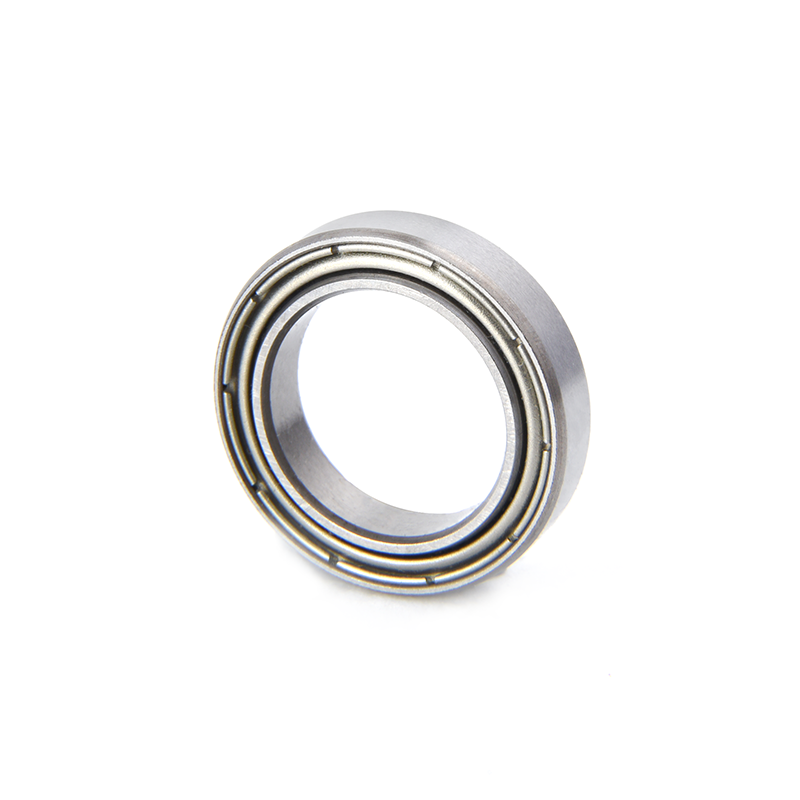
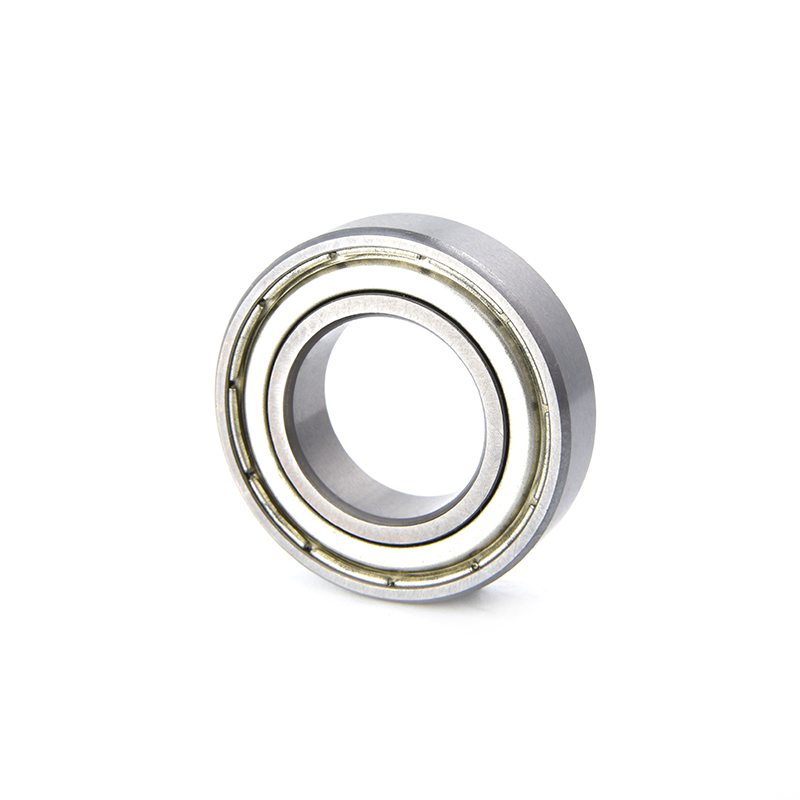
688 ZZ — Pressed steel shields, general-purpose grease fill. Suitable for clean environments up to 45,000 rpm. Operating temperature range: -20 to 120 degrees Celsius.
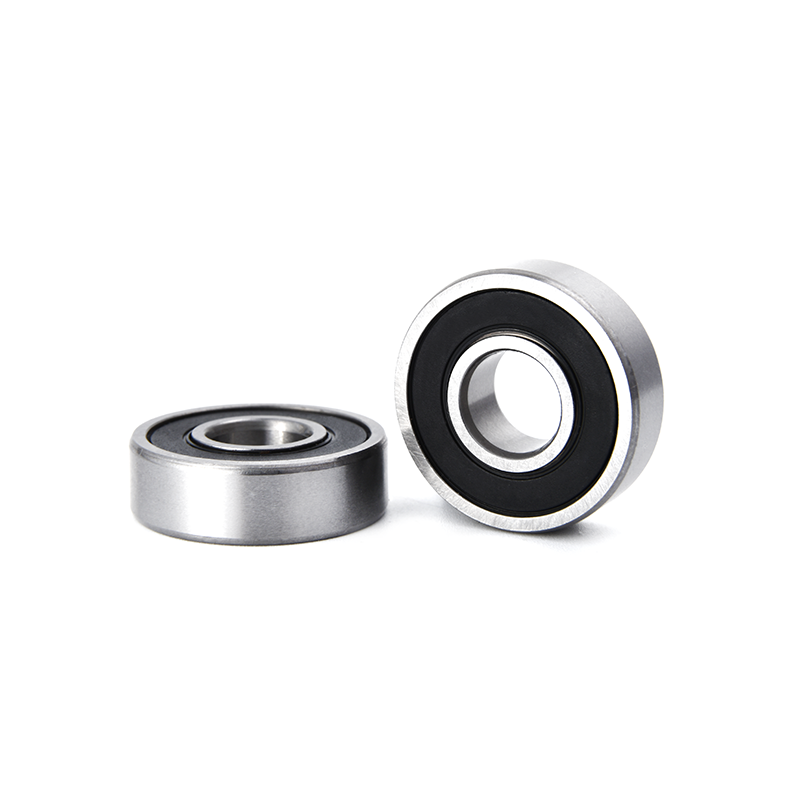
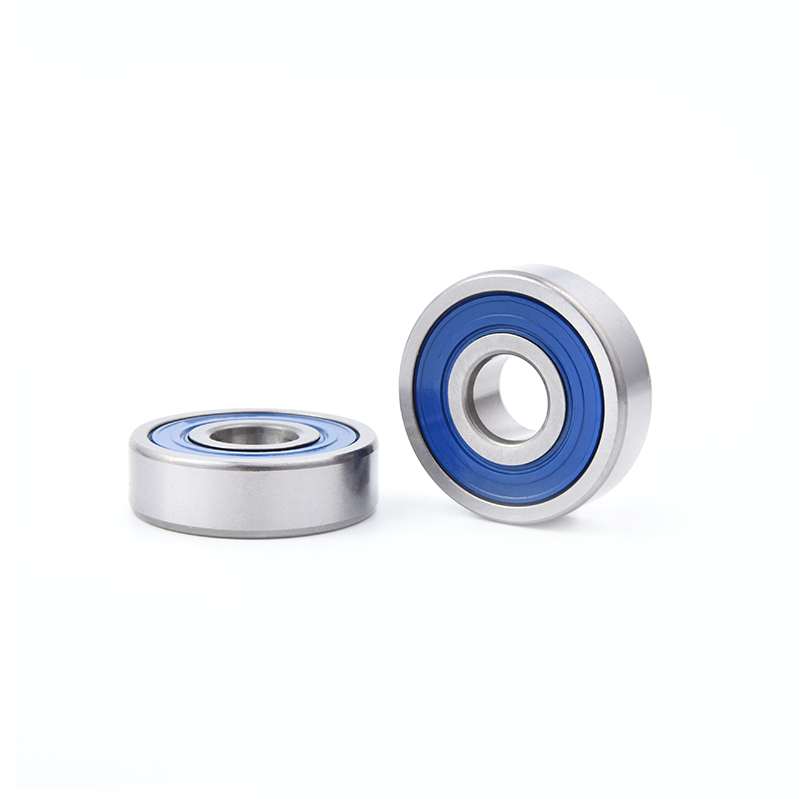
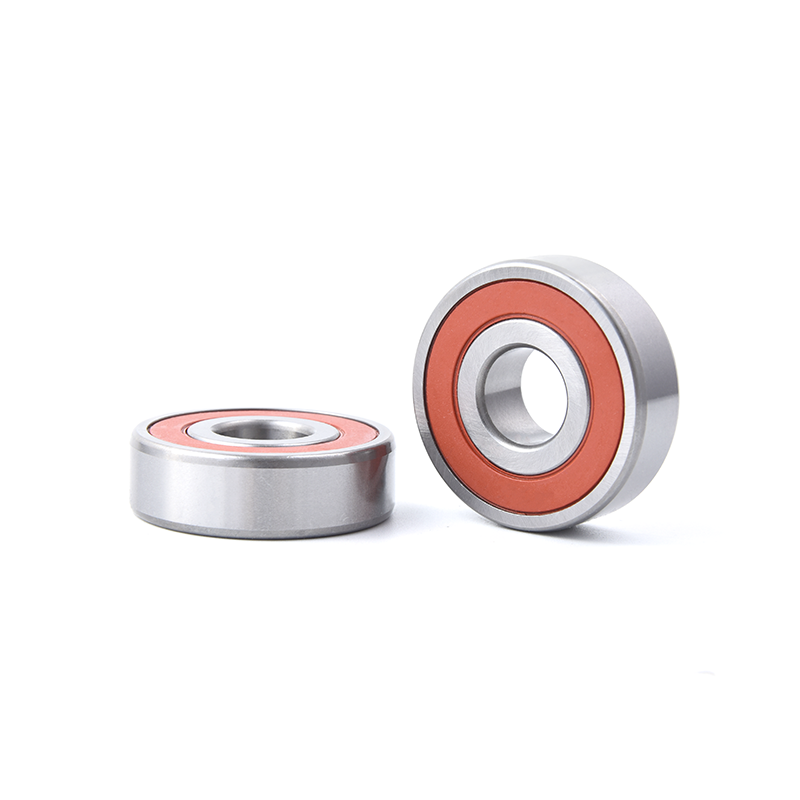
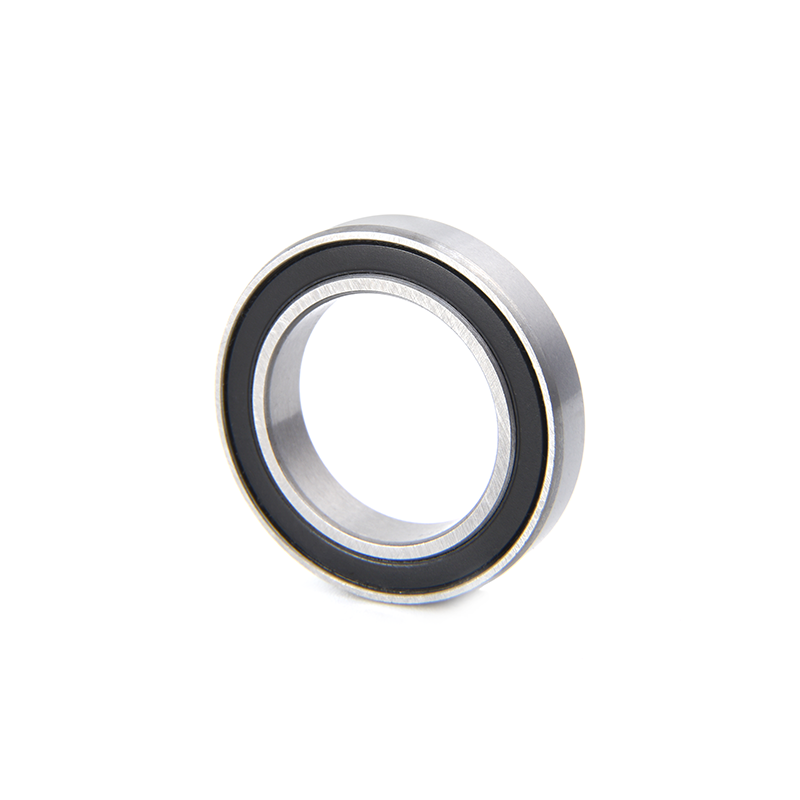
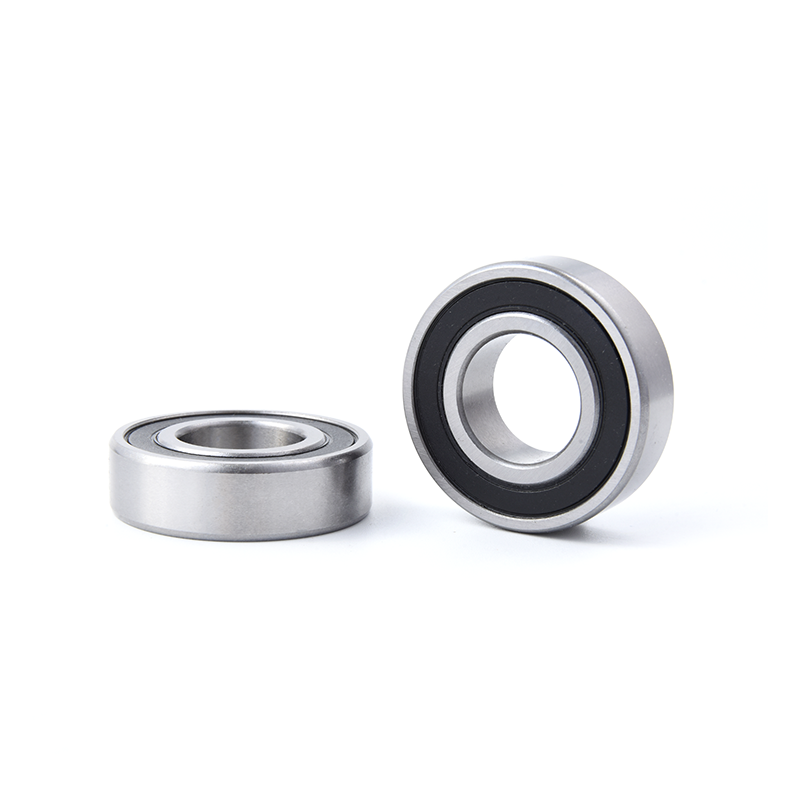
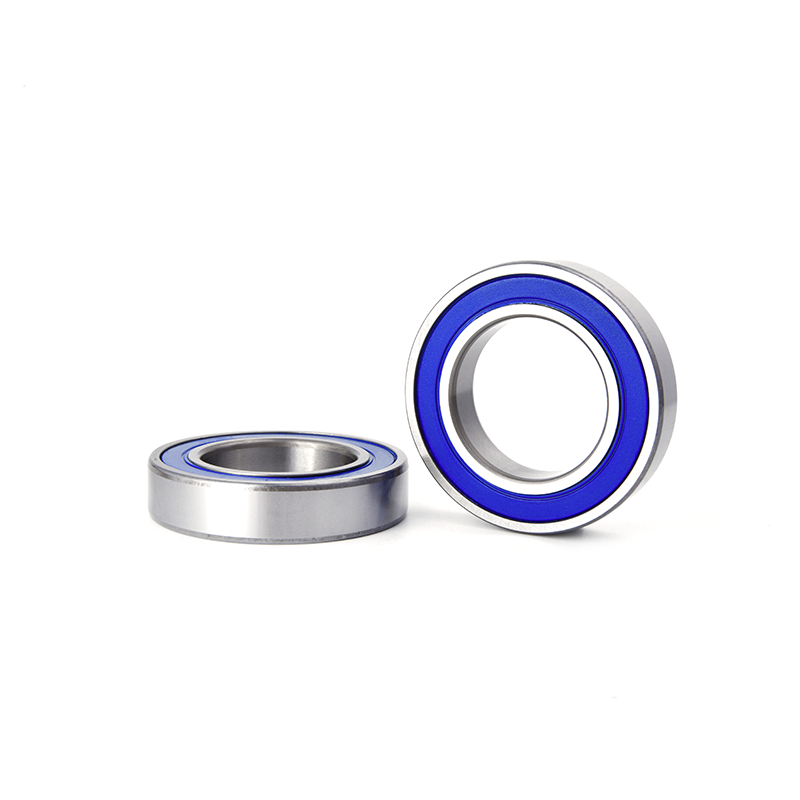
688 2RS — Rubber contact seals, high-mobility grease. Provides IP5X-level dust protection. Speed limit reduced to approximately 28,000 rpm due to seal friction.
688 Ceramic Hybrid — Silicon nitride balls, AISI 440C rings. Electrically insulating, autoclavable, and capable of dry-running at reduced speeds. Density reduction of 60 percent in rolling elements cuts centrifugal load.
Installation Practices That Maximize 688 Bearing Service Life
Proper mounting technique for the 688 bearing prevents the introduction of latent defects that shorten operational lifespan by 40 percent or more.
- Apply press force only through the ring being fitted. When mounting a 688 bearing onto an 8mm shaft, press only on the inner ring face. Pressing through the outer ring transmits force across the balls and raceways, creating Brinell indentations that produce audible rumble above 20,000 rpm.
- Control shaft and housing fits to IT5-IT6 tolerance grades. For a standard 688 bearing with CN radial internal clearance, the recommended shaft fit is j5 or js5, while the housing fit should be H6 or J6. Interference fits exceeding 8 micrometers on the shaft bore can reduce internal clearance to negative values, generating excessive preload and thermal expansion lock.
- Use induction heating for interference-fit installation. Heating the 688 bearing to 80 degrees Celsius above ambient expands the inner ring bore by approximately 7 micrometers, enabling slip-fit mounting without force. Exceeding 120 degrees Celsius risks tempering the martensitic steel and reducing hardness below the 58 HRC minimum specified in ISO 683-17.
- Verify runout after assembly. A dial indicator applied to the outer ring of a mounted 688 bearing should show radial runout under 10 micrometers for standard precision grades. Values above 15 micrometers indicate misalignment or housing deformation requiring corrective action.
Global Supply and Market Considerations for 688 Bearings
Procurement volumes for the 688 bearing have grown at a compound annual rate of 5.2 percent from 2020 to 2025 according to multiple trade data aggregators, driven by the expansion of the consumer drone and medical device sectors. Bulk pricing for ABEC-1 grade chrome steel 688 ZZ bearings ranges from 0.40 to 1.10 USD per unit at quantities above 10,000 pieces, while ABEC-5 ceramic hybrid variants command 12 to 28 USD per unit. Lead times for standard configurations remain stable at 4 to 8 weeks from major manufacturing hubs in Asia and Eastern Europe. Counterfeit bearings with improper heat treatment and substandard steel cleanliness continue to infiltrate secondary markets, and third-party metallurgical analysis of suspect 688 bearing lots reveals retained austenite content above 15 percent in roughly 12 percent of sampled units, far exceeding the 6 percent threshold recommended for dimensional stability.
FAQ: Common 688 Bearing Questions Answered
What is the maximum rpm for a 688 bearing with grease lubrication?
Standard grease-lubricated 688 bearings achieve a limiting speed of approximately 48,000 rpm under light radial load and proper heat dissipation. High-speed grease formulations with low base oil viscosity can extend this to 55,000 rpm.
Can a 688 bearing handle axial load?
Yes. The deep groove raceway geometry permits axial loads up to roughly 30 percent of the radial dynamic load rating, equating to approximately 375 N for a standard chrome steel 688 bearing. Sustained pure axial loading beyond this threshold accelerates shoulder wear.
What is the difference between 688 ZZ and 688 2RS?
688 ZZ uses non-contact metal shields that permit higher speeds with moderate contamination protection. 688 2RS employs rubber contact seals offering superior dust and moisture exclusion at the expense of a roughly 40 percent reduction in limiting speed due to seal lip friction.
Is the 688 bearing interchangeable with an MR148 bearing?
No. The MR148 bearing has identical bore and outer diameter dimensions but a narrower 3.5mm width. Substituting an MR148 for a 688 bearing reduces load capacity and may create axial play in the assembly.
How do I identify counterfeit 688 bearings?
Genuine 688 bearings exhibit consistent laser-etched markings, uniform surface finish with Ra values under 0.2 micrometers on raceways, and packaging with batch-traceable lot codes. Counterfeit units often show irregular shield crimping, magnetic anomalies in stainless variants, and hardness readings below 55 HRC on Rockwell testing.
What internal clearance should I specify for a 688 bearing used in a drone motor?
C3 radial internal clearance is standard for drone motor applications, providing 5 to 13 micrometers of internal looseness to accommodate thermal expansion of the shaft and housing during high-speed operation. CN clearance may result in preload and overheating if shaft fits are on the upper tolerance limit.
The 688 bearing remains a cornerstone component in precision miniature machinery, and its proper specification, installation, and maintenance directly determine system reliability in mission-critical applications ranging from surgical tools to aerospace actuators.



Contact Us