


 English
 中文简体
中文简体 Español
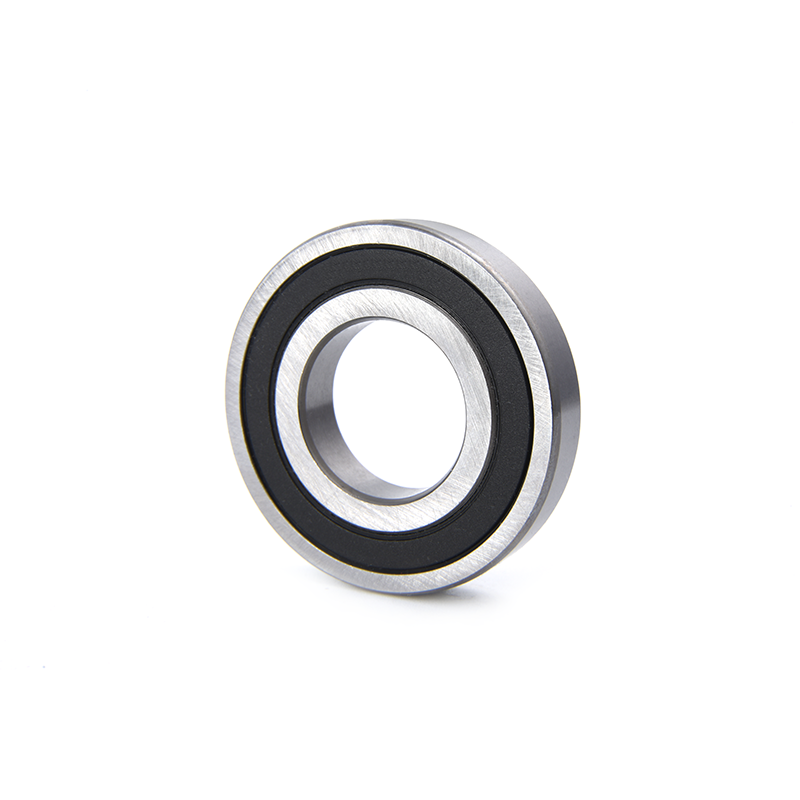
The 6205 bearing is a single-row deep groove ball bearing with a 25 mm bore, 52 mm outer diameter, and 15 mm width — one of the most widely used bearing sizes in the world, found in electric motors, pumps, agricultural equipment, conveyor systems, and household appliances. It carries a dynamic load rating of approximately 14.0 kN and a static load rating of 7.8 kN, making it suitable for moderate radial and light axial loads at speeds up to 13,000 RPM in open configuration.
This guide covers every dimension, suffix variant, lubrication option, and application scenario for the 6205 bearing — along with a comparison table of the most common configurations to help you specify the correct part on the first order.
Content
- 6205 Bearing Dimensions and Core Specifications
- 6205 Bearing Suffix Codes Explained
- 6205 Bearing Suffix Variant Comparison Table
- Materials and Internal Clearance Classes
- Lubrication: Open vs. Shielded vs. Sealed 6205 Bearings
- Common Applications of the 6205 Bearing
- How to Install and Replace a 6205 Bearing Correctly
- Common 6205 Bearing Failure Modes and How to Identify Them
- How to Select the Right 6205 Bearing Variant for Your Application
- Frequently Asked Questions About the 6205 Bearing
- Q: What is the difference between 6205-ZZ and 6205-2RS?
- Q: Is a 6205 bearing the same as a 6205-2RS bearing?
- Q: Why do I need C3 clearance in my electric motor 6205 bearing?
- Q: How do I know if my 6205 bearing needs replacement?
- Q: Can I use a 6205 bearing for both radial and axial loads?
- Q: What is the expected L10 service life of a 6205 bearing?
6205 Bearing Dimensions and Core Specifications
The 6205 bearing conforms to ISO 15 dimensional standards, ensuring full interchangeability between manufacturers worldwide — any compliant 6205 bearing from any supplier will fit identically in the same housing and shaft. The designation breaks down as follows: "6" denotes a single-row deep groove ball bearing, "2" indicates the 02 dimension series (light series), and "05" is the bore code, which corresponds to a 25 mm bore diameter (bore code 05 multiplied by 5).
| Parameter | Value | Unit |
| Bore Diameter (d) | 25 | mm |
| Outer Diameter (D) | 52 | mm |
| Width (B) | 15 | mm |
| Dynamic Load Rating (C) | 14.0 | kN |
| Static Load Rating (C0) | 7.8 | kN |
| Limiting Speed (Grease) | 9,000 | RPM |
| Limiting Speed (Oil) | 13,000 | RPM |
| Ball Complement | 9 | balls |
| Ball Diameter | 9.525 (3/8 inch) | mm |
| Reference Fatigue Load Limit (Pu) | 0.335 | kN |
| Mass (open, steel cage) | approx. 0.130 | kg |
| Corner Radius (r min) | 1.0 | mm |
Table 1: Standard dimensional and performance specifications for the 6205 deep groove ball bearing per ISO 15.
6205 Bearing Suffix Codes Explained
The suffix appended after "6205" is the most important part of a bearing order because it defines the sealing type, internal clearance, cage material, and lubrication — all of which directly determine whether the bearing survives in your specific operating environment. Ordering a plain "6205" without understanding suffixes often leads to premature failure caused by contamination ingress or incorrect clearance for the operating temperature.
Sealing and Shielding Suffixes
- 6205 (no suffix / open): No shields or seals. Maximum speed capability, requires external lubrication system. Used where the bearing housing itself provides contamination protection or where frequent re-lubrication is performed.
- 6205-Z: Single metal shield on one side. Shields are non-contact and do not add friction, but offer only moderate contamination exclusion. Common in lightly contaminated environments where one side faces a controlled internal space.
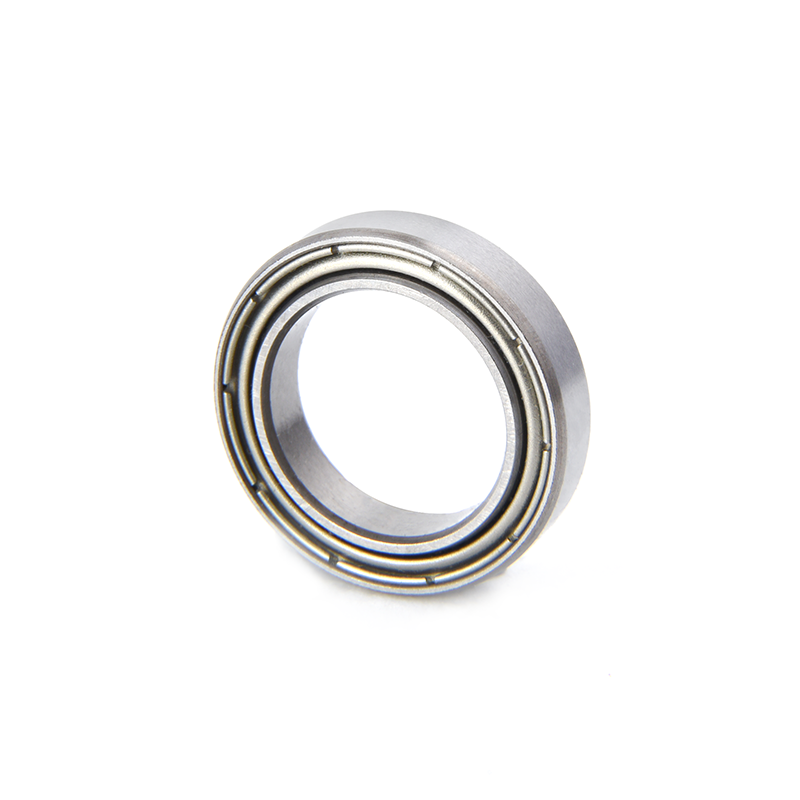
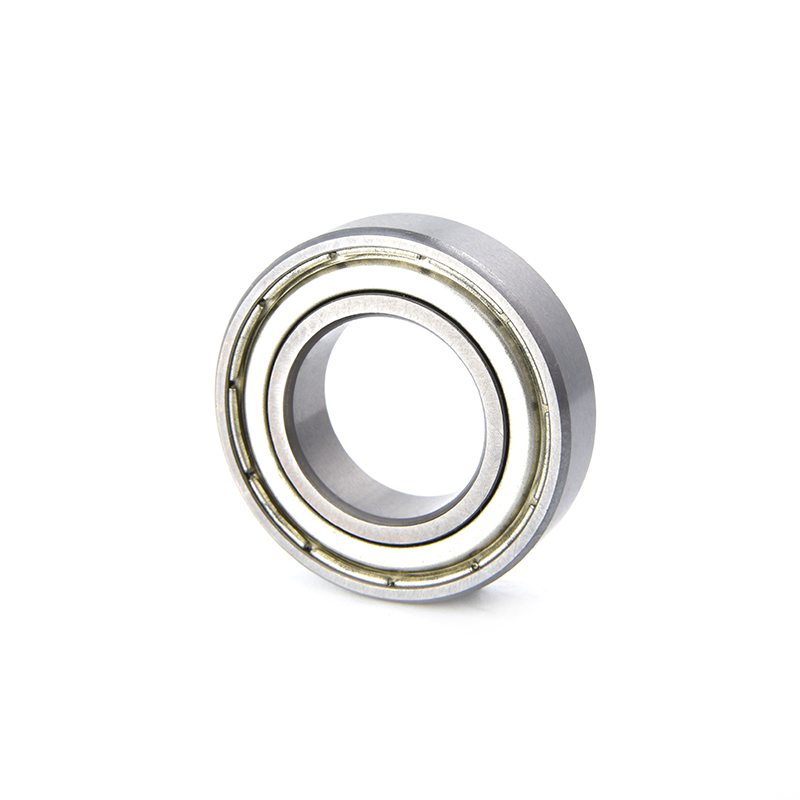
- 6205-ZZ (also 6205-2Z): Metal shields on both sides. Retains factory-applied grease, excludes coarse contaminants. Speed capability similar to open bearing. Used in electric motors, fans, and household appliances. This is the highest-volume 6205 variant globally.
- 6205-RS (also 6205-RZ, 6205-LB): Single rubber contact seal on one side. The contact lip creates a positive seal against the inner ring, providing excellent contamination exclusion but generating slightly more friction than a shield. Temperature limit of approximately 110°C for standard NBR rubber seals.
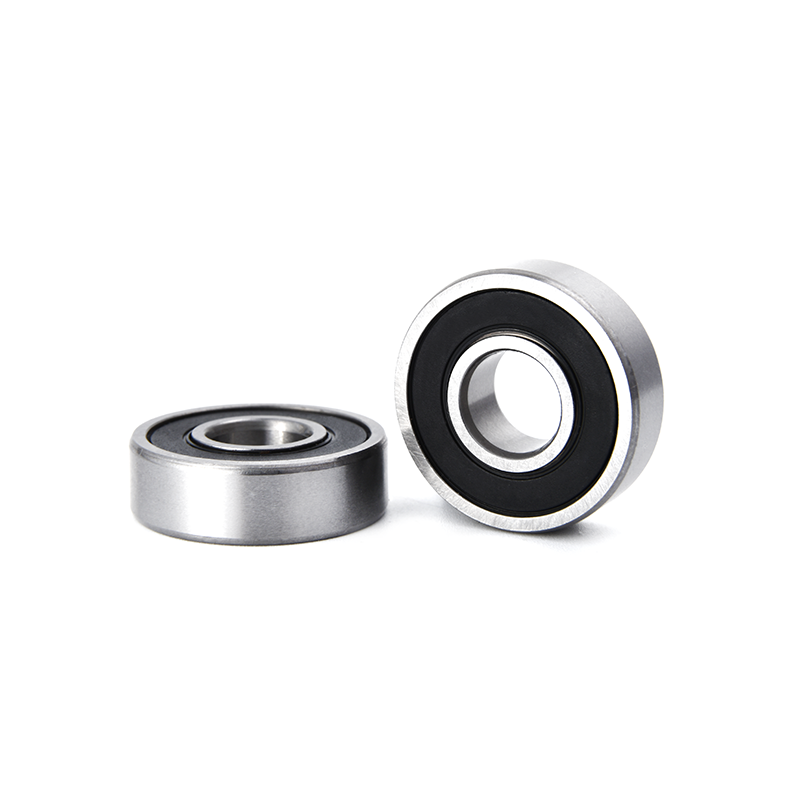
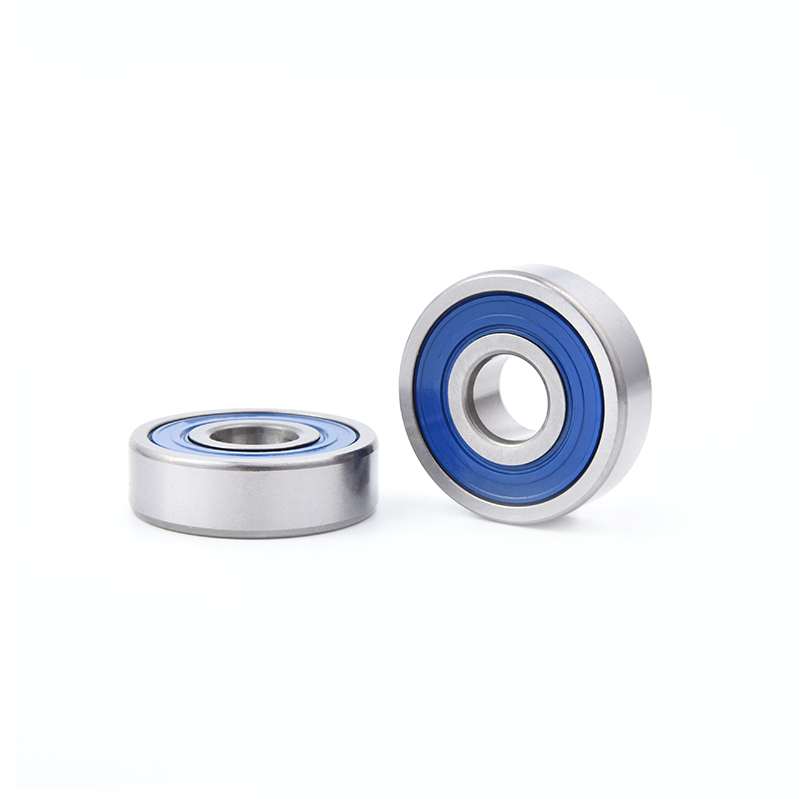
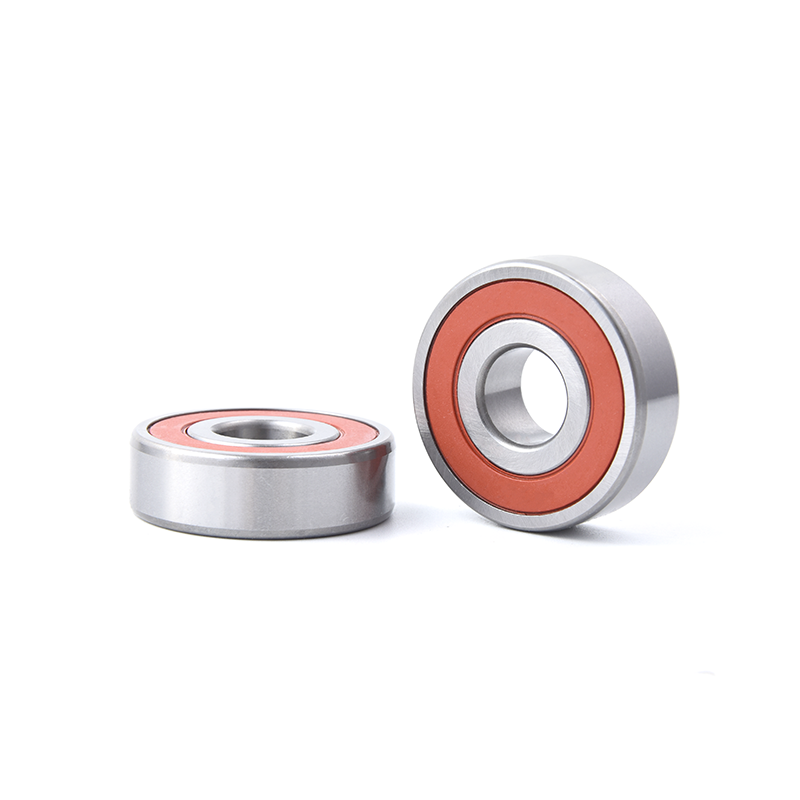
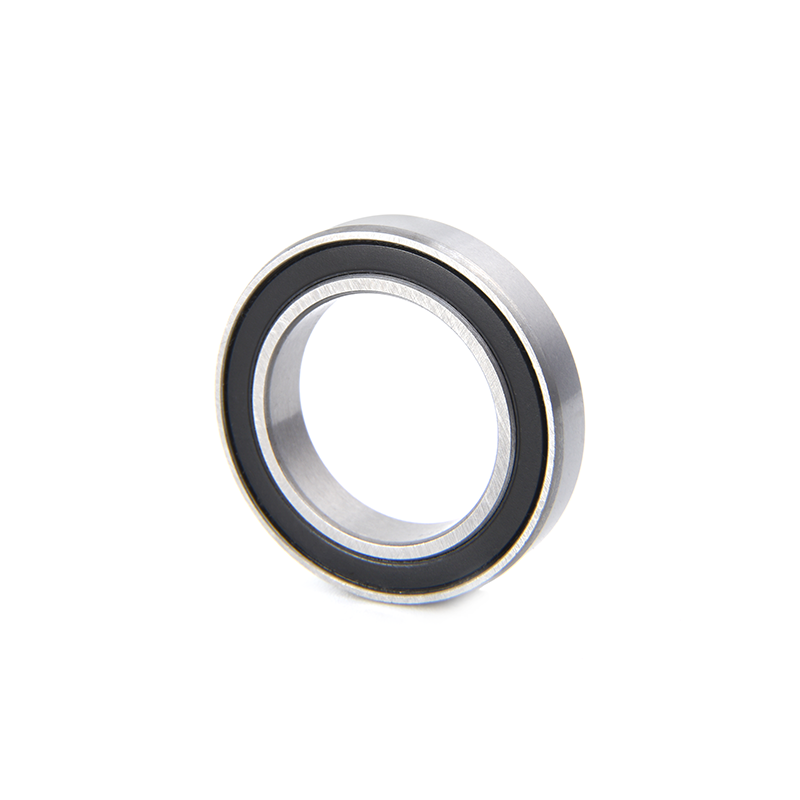
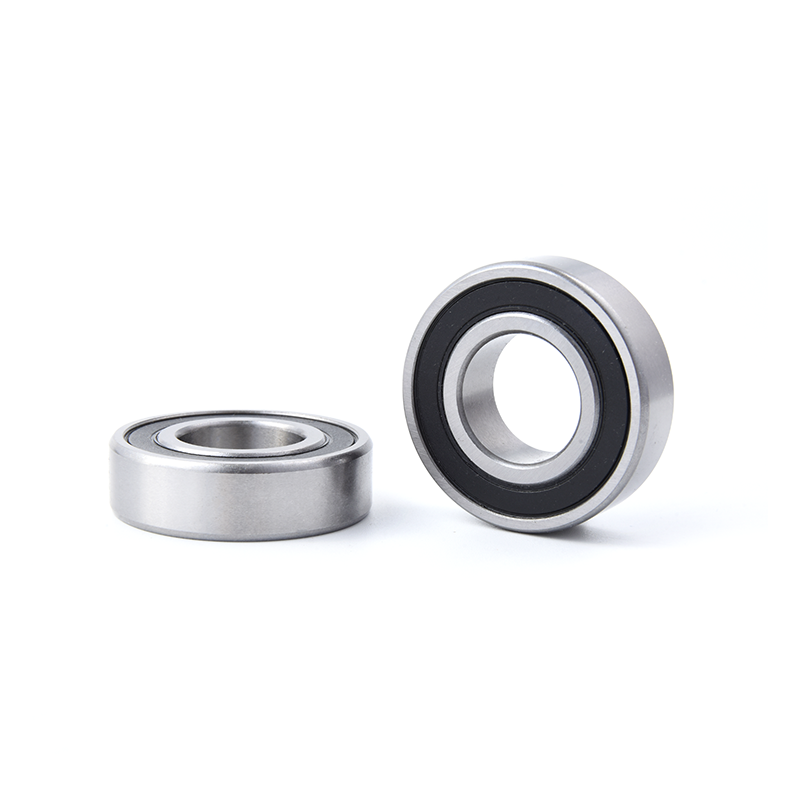
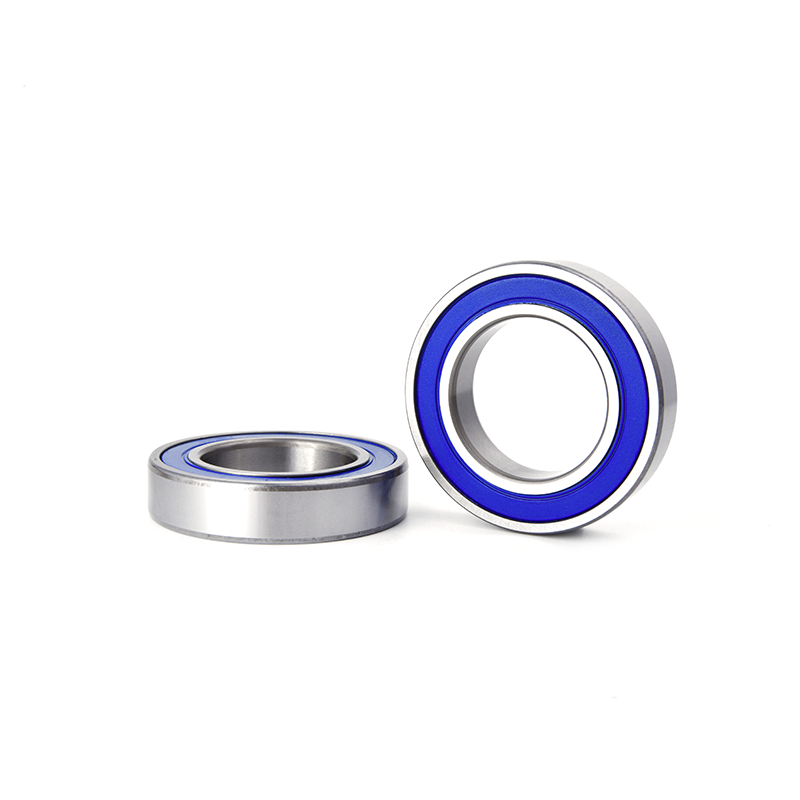
- 6205-2RS (also 6205-2RSH, 6205-DDU): Rubber contact seals on both sides. The most contamination-resistant standard 6205 variant. Pre-lubricated with grease and maintenance-free for typical service life. Standard for pumps, agricultural equipment, and any application with exposure to water, dust, or chemicals. NBR seal rated to 110°C; EPDM seal variants rated to 150°C.
- 6205-2RSL: Low-friction rubber seal variant. Uses a modified seal geometry with reduced lip contact force, lowering operating temperature and friction torque by 15–25% compared to standard 2RS — useful in energy-efficiency-sensitive applications or at higher speeds.
Internal Clearance Suffixes
- No clearance suffix (CN / Normal): Standard internal clearance, suitable for most ambient-temperature applications with normal interference fits on both rings.
- C3: Clearance group 3 — greater than normal. Required when the bearing inner ring will be heated above ambient by the shaft (e.g., electric motor rotors running at 80°C+), when heavy interference fits are used on the inner ring, or in applications where thermal expansion would otherwise preload the bearing excessively. C3 is the second most common 6205 variant after 2ZZ in industrial applications.
- C4: Clearance group 4 — greater than C3. Used in very high operating temperatures (120°C+) or extreme interference fit applications such as press-fit into heated housings.
- C2: Clearance group 2 — less than normal. Used where quiet running and minimal vibration are priorities at moderate temperatures, such as precision instruments or quiet electric motors.
Cage Material Suffixes
- No cage suffix: Standard pressed steel cage (most common, cost-effective, suitable for general applications)
- -TN9 / -TVH: Polyamide (nylon) cage — quieter running, lower mass, better performance at high speeds, limited to temperatures below 120°C
- -M: Machined brass cage — highest temperature tolerance (up to 200°C+), used in high-speed or high-temperature industrial applications
- -J: Pressed steel cage with riveted construction — used in heavy-duty or high-vibration applications
6205 Bearing Suffix Variant Comparison Table
The table below compares the most commonly ordered 6205 bearing configurations to help you select the right specification for your application without needing to cross-reference multiple catalogues.
| Part Number | Sealing | Lubrication | Max Speed (RPM) | Temp Range | Best Application |
| 6205 (Open) | None | External (oil or grease) | 13,000 | -30 to +120°C | Gearboxes with oil bath lubrication |
| 6205-ZZ | Both sides metal shield | Factory grease | 12,000 | -30 to +120°C | Electric motors, fans, household appliances |
| 6205-2RS | Both sides rubber contact seal | Factory grease | 9,000 | -30 to +110°C | Pumps, agriculture, washdown environments |
| 6205-2RS/C3 | Both sides rubber contact seal | Factory grease | 9,000 | -30 to +110°C | Hot running motors, heavy interference fits |
| 6205-ZZ/C3 | Both sides metal shield | Factory grease | 12,000 | -30 to +120°C | High-speed motors with elevated operating temp |
| 6205-2RSL | Low-friction rubber seal, both sides | Factory grease | 10,000 | -30 to +110°C | Energy-efficient motors, reduced heat generation |
| 6205-2RS-TN9 | Both sides rubber contact seal | Factory grease | 9,500 | -30 to +110°C | Quiet-running, low-vibration equipment |
Table 2: Comparison of common 6205 bearing suffix variants by sealing type, lubrication, speed limits, temperature range, and recommended application.
Materials and Internal Clearance Classes
Standard 6205 bearings use AISI 52100 chrome steel for all rolling contact surfaces, which provides the optimal balance of hardness (58–65 HRC after heat treatment), fatigue strength, and machinability for general industrial use. Specialty material options are available for specific operating environments.
Chrome Steel (Standard)
AISI 52100 (DIN 100Cr6) is the universal standard for 6205 bearing rings and balls. After through-hardening to 60–64 HRC, it offers excellent rolling contact fatigue life and good resistance to deformation under load. Maximum continuous operating temperature is 120°C for standard heat-stabilized bearings; bearings with HT (high-temperature) suffix treatment can operate up to 200°C with reduced dynamic load capacity.
Stainless Steel (6205 Variants)
Stainless steel 6205 bearings — typically designated 6205-2RS in 440C stainless steel — are used in food processing, pharmaceutical, marine, and chemical environments where corrosion resistance is required. The 440C stainless hardness of 58–60 HRC is slightly lower than chrome steel, resulting in dynamic load ratings approximately 20% lower (around 11.2 kN versus 14.0 kN for chrome steel). These bearings typically cost 2–4 times more than chrome steel equivalents.
Ceramic Hybrid 6205 Bearings
Hybrid 6205 bearings use chrome steel rings with silicon nitride (Si3N4) ceramic balls. Ceramic balls are 60% less dense than steel (reducing centrifugal forces at high speed), electrically non-conductive (preventing electrical erosion from variable-frequency drives), harder than steel (40% higher hardness, extending fatigue life), and compatible with dry-running or reduced-lubrication conditions. Hybrid 6205 bearings typically extend bearing service life by 2–5x in VFD-driven motors and achieve limiting speeds 30–50% higher than all-steel equivalents. Cost is typically 5–10x the chrome steel version.
Internal Clearance Selection
Internal radial clearance determines how the bearing responds to thermal expansion and interference fits. Selecting the wrong clearance group is one of the most common causes of premature bearing failure:
- C2 (reduced clearance): 6–19 microns radial clearance. Use for precision, low-noise applications at moderate temperatures with light interference fits.
- CN / Normal: 11–25 microns radial clearance. Correct choice for most standard applications at ambient temperatures with j5/k5/m5 shaft tolerances.
- C3 (greater clearance): 15–33 microns radial clearance. Required when operating temperature exceeds 70°C above ambient, with heavy interference fits (n5/p5), or in applications with significant temperature differentials between inner and outer rings.
- C4 (greatest standard clearance): 23–45 microns radial clearance. Used in extreme heat applications exceeding 150°C operating temperature or with very heavy press fits.
Lubrication: Open vs. Shielded vs. Sealed 6205 Bearings
Lubrication is the single most critical factor in 6205 bearing service life — approximately 36% of all premature bearing failures are attributable to inadequate or incorrect lubrication. The choice between oil and grease, and between open, shielded, and sealed configurations, should be driven by operating speed, temperature, contamination level, and maintenance access.
Grease Lubrication (Sealed and Shielded 6205)
Sealed and shielded 6205 bearings are factory-filled with grease at approximately 25–35% of free internal space — overfilling beyond 50% increases churning losses and heat generation, reducing bearing life. Standard factory grease is a lithium complex base grease with a viscosity of ISO VG 100–150 at 40°C and a service temperature range of -30°C to +120°C. For low-temperature applications (below -20°C), a synthetic polyalphaolefin (PAO) grease must be specified; for high-temperature applications above 120°C, a polyurea or perfluoropolyether (PFPE) grease is required.
Oil Lubrication (Open 6205)
Open 6205 bearings in oil bath or circulating oil systems achieve maximum speed capability (13,000 RPM) and excellent heat dissipation. The minimum required oil viscosity at operating temperature is 7 cSt for the 6205 at its standard operating conditions. For a bearing running at 3,000 RPM at 70°C operating temperature, an ISO VG 68 mineral oil is typically appropriate. Oil lubrication is preferred in gearboxes, high-speed spindles, and wherever heat must be actively removed from the bearing zone.
Re-lubrication Intervals for Open 6205 Bearings
For open or single-shielded 6205 bearings in grease-lubricated housings, re-lubrication intervals depend on speed and temperature. At 1,500 RPM and 70°C operating temperature, a grease re-lubrication interval of approximately 4,000–6,000 hours is typical. At 3,000 RPM and 90°C, this interval drops to 1,500–2,500 hours. Every 15°C rise in bearing temperature above the base calculation temperature halves the grease service life.
Common Applications of the 6205 Bearing
The 6205 bearing is one of the ten most-produced bearing sizes globally, with annual production estimated in the hundreds of millions of units, because the 25 mm shaft size it accommodates corresponds to one of the most common output shaft dimensions in fractional and integral horsepower electric motors.
- Electric Motors (most common application): The 6205-ZZ and 6205-2RS are the default drive-end and non-drive-end bearings in hundreds of millions of IEC frame 71, 80, and 90 motors — the motors driving pumps, compressors, fans, and conveyor systems worldwide. A typical 0.75 kW four-pole induction motor running at 1,450 RPM will have its 6205-ZZ/C3 bearings last 40,000–80,000 hours under normal load conditions.
- Agricultural Equipment: Tilling machines, seeders, baler drives, and irrigation pump assemblies widely use 6205-2RS bearings for their resistance to soil contamination, water ingress, and the variable load cycles typical of field machinery.
- Washing Machines and Appliances: The drum shaft of front-loading washing machines frequently uses a 6205-2RS as the inner drum bearing — one of the most common consumer appliance repair items, with 6205-2RS replacement bearings available at virtually every hardware and appliance parts outlet.
- Conveyor and Material Handling Systems: 6205 bearings are used in the head, tail, and snub pulley assemblies of light to medium belt conveyors, as well as in roller chain drives and idler assemblies.
- Water Pumps and Centrifugal Pumps: Both the impeller-side and motor-side bearings in small to medium centrifugal pump assemblies commonly use 6205-2RS in stainless steel housing units, benefiting from the bearing's combined radial and light thrust capability.
- Lawn and Garden Equipment: Lawn mower blade spindles, garden tractor transmissions, and deck spindle assemblies are major consumers of 6205-2RS bearings due to the outdoor operating environment and exposure to grass debris and moisture.
- Go-Karts and Small Recreational Vehicles: Axle and wheel hub assemblies in entry-level karts and mini-bikes commonly spec 6205-2RS for its compact dimensions, adequate load rating for light vehicle weights, and wide availability as a service part.
- HVAC and Refrigeration Equipment: Blower fan shafts, compressor auxiliary drives, and condenser fan motor assemblies use 6205-ZZ or 6205-2RS depending on whether the unit is in a sealed enclosure or exposed to outdoor ambient conditions.
How to Install and Replace a 6205 Bearing Correctly
Incorrect installation is responsible for approximately 16% of premature bearing failures — most caused by applying mounting force through the rolling elements rather than directly to the ring being pressed.
Shaft and Housing Fit Selection
For a standard rotating inner ring / stationary outer ring application (the most common configuration):
- Inner ring (shaft) fit: k5 or m5 for normal loads; j5 for light loads or frequent removal requirements. The 6205 bore of 25 mm with a k5 shaft tolerance gives an interference of 2–13 microns — sufficient to prevent inner ring creep at normal loads.
- Outer ring (housing) fit: H7 for standard housing bores — this provides a slight clearance (0–21 microns) that allows the outer ring to align in the housing without binding, while the friction of the fit prevents rotation.
Installation Steps
- Clean the shaft and housing bore thoroughly — any debris between the bearing ring and its seat creates stress concentrations that initiate fatigue cracks at the contact surface.
- Inspect shaft and housing dimensions with a micrometer. The shaft should measure 25.002–25.013 mm (k5 tolerance); the housing bore should measure 52.000–52.030 mm (H7 tolerance).
- Use an induction heater or oil bath to heat the bearing to 80–100°C before mounting on the shaft — this expands the bore by approximately 0.03 mm, allowing hand-fitting onto a k5 shaft. Never use an open flame, which creates uneven heating and thermal damage.
- Apply mounting force only to the ring being fitted. To press the inner ring onto the shaft, use a mounting sleeve or drift that contacts only the inner ring face. Never strike the outer ring to seat the inner ring — this loads the balls and creates brinelling (false brinell marks) on the raceways.
- Drive the bearing fully home until it seats against the shaft shoulder. A correctly seated bearing produces a clear change in percussion sound — from a hollow ring to a solid thud — when tapped with a hammer through the mounting sleeve.
- Allow the bearing to cool to ambient temperature before applying load. A bearing mounted hot and immediately loaded under interference can experience temporary preload exceeding its rated capacity during the thermal transition.
Common 6205 Bearing Failure Modes and How to Identify Them
Identifying the failure mode from the condition of a removed 6205 bearing is the most reliable way to determine the root cause and prevent recurrence in the replacement bearing.
- Fatigue spalling: Flaking or pitting of the raceway surface, typically appearing as crater-like depressions 0.5–5 mm in diameter. Indicates normal end-of-life if the bearing reached its rated L10 life; indicates overload if premature. Characterized by increasingly loud, irregular noise before final failure.
- Contamination damage: Fine scoring marks and gray/black discoloration of all internal surfaces — the "sandpaper" appearance of raceways indicating abrasive particles have circulated through the contact zone. Caused by seal failure, incorrect open bearing selection for a contaminated environment, or contamination introduced during installation.
- Electrical erosion (fluting): Regularly spaced circumferential grooves (fluting) 0.1–0.5 mm deep on the inner or outer raceway. Classic signature of stray electric current passing through the bearing, common in VFD-driven motors without shaft grounding rings. The solution is hybrid ceramic ball 6205 bearings, which interrupt the current path.
- Lubrication failure: Discolored (dark brown or black), dried grease and significant heat-tinting (blue or gold coloration) of the rings. Indicates the bearing ran out of effective lubrication. Caused by grease degradation, over-temperature operation that cooked the grease, or grease wash-out in a wet environment with an open or shielded (rather than sealed) bearing.
- Brinelling / false brinelling: Evenly spaced, ball-diameter-sized indentations in the raceway at the ball pitch spacing. True brinelling is caused by static overload exceeding the static load rating (7.8 kN for 6205). False brinelling shows red-brown fretting debris and is caused by micro-vibration while the bearing is stationary — common in transportation damage or standby motors subject to building vibration.
- Inner ring creep: Polished, circumferentially scored outer surface of the inner ring bore and mating shaft, indicating the inner ring rotated on the shaft rather than with it. Caused by an undersized shaft or too-light an interference fit — prevent by verifying shaft diameter meets k5 tolerance before fitting.
How to Select the Right 6205 Bearing Variant for Your Application
Selecting the correct 6205 variant requires answering five questions in sequence — skipping any one of them risks specifying a bearing that fails prematurely despite being nominally the same size.
- What is the contamination level? Clean environment with enclosed housing: 6205-ZZ is sufficient. Exposure to water, dust, soil, or chemicals: specify 6205-2RS. Food, pharmaceutical, or corrosive chemical contact: specify stainless steel 6205-2RS.
- What is the operating speed? Below 9,000 RPM: any variant is acceptable. Above 9,000 RPM: avoid 2RS contact seals; use 6205-ZZ or open 6205. Above 12,000 RPM: open 6205 with oil lubrication or specify a polyamide cage (TN9) variant for reduced centrifugal cage stress.
- What is the operating temperature? Up to 120°C: standard chrome steel with normal or C3 clearance. 120–200°C: specify high-temperature (HT) heat-stabilized rings with brass cage and PFPE grease. Above 200°C: full ceramic or specialty bearing required — a standard 6205 is not applicable.
- Is there electrical current risk? If the bearing is in a VFD-driven motor or any application with stray current: specify a hybrid ceramic ball 6205. This eliminates fluting damage and typically increases bearing life by 3–5x in these applications.
- What are the interference fit conditions? Standard press fit with moderate operating temperature: specify CN (normal) clearance. Heavy interference fit or operating temperature exceeding 70°C above ambient: specify C3 clearance to prevent thermally-induced preload from reducing fatigue life.
Frequently Asked Questions About the 6205 Bearing
Q: What is the difference between 6205-ZZ and 6205-2RS?
The 6205-ZZ has non-contact metal shields that retain grease and exclude coarse contamination but leave a small running gap between the shield and the inner ring. The 6205-2RS has rubber lip seals that make contact with the inner ring, providing superior exclusion of fine particles, dust, and moisture. The trade-off is that contact seals generate slightly more friction and limit maximum speed to 9,000 RPM versus 12,000 RPM for the ZZ. For motors in clean environments, ZZ is preferred for lower running temperature; for outdoor, wet, or dusty applications, 2RS is the correct choice.
Q: Is a 6205 bearing the same as a 6205-2RS bearing?
The bore, outer diameter, and width are identical (25 x 52 x 15 mm), and either will physically fit the same shaft and housing. However, the 6205-2RS includes rubber seals and factory grease — it is maintenance-free for its service life. The open 6205 has no seals or shields and requires an external lubrication system. They are interchangeable dimensionally but not functionally: installing an open 6205 in an application designed for a 2RS without providing equivalent external lubrication and contamination protection will result in premature failure.
Q: Why do I need C3 clearance in my electric motor 6205 bearing?
Electric motor rotors generate heat during operation, which expands the inner ring faster than the outer ring (which is cooled by the frame). This thermal differential reduces the bearing's internal clearance during operation. If a CN (normal) clearance bearing is used, the thermal reduction can consume all available clearance and create a preloaded condition — dramatically increasing contact stresses and reducing fatigue life. C3 clearance starts with 15–33 microns of extra room, which is consumed by the thermal expansion, leaving the operating clearance near zero to slightly positive — the optimal condition for load distribution and fatigue life.
Q: How do I know if my 6205 bearing needs replacement?
The most reliable early indicator is elevated noise — a healthy 6205 bearing in normal operation produces a smooth, continuous hum. Irregular clicking, grinding, or a high-pitched squealing indicates raceway damage, contamination, or lubrication failure. Elevated temperature at the bearing housing (more than 30–40°C above ambient without a corresponding increase in load) indicates lubrication breakdown or internal damage generating excess friction. Vibration analysis using a handheld vibration meter can detect inner race defect frequencies, outer race defect frequencies, and ball spin frequencies specific to the 6205 geometry before audible symptoms develop — enabling planned replacement rather than breakdown maintenance.
Q: Can I use a 6205 bearing for both radial and axial loads?
Yes — the deep groove design of the 6205 allows it to carry both radial and moderate axial (thrust) loads simultaneously. The maximum axial load a 6205 can carry as a fraction of the radial load is approximately 40–50% of the applied radial load in typical operating conditions. For purely axial loads or for applications where axial loads exceed 50% of the radial component, an angular contact ball bearing or a thrust bearing should be specified instead. The 6205's static axial load rating is generally considered to be equal to its static radial load rating of 7.8 kN for occasional axial loading.
Q: What is the expected L10 service life of a 6205 bearing?
L10 life is the number of operating hours at which 90% of a population of identical bearings under identical conditions are expected to still be in service. For a 6205 bearing at its full dynamic load rating of 14.0 kN and 3,000 RPM, the L10 life is approximately 500 hours — this represents maximum rated load, which is rarely the actual operating condition. In a typical fractional horsepower electric motor running at 50% of rated load capacity and 1,450 RPM, the L10 life of the 6205 is approximately 80,000–150,000 hours, equivalent to 9–17 years of continuous operation. This is why 6205 bearings in properly maintained motors often outlast the insulation and winding systems of the motor itself.
Key takeaway: The 6205 bearing is a standardized, globally interchangeable 25 x 52 x 15 mm deep groove ball bearing with a 14.0 kN dynamic load rating — but choosing the correct suffix variant matters far more than the base number. Select the sealing type based on your contamination environment, the clearance class based on your operating temperature and interference fit, the cage material based on your speed and temperature requirements, and the material grade based on corrosion and electrical current exposure. Matching all five parameters to your actual operating conditions is what separates a bearing that lasts its full rated life from one that fails within months.



Contact Us