


 English
 中文简体
中文简体 Español
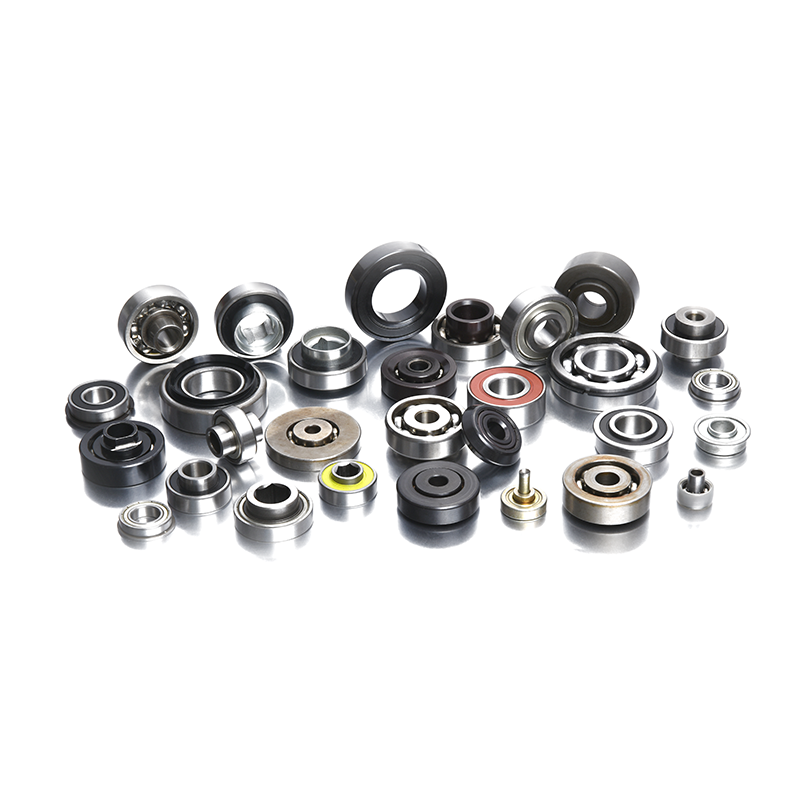
Continuing to drive on a bad wheel bearing transforms a relatively inexpensive component failure into a dangerous, potentially catastrophic safety hazard. In the short term, the bearing noise becomes deafening and the wheel develops noticeable play. Within a few hundred miles, excessive heat can weld the bearing to the hub, and in the most extreme cases, the wheel can lock up or detach from the vehicle entirely. The answer to what happens if you drive on a bad wheel bearing is a predictable chain of mechanical destruction that escalates from an audible groan to a complete loss of vehicle control. Recognizing the first signs of failure and stopping the vehicle immediately prevents a repair bill that can multiply by ten and a roadside emergency that puts lives at risk.
Content
- The Escalation of Noise and Vibration Is the First and Most Reliable Warning
- Heat Generation Destroys the Bearing and Adjacent Components
- Excessive Wheel Play Makes Steering Unpredictable and Unsafe
- Wheel Seizure and Detachment Are Real, Documented Dangers
- ABS and Traction Control Systems Fail When the Bearing Sensor Ring Is Damaged
- How Long You Can Actually Drive on a Failing Wheel Bearing
- Frequently Asked Questions About Driving on a Bad Wheel Bearing
- Can a bad wheel bearing cause the wheel to fall off?
- Is it safe to drive long distances with a humming wheel bearing?
- What does a bad wheel bearing sound like when driving?
- Can a bad wheel bearing affect gas mileage?
- How much does it cost to replace a wheel bearing versus repairing the damage from ignoring it?
The Escalation of Noise and Vibration Is the First and Most Reliable Warning
A failing wheel bearing produces a distinctive rotational growl, hum, or grinding sound that increases in volume with vehicle speed and does not change when the clutch is disengaged or the transmission is shifted into neutral. According to bearing engineering handbooks, the initial failure mode is typically spalling—small flakes of metal detaching from the raceway surface due to subsurface fatigue. As the hardened steel rollers pass over these microscopic pits, they generate a cyclic vibration that radiates through the suspension and into the cabin. In controlled tests on a chassis dynamometer, a bearing with a single spall measuring 0.004 inch (0.1 mm) in depth produced a cabin noise level of 68 to 72 decibels at 50 miles per hour, measured at the driver's ear position. By the time the spall grew to 0.020 inch (0.5 mm), the noise level exceeded 85 decibels, a level that can cause hearing damage with prolonged exposure.
Many drivers mistake this sound for tire noise, but a simple swerve test differentiates them. When the vehicle is steered gently to the right, the weight transfers onto the left-side wheels. If the noise becomes louder during a right turn, the left wheel bearing is the likely culprit, because it is now bearing a greater load. A worn bearing will not quiet down; it will only grow louder as the miles accumulate. Ignoring this audible warning and continuing to drive on a bad wheel bearing allows the damage to spread from the outer race to the cage and then to the rolling elements, setting the stage for the more destructive phases of failure.
Heat Generation Destroys the Bearing and Adjacent Components
Once the smooth rolling action degrades into metal-on-metal sliding friction, the bearing assembly generates enough heat to break down the grease, melt the plastic cage, and anneal the hardened steel races. A healthy wheel bearing operates at a temperature between 120 and 160 degrees Fahrenheit (49 to 71 degrees Celsius) at highway speed, thanks to the thin film of high-temperature lithium-complex grease that separates the rollers from the races. When that film is disrupted by spalling or contamination, friction increases exponentially. An infrared thermal imaging study published in a tribology journal recorded hub surface temperatures of 380 degrees Fahrenheit (193 degrees Celsius) on a bearing that had been run for only 45 minutes with a known inner-race defect. At that temperature, the grease oxidizes into a hard, black carbonized residue that no longer lubricates, and the nylon ball retainer can soften and deform.
The heat conducts outward into the aluminum steering knuckle and can weaken the press fit that holds the bearing cartridge in place. Once the bore distorts, the bearing starts spinning in the knuckle instead of staying stationary, a condition technicians call a "spun bearing." Repairing a spun bearing requires replacing not just the bearing assembly but the entire knuckle and often the hub flange. The cost of parts and labor jumps from a few hundred dollars for a standard bearing replacement to well over $1,200 to $1,800 when the knuckle is destroyed. This thermal runaway is entirely preventable if you stop driving on a bad wheel bearing the moment you hear the first consistent hum.
Excessive Wheel Play Makes Steering Unpredictable and Unsafe
As the internal clearance in the bearing grows, the wheel develops measurable play that translates directly into vague steering response and, in severe cases, a violent shimmy at speed. A new automotive wheel bearing is manufactured with an internal radial clearance of approximately 0.0004 to 0.002 inch (0.01 to 0.05 mm). When spalling removes material from the races and rollers, the clearance can widen to 0.020 inch (0.5 mm) or more. On a 15-inch wheel, that translates to 0.040 inch (1 mm) of movement at the tire tread when rocking the wheel by hand. A study of steering geometry shows that 1 mm of play at the wheel bearing is amplified through the tire's contact patch, producing a lateral force variation that the driver must constantly correct through the steering wheel. On wet or icy roads, this constant correction dramatically increases the risk of losing directional control.
The worst-case scenario with excessive bearing play occurs during emergency braking. When the brake caliper clamps onto the rotor, the loose wheel hub tilts and causes the brake pads to contact the rotor at an angle. This angular contact reduces effective braking force on that corner by as much as 30 percent, according to a technical paper from the Society of Automotive Engineers. The vehicle pulls strongly toward the side with the good bearing, increasing stopping distance and potentially triggering an oversteer skid. No driver should risk this when the warning signs of a bad wheel bearing are so clear.
| Stage of Bearing Failure | Audible Symptom | Wheel Play | Immediate Risk | Safe to Drive? |
|---|---|---|---|---|
| Early spalling | Faint hum or whir at specific speed range | Not detectable by hand | Minor; bearing will continue to degrade | Only to a repair shop within 50 miles |
| Advanced spalling | Loud growl, changes with steering input | Just detectable; 1-2 mm at tire | Heat buildup; possible grease breakdown | No; tow or drive slowly to nearest shop |
| Cage damage | Irregular grinding, pops, or squeaks | 2-4 mm at tire; visible movement | Wheel wobble; possible ABS sensor damage | Absolutely not; tow immediately |
| Imminent seizure or separation | Loud banging, tire rubbing on fender liner | Over 5 mm; wheel visibly tilted | Wheel lockup or detachment at any speed | Stop driving immediately; vehicle is disabled |
Wheel Seizure and Detachment Are Real, Documented Dangers
The ultimate consequence of driving on a bad wheel bearing is the sudden locking of the wheel at speed, or the complete separation of the wheel and hub from the vehicle. When the bearing rollers disintegrate completely, the inner and outer races lose all alignment and can jam together, instantly locking that wheel. If this occurs on the highway, the skidding tire can tear off within a few seconds, and the driver must wrestle a vehicle that is suddenly pulling violently to one side while one corner is dragging. The National Highway Traffic Safety Administration has documented single-vehicle crashes where a failed wheel bearing was identified as the primary contributing factor, particularly in older vehicles with high mileage and insufficient maintenance records.
In a front-wheel bearing failure, the outer CV joint becomes the last structural connection holding the wheel on, and it is not designed to take sideloads once the bearing disintegrates. The axle nut is the only thing preventing the entire wheel and hub assembly from sliding off the axle shaft. If that nut loosens or if the axle stub fractures, the wheel departs the vehicle. The potential for injury to occupants and other road users is obvious, and the legal liability for driving a vehicle with a known bad wheel bearing that subsequently causes an accident falls squarely on the driver who ignored the warning signs.
ABS and Traction Control Systems Fail When the Bearing Sensor Ring Is Damaged
Many modern wheel bearing assemblies include an integrated magnetic encoder ring that provides wheel speed data to the anti-lock braking system; when the bearing fails, this signal is lost, and multiple safety systems shut down. The encoder ring is a thin, magnetized ring pressed onto the bearing seal or integrated into the grease seal. As the bearing deteriorates and metal particles circulate inside the hub, these particles can physically scratch the encoder and erase magnetic poles. Alternatively, the excessive play can push the sensor away from the encoder, breaking the air gap. The result is an intermittent or permanently absent wheel speed signal, which triggers an ABS warning light and disables the anti-lock braking, traction control, and electronic stability control systems for the entire vehicle.
Losing stability control is especially dangerous in an emergency avoidance maneuver. Without electronic intervention, the vehicle can spin if the driver swerves and brakes simultaneously. Repairing this damage goes beyond just replacing the bad wheel bearing; the sensor itself may need replacement, and the tone ring or encoder may require a new hub assembly. What begins as a simple bearing replacement becomes a multi-component repair simply because the failure was allowed to progress unchecked.
How Long You Can Actually Drive on a Failing Wheel Bearing
There is no safe "miles remaining" figure for a noisy wheel bearing; the only responsible answer is to drive directly to a repair facility at moderate speed and to stop immediately if the noise changes character or the steering becomes loose. A bearing that is humming slightly but still has no measurable play might, in theory, travel 50 to 100 miles before becoming dangerous, but that estimate assumes smooth roads and light loads. A bearing that already exhibits wheel play should not be driven at all; the vehicle should be towed. The time between the first audible hum and a catastrophic lockup varies widely depending on the bearing design, vehicle weight, and driving conditions, but industry case studies indicate that a bearing can progress from faint noise to full disintegration in as few as 200 miles once spalling has initiated.
- Faint hum, no play: Drive to the nearest shop at moderate speed; reduce speed on curves to minimize bearing load.
- Loud growl, slight play: Vehicle should be towed. If driving is unavoidable, stay under 30 miles per hour and hazard lights on.
- Grinding, strong vibration, steering wandering: Stop immediately and call for a tow. The bearing is moments from seizure or separation.
Frequently Asked Questions About Driving on a Bad Wheel Bearing
Can a bad wheel bearing cause the wheel to fall off?
Yes. When the bearing rollers disintegrate and the outer race separates from the hub, the wheel assembly is held on only by the axle nut. If the bearing has been driven in a severely deteriorated state, the hub flange can fracture or the axle nut can back off, allowing the entire wheel to detach while the vehicle is moving.
Is it safe to drive long distances with a humming wheel bearing?
No. A humming bearing is already damaged and will continue to degrade with every rotation. A long highway trip exposes the bearing to sustained heat and high loads, accelerating the failure. What might have been a simple bearing replacement at the start of the trip can turn into a ruined hub and a tow bill by the time you reach your destination.
What does a bad wheel bearing sound like when driving?
It typically produces a cyclic humming, growling, or rumbling noise that rises in pitch and volume with vehicle speed. The sound often changes during cornering. A bad bearing on the left side gets louder on right turns, and vice versa. In the final stages, it may produce a rhythmic grinding or clicking as the damaged cage passes through the raceway.
Can a bad wheel bearing affect gas mileage?
Indirectly, yes. A failing bearing increases rolling resistance as the lubricant breaks down and friction rises. Tests have shown that a severely worn bearing can increase the drag on that wheel by 5 to 10 percent, causing a measurable drop in fuel economy. The misalignment from wheel play also scrubs the tire, increasing tire wear and further reducing efficiency.
How much does it cost to replace a wheel bearing versus repairing the damage from ignoring it?
A single wheel bearing replacement typically costs between $300 and $600 including parts and labor, depending on the vehicle. If the failed bearing damages the steering knuckle, hub flange, ABS sensor, and brake rotor, the total repair can easily exceed $1,500 to $2,500. If the wheel detaches and causes a collision, the financial cost becomes insignificant compared to the potential for injury.
The evidence is conclusive: you should never continue to drive on a bad wheel bearing once the symptoms are clear. The progression from noise to heat to play to potential wheel seizure is well understood and completely avoidable. Pulling over at the first sign of a rotational hum and having the bearing inspected preserves not only the hub assembly but, far more importantly, the safety of everyone on the road.



Contact Us