


 English
 中文简体
 Español
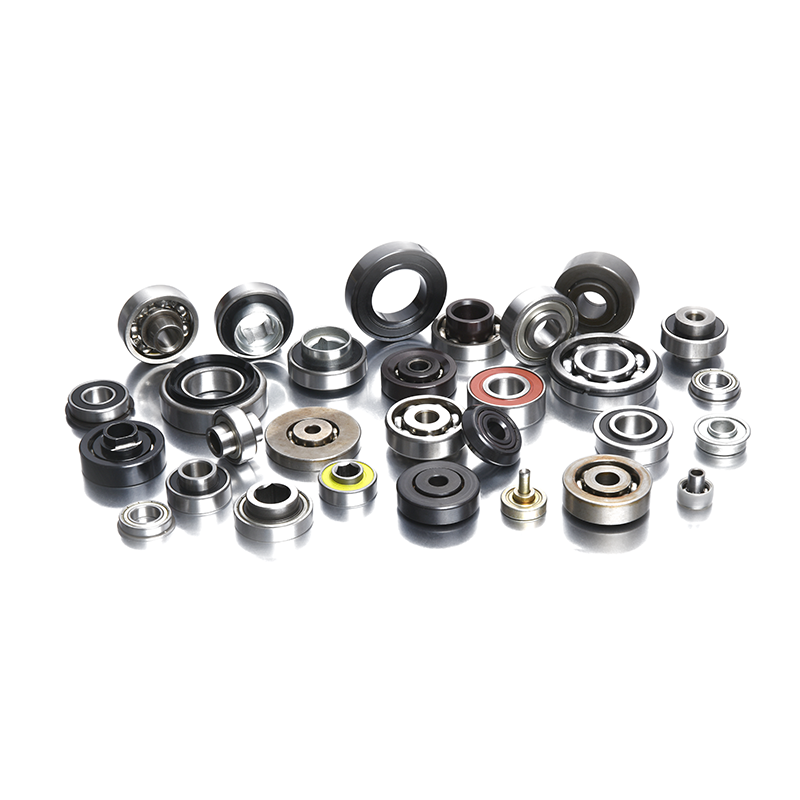
A deep groove ball bearing that fails inside its first 1,000 hours is rarely a bearing problem. It is usually a fitting problem. Drive a 6205 onto a shaft by hitting the outer ring and the mounting force travels through the balls into the raceways, leaving brinelling marks that show up as noise long before the grease is due for replacement.
So what belongs in a mounting kit? Bearing mounting tools fall into four working families: force tools (arbor presses, hydraulic presses, fitting tubes and sleeves), heat tools (induction heaters, oil baths and ovens), drive and impact tools (dead-blow hammers, impact rings and hydraulic nuts), and removal tools (two-jaw and three-jaw pullers, blind pullers and slide hammers). Add a dial indicator, a feeler gauge and a contact thermometer, and you can mount and verify almost any standard bearing correctly.
The rule that ties them together is short: apply force only to the ring that carries the interference fit, stay under the bearing temperature limit, and confirm the result with a measurement instead of a feeling.
Content
- What Counts as a Bearing Mounting Tool?
- Cold Mounting: Presses, Fitting Tubes and Sleeves
- Hot Mounting: Induction Heaters and Temperature Limits
- Removal Tools: Pullers, Blind Pullers and Hydraulic Nuts
- Matching the Tool to the Fit and the Bore Size
- Five Mounting Mistakes That Shorten Bearing Life
- How the Bearing Itself Changes the Tool You Need
- FAQ: Bearing Mounting Tools in Practice
What Counts as a Bearing Mounting Tool?
A bearing mounting tool is any device that seats a bearing with the right force path, temperature and alignment. Your existing shop press already qualifies, provided you have the correct adapter for the bore in front of you.
| Tool family | Best suited to | Typical bore range | Failure it prevents |
|---|---|---|---|
| Arbor press and fitting tube | Cold mounting, light to medium fits | 10 to 80 mm | Brinelling caused by hammer blows |
| Hydraulic press and fitting sleeve | Cold mounting, heavier interference | 30 to 150 mm | Cocked, misaligned seating |
| Induction heater | Hot mounting, medium and large bearings | 50 to 500 mm | Excess force and damaged seats |
| Oil bath or oven | Hot mounting, low volume, simple parts | Any | Uneven, uncontrolled heating |
| Hydraulic nut with oil injection | Tapered and heavy interference fits | 100 mm and above | Galling on tapered seats |
| Two-jaw or three-jaw puller | Dismounting outer rings from housings | 10 to 100 mm | Scoring the housing seat |
| Blind puller or slide hammer | Bearings in blind or shouldered housings | 10 to 50 mm | Pulling the inner ring through the balls |
The message from the table is that the adapter matters more than the machine. A modest arbor press with a correctly sized fitting tube outperforms a large hydraulic press used with a length of pipe.
Cold Mounting: Presses, Fitting Tubes and Sleeves
For bores up to roughly 80 mm and ordinary interference fits, a press with the correct fitting tube is the fastest and safest method, and it costs far less than heating equipment.
Two details decide whether the press helps or harms. The force must travel through the ring that is actually tight: with an interference fit on the inner ring, the tube presses on the inner ring face; with a housing fit, it presses on the outer ring. The tube face must also be flat, parallel and wide enough to cover the ring shoulder without touching the cage, shield or seal.
Sizing is where workshops cut corners. A tube that is too narrow concentrates stress on a small band of the ring and can tilt the bearing; one that is too wide presses the cage. Check the boundary dimensions on the technical data page for the exact series before machining a tube set.
A plain hammer is not a mounting tool. A dead-blow hammer with a proper fitting sleeve is acceptable for small bearings with light fits, and it is often the only option on site, but the impact must still land squarely on the tight ring.
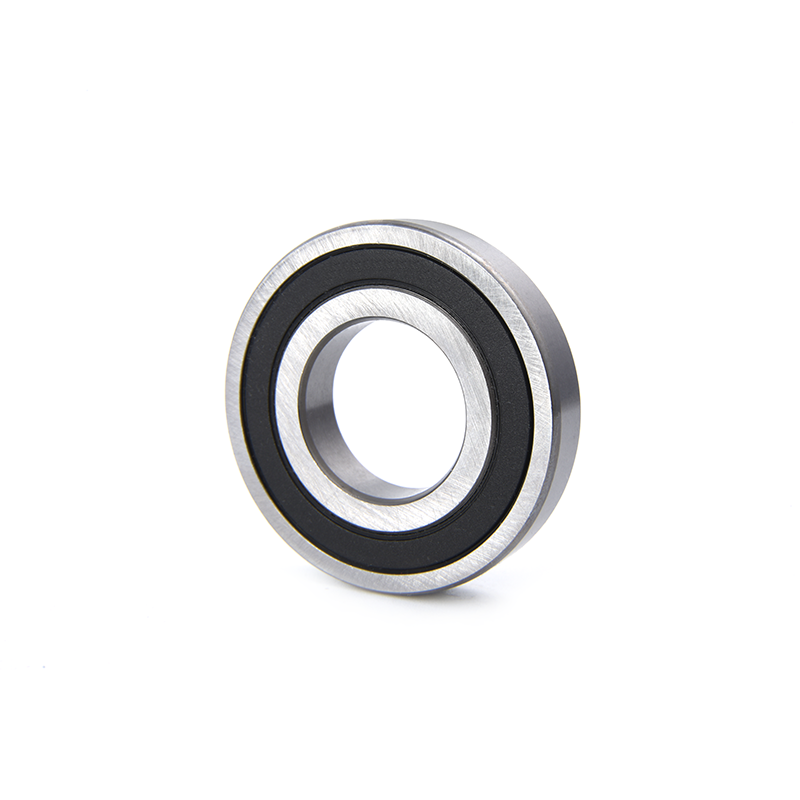
This is the working environment of most 60 series and 62 series bearings: general industrial duty with j5 to k5 shaft fits, where one well-made tube set covers the majority of routine mounting jobs.
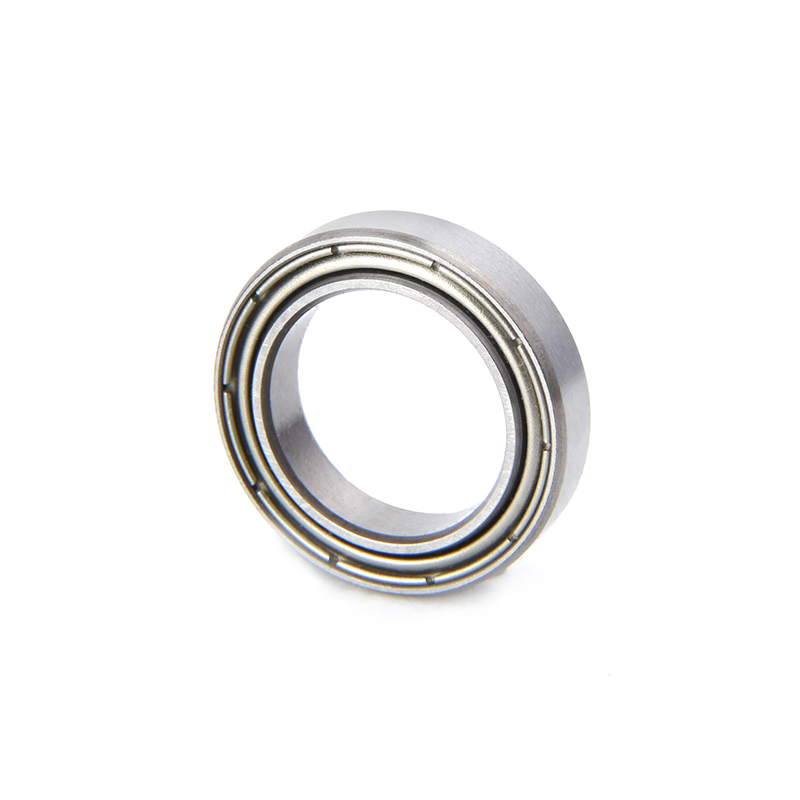
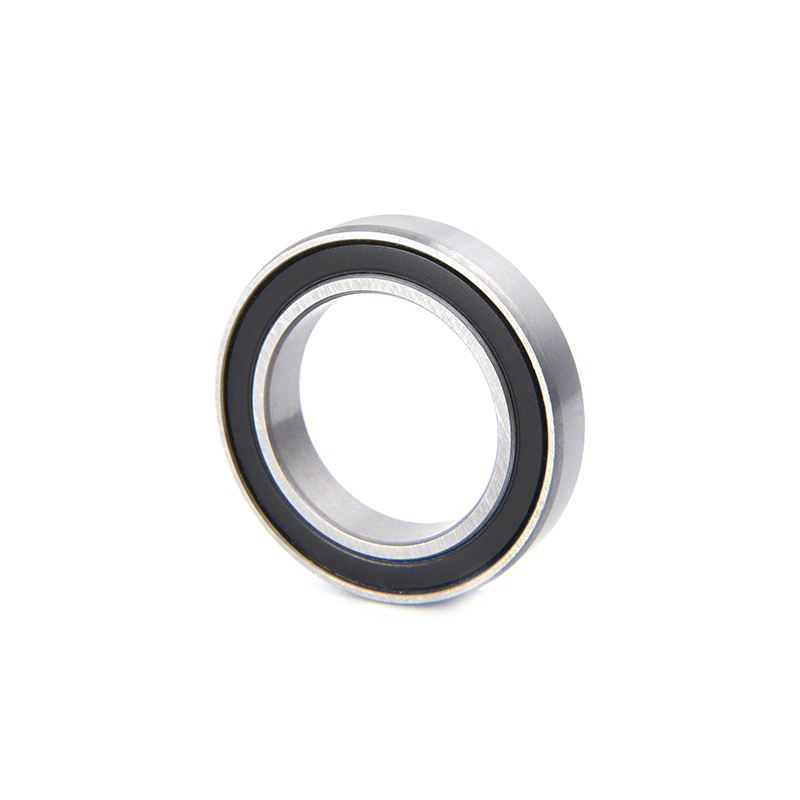
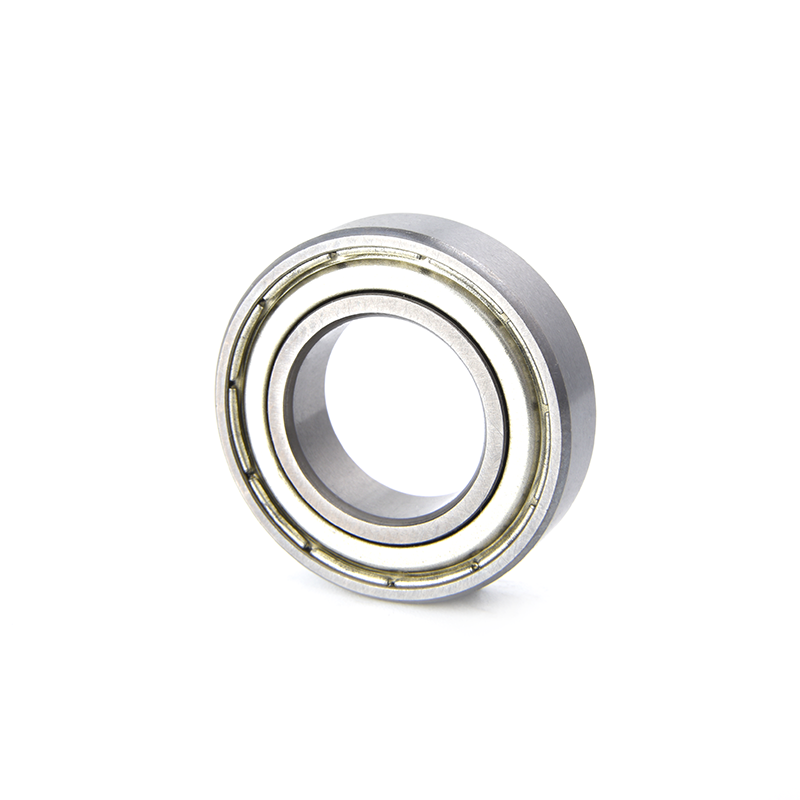
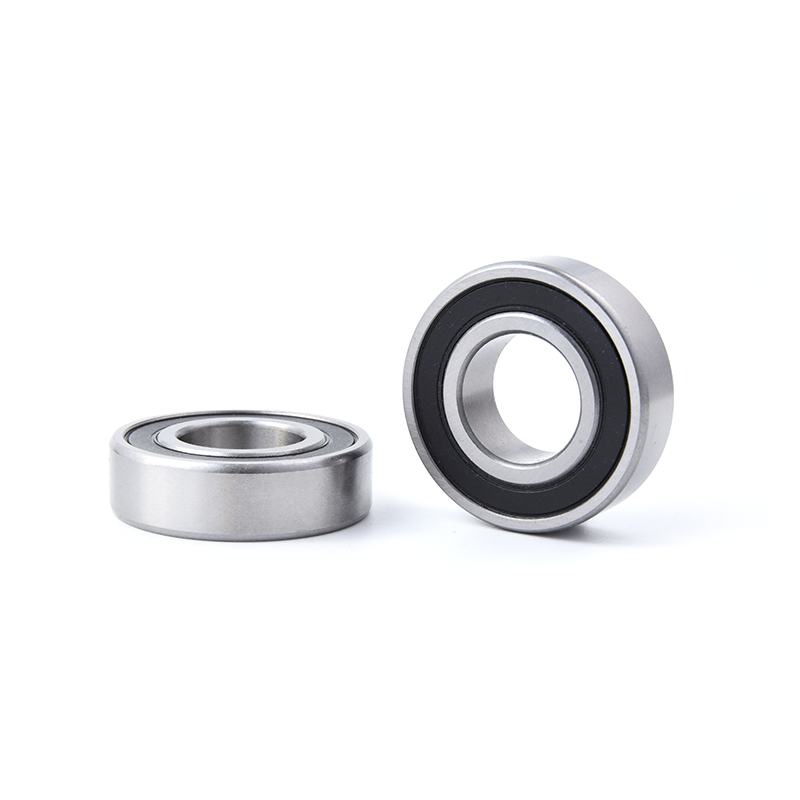
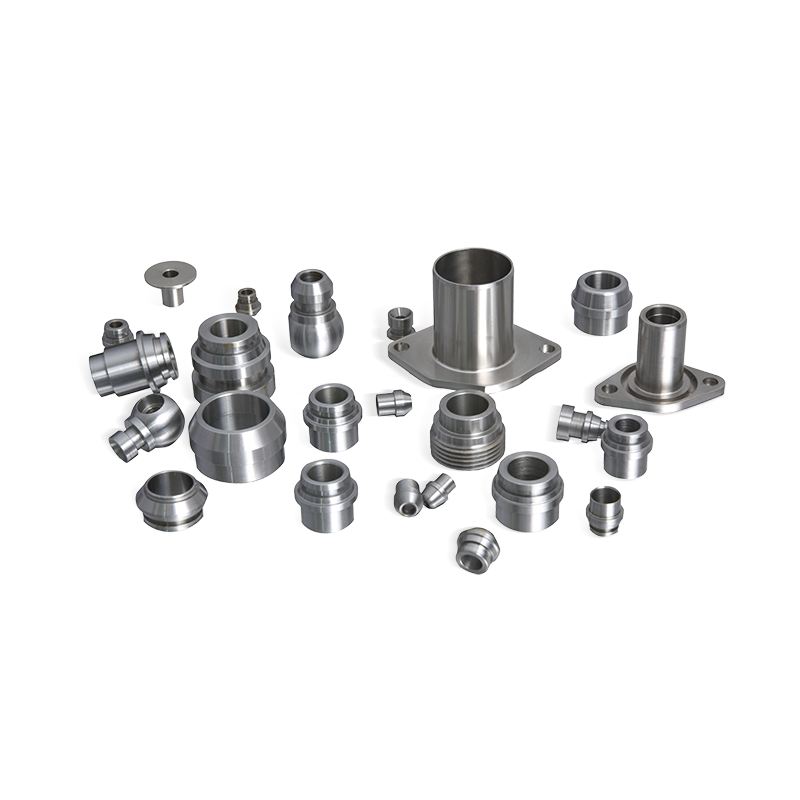 OEM Deep Groove Ball Bearing 60 SeriesCategory listing 60-series deep groove ball bearings with GCr15 rings, multiple seals, accuracy grades and load/speed data for routine industrial mounting.View Product →
Hot Mounting: Induction Heaters and Temperature Limits
Heat is the right tool when cold mounting would demand excessive force, which in practice means fits beyond roughly 0.05 mm interference or bores above 100 mm.
The arithmetic is simple. Bearing steel expands by about 0.00115 percent of its diameter per degree Celsius, so 0.05 mm of interference on a 100 mm bore needs roughly a 45 degrees C rise, plus a 20 to 30 degrees C working margin. The target usually lands near 70 to 90 degrees C, comfortably inside the safe range.
That range has limits. Standard bearings should not exceed 120 degrees C, and sealed or pre-greased bearings should stay at or below 80 degrees C so that grease and seal elastomer survive. Induction heaters reach the target quickly and evenly, and most units hold a set temperature. An oven or oil bath handles low volumes but heats slowly, and an oil bath leaves residue that must be removed before the bearing goes into service.
Never use an open flame, a hot plate or a heat gun. Local overheating alters the temper of the raceway, and the damage is invisible at the moment of mounting.
Removal Tools: Pullers, Blind Pullers and Hydraulic Nuts
Dismounting follows the same logic in reverse: grip and pull the ring that carries the interference fit, never pull through the rolling elements.
For a shaft fit, use a bearing separator or split plate behind the inner ring with a two-jaw or three-jaw puller. For a housing fit, the puller acts on the outer ring. In blind or shouldered housings, a blind puller or slide hammer with an expanding collet is the only tool that reaches the outer ring; if the bearing will not move, warm the housing moderately instead of hitting harder.
Large tapered seats and heavy fits are a different job. Hydraulic nuts and oil injection are standard there because they apply controlled axial force without impact, and the pressure can be recorded. A bearing that has been pulled through its balls during removal should be treated as scrap.
Matching the Tool to the Fit and the Bore Size
Tool choice follows size and fit rather than habit. The table below is a reasonable starting point for deep groove ball bearings in normal industrial duty.
| Duty and fit | Mounting method | Removal method | Verification |
|---|---|---|---|
| Up to 50 mm bore, j5 to k5 | Arbor press with fitting tube | Separator plate plus puller | Hand rotation, dial indicator |
| 50 to 100 mm bore, k5 to m5 | Hydraulic press or induction heater | Puller acting on the tight ring | Radial runout check |
| 100 mm and above, m5 to n6 | Induction heater at 70 to 90 degrees C | Hydraulic puller or oil injection | Clearance check after cooling |
| Sealed or pre-greased bearings | Induction heater at or below 80 degrees C | Puller, no heating above 80 degrees C | Smooth rotation by hand |
| Thin-section or miniature series | Light arbor press, slow and square | Blind puller or expanding collet | Feel for roughness and play |
Where a bearing is made to a drawing instead of a catalogue page, the mounting method follows that drawing: the fit, the seat hardness and the permitted temperature all come from the specification, and the tooling has to respect them.
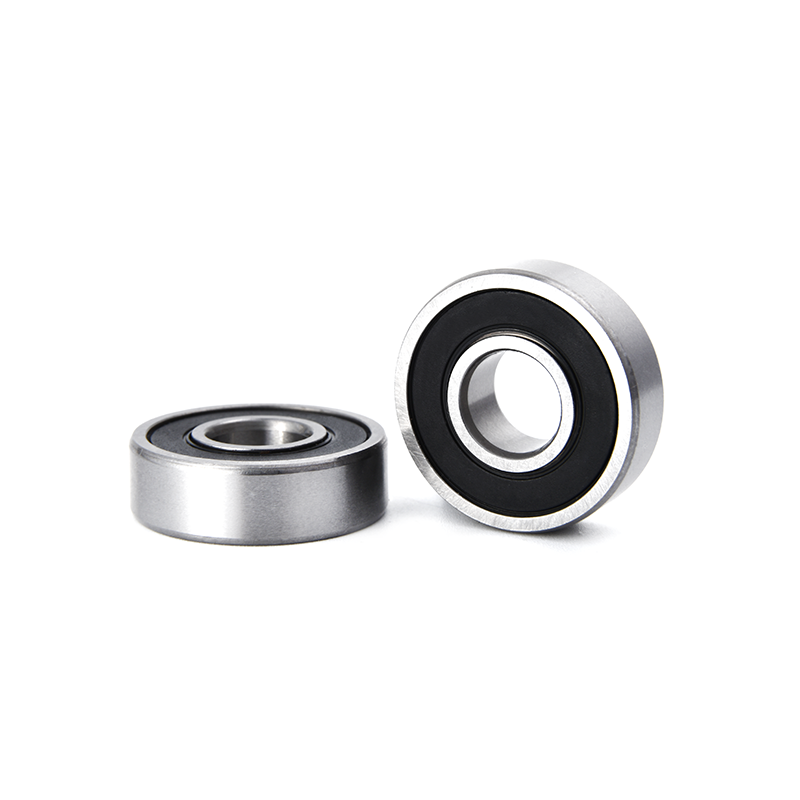
OEM Non-Standard Series Deep Groove Ball BearingsCustom deep groove ball bearings made to drawings or samples, with varied dimensions, row types, seals and miniature flange options for special equipment.View Product →Five Mounting Mistakes That Shorten Bearing Life
Most mounting damage traces back to a small set of recurring shortcuts.
- Driving the wrong ring. Force passed through the balls brinells the raceways in seconds, even with a soft-faced hammer.
- Heating without control. A torch or hot plate creates uneven temperatures and local overheating that changes raceway hardness.
- Using the old bearing as a driver. It contacts the wrong surface, transmits load through the balls and often jams in the seat.
- Skipping the alignment check. A bearing pressed in slightly cocked loads one side of the raceway and fails early.
- Ignoring residual clearance. Recheck after cooling with a dial indicator; a bearing that turns stiffly is already preloaded.
How the Bearing Itself Changes the Tool You Need
The bearing design shapes the toolkit as much as the shaft does. Thin-section bearings such as the 67, 68 and 69 series warm up faster and distort more easily than the 60 or 62 series, so controlled induction heating matters more than heating power, and a press is often safer than an impact tool.
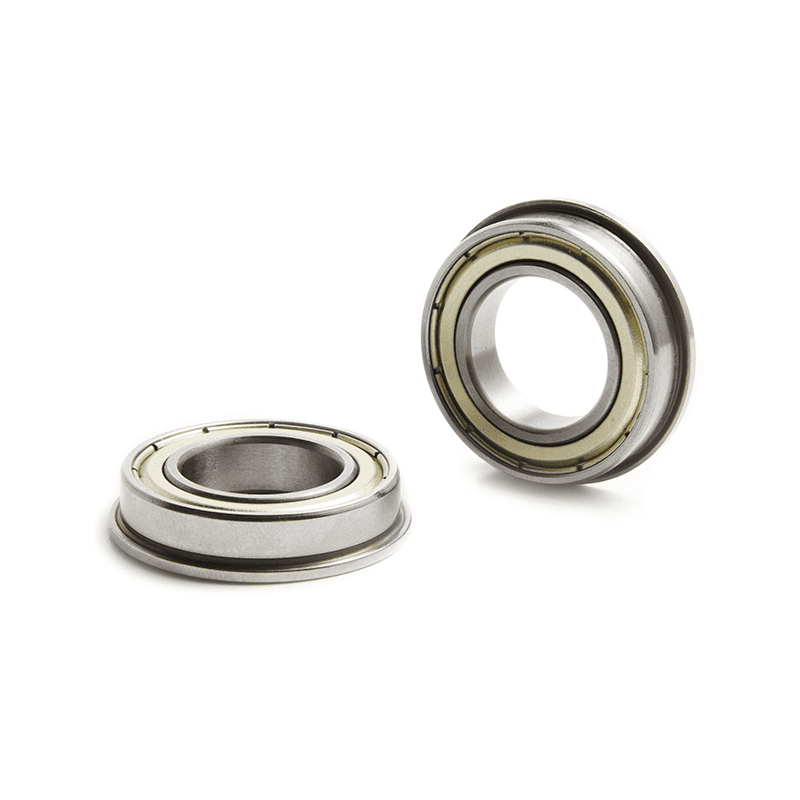
Flange series bearings in automation equipment show how one housing feature changes the method: the flange locates in a machined recess, so a press with a flat plate holds axial position far better than any hammer work.
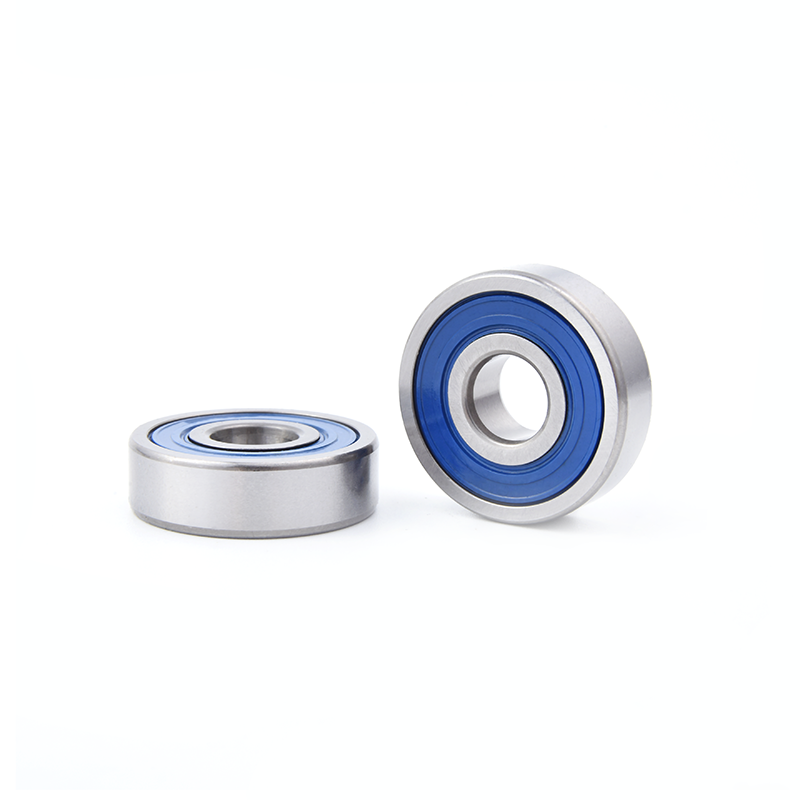
OEM Flange Series Deep Groove Ball BearingsFlanged deep groove ball bearings for locating in machined recesses, with small-bore shielded and open variants, GCr15 rings and multiple clearance grades.View Product →
Miniature MR series bearings tolerate almost no mounting force and belong in a light, well-aligned arbor press. Large bearings rarely fail because the tool was too small; they fail because the tool was applied to the wrong ring.
FAQ: Bearing Mounting Tools in Practice
Can I mount a bearing with a hammer?
Only with a proper impact ring or fitting sleeve on a light fit. Direct hammer blows on a ring, and any blow that passes through the balls, will damage the bearing even if it looks fine afterwards.
Do I need an induction heater, or is an oven enough?
An oven handles low volumes and simple fits, but it heats slowly and unevenly. For repeat production work, an induction heater with a temperature setpoint gives consistent results and protects grease and seals.
How hot is too hot for a bearing?
Stay at or below 120 degrees C for standard bearings and 80 degrees C for sealed or pre-greased types. Confirm with a contact thermometer rather than by touch.
What is the most underrated mounting tool?
A fitting tube sized to the tight ring, followed by a dial indicator. Together they prevent more bearing failures than any press upgrade.
Mounting is a measurable process, not a matter of force and feel. Match the tool to the ring, respect the temperature limits, and verify the result before the machine runs. That is the whole method, and it is the cheapest reliability work available in any workshop.
A bearing seated correctly the first time will outlast three that were pressed on by guesswork.


Contact Us