


 English
 中文简体
中文简体 Español
Angular contact ball bearings are engineered to carry combined radial and axial loads by placing the ball raceways at a precise angle to the bearing axis. That engineered angle is why they are called “angular” contact bearings, and it is also the main reason they outperform deep groove designs in applications that demand axial stiffness and high-speed precision. If you need to handle a significant thrust load in one direction while keeping shaft deflection small, an angular contact ball bearing is typically the most reliable choice.
Content
- What Is an Angular Contact Ball Bearing?
- How Does the Contact Angle Affect Load and Speed?
- Single-Row, Double-Row, or Paired Arrangement?
- Key Selection Criteria for Angular Contact Bearings
- Where Do Angular Contact Bearings Perform Best?
- Installation and Maintenance Tips
- Angular Contact vs. Deep Groove Ball Bearings
- Frequently Asked Questions
What Is an Angular Contact Ball Bearing?
An angular contact ball bearing is a rolling-element bearing in which the line of contact between the balls and the raceways forms an angle with a line perpendicular to the bearing axis. This contact angle allows the bearing to support a combination of radial and axial loads, but it also creates an internal load path that must be considered during mounting and pairing.
In the 7-series angular contact bearing family, the outer and inner rings have one side higher than the other. The resulting contact angle is usually marked on the bearing or listed in the manufacturer’s data sheet. Common angles include 15°, 25°, 30°, and 40°. The cage material, ball grade, and ring quality also matter because they affect running noise, heat build-up, and service life under continuous operation.
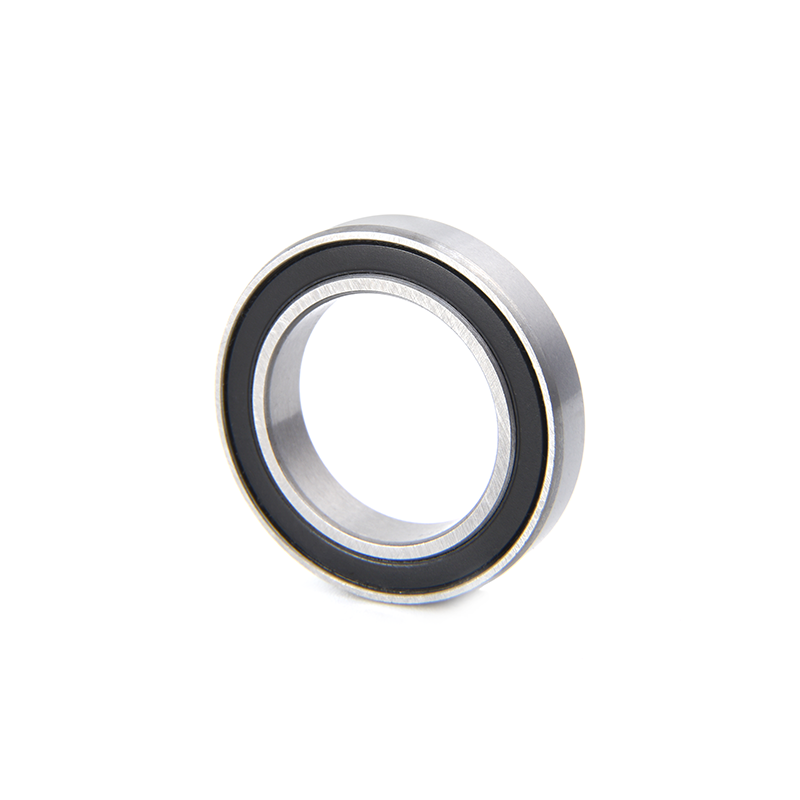
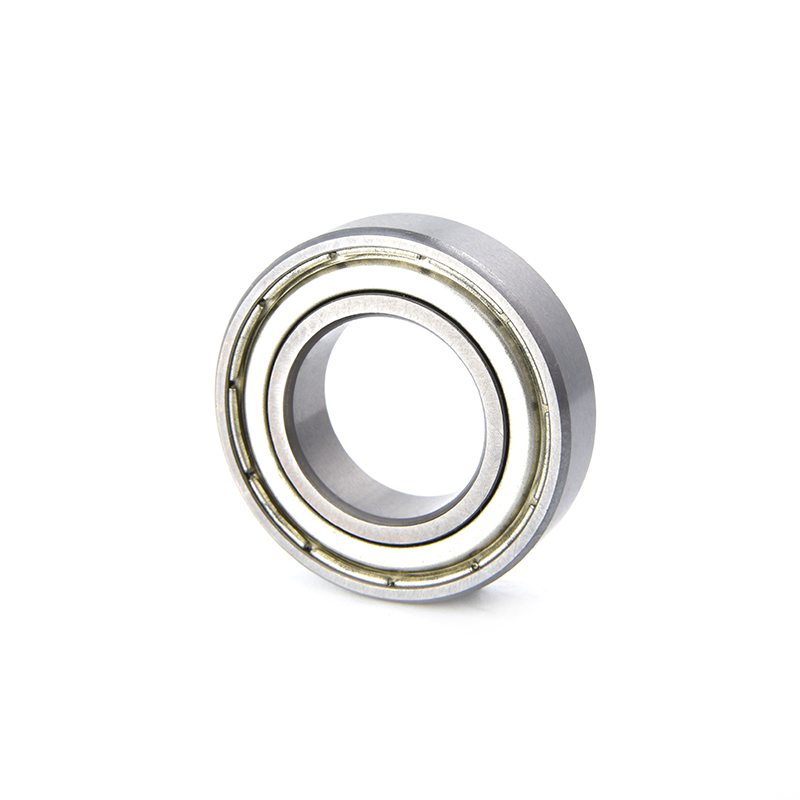
 7 Series Angular Contact Bearings Supplier with Common Contact AnglesFor designs where contact angle affects load and speed behavior, this supplier offers 7 series angular contact bearings in angles like 15°, 25°, 30°, and 40°, with separate rating data available.View Product →
The precise angle changes the direction of the internal force created when the bearing rotates, so the same bearing size in different contact angles will behave quite differently under load and speed. That is why manufacturers provide separate rating tables for each angle rather than a single load value for a given bore size.
How Does the Contact Angle Affect Load and Speed?
The contact angle is the first parameter to check when selecting an angular contact bearing because it sets the balance between axial capacity and speed capability.
| Contact Angle | Axial Load Capacity | Radial Load Capacity | Speed Suitability | Typical Use |
|---|---|---|---|---|
| 15° | Moderate | High | Excellent at very high speeds | High-speed spindles |
| 25° | Good | Good | Good for medium-to-high speeds | General machinery, electric motors |
| 30° | Better | Slightly reduced | Medium speed range | Pumps, gearboxes |
| 40° | Highest | Reduced | Lower maximum speed | Heavy thrust loads, gear shafts |
Higher contact angles allow the balls to transfer more axial force, but they also introduce higher internal sliding and heat. For very high speed applications, a smaller angle is usually safer even if the axial load rating is lower. If a machine runs at the edge of the speed limit, the temperature rise can change the bearing’s internal clearance, so always verify the thermal operating window with the manufacturer.
Single-Row, Double-Row, or Paired Arrangement?
A single-row angular contact ball bearing can only take axial load in one direction. This is not a defect; it is a structural result of the offset raceways. To handle axial forces in both directions, you must combine bearings.
Common mounting configurations include:
- Back-to-back (DB): the load lines open outward; this gives a wider effective spread and higher rigidity under tilting moments.
- Face-to-face (DF): the load lines open inward; this arrangement is more compact and less sensitive to thermal expansion, but has lower tilting rigidity.
- Tandem (DT): both bearings face the same direction; this arrangement is used when a single bearing cannot carry the axial load alone.
- Double-row angular contact bearings: two rows of balls in one unit; they can handle axial loads in both directions and are easy to mount, but are wider and generate more heat at high speed.
In machine tool spindles, a set of three or four single-row bearings with carefully controlled preload is often used to achieve both high radial stiffness and accurate axial positioning. Preload eliminates play and keeps the balls in constant contact with the raceways, which improves positioning repeatability but also increases friction. The correct preload value depends on the spindle speed, the mass of the rotating assembly, and the cutting forces experienced during operation.
Key Selection Criteria for Angular Contact Bearings
To choose the right bearing, start by defining the load path, speed envelope, and required stiffness. The following factors are the most critical:
- Magnitude and direction of radial and axial loads
- Shaft speed and operating temperature range
- Required preload and system rigidity
- Accuracy grade, such as ABEC/ISO tolerance classes
- Lubrication method and relubrication interval
- Mounting space and whether a matched pair is acceptable
If your axial load is negligible and your main need is low cost and simple mounting, a deep groove ball bearing may be sufficient. For example, the 62-series deep groove ball bearing is a common alternative in general motor applications where thrust is minimal.
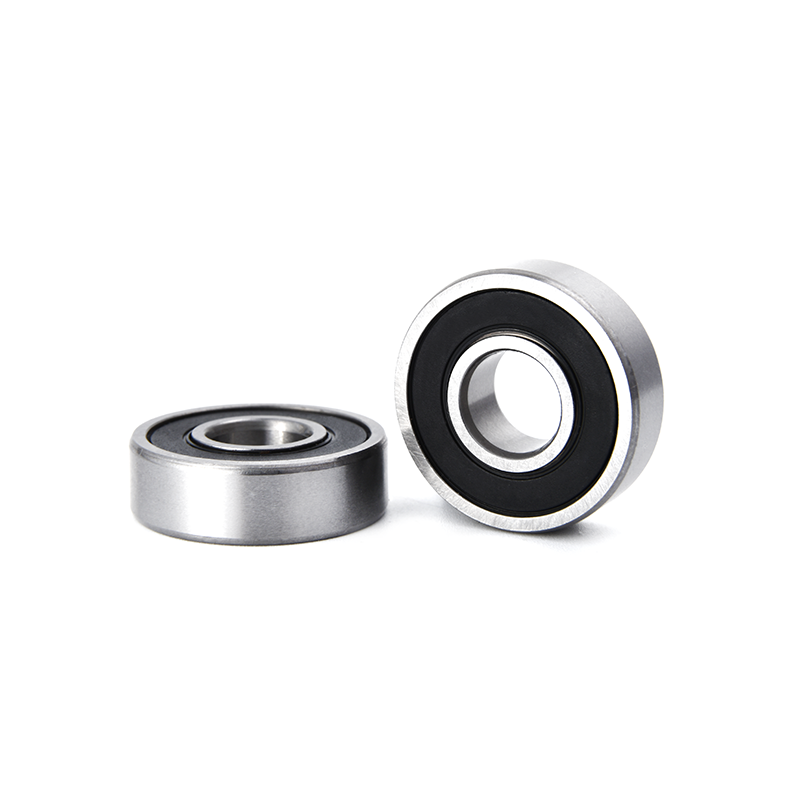
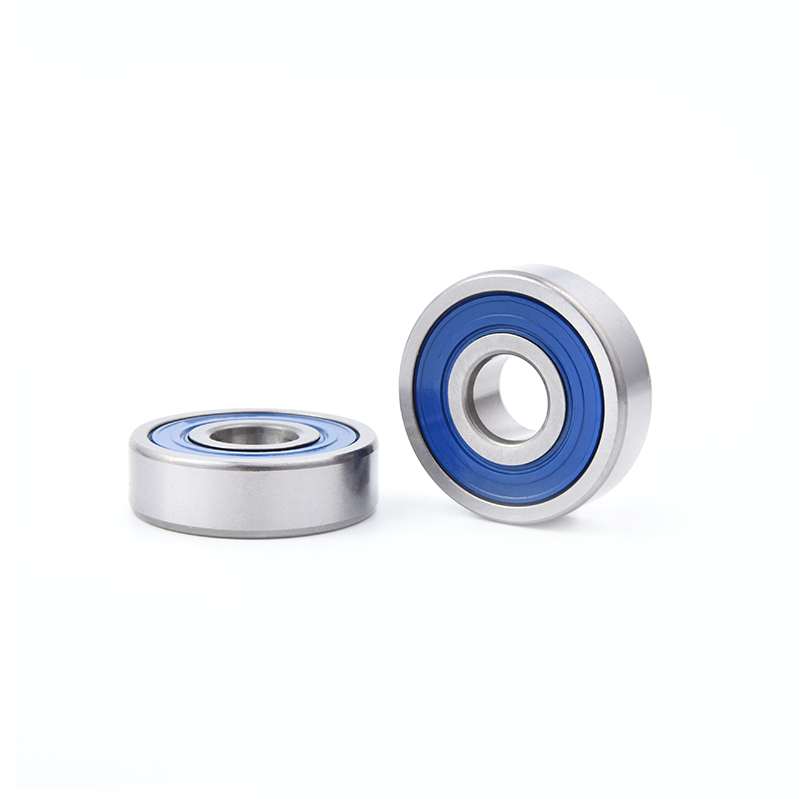
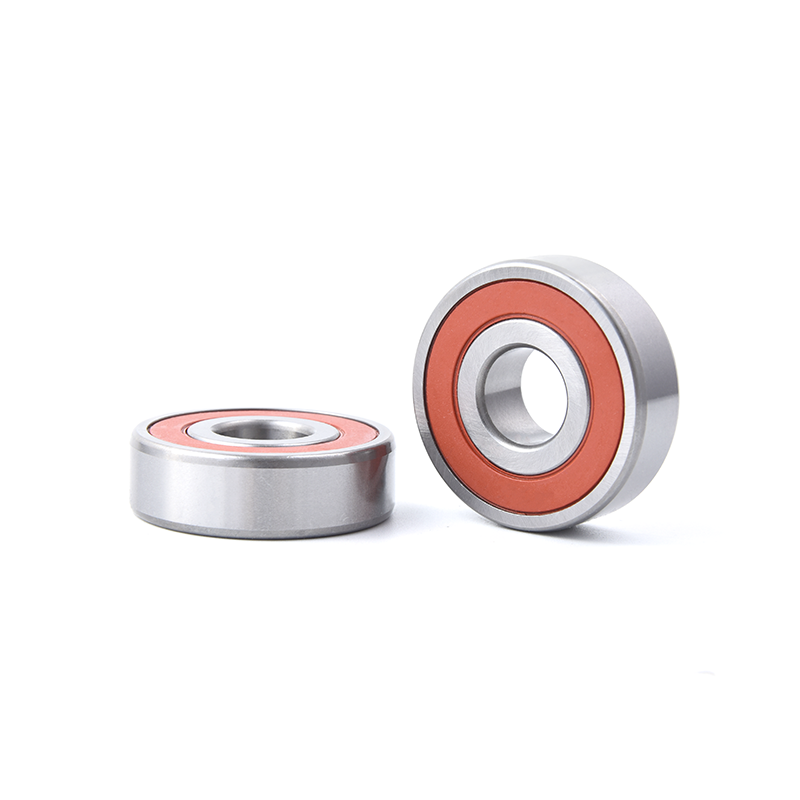
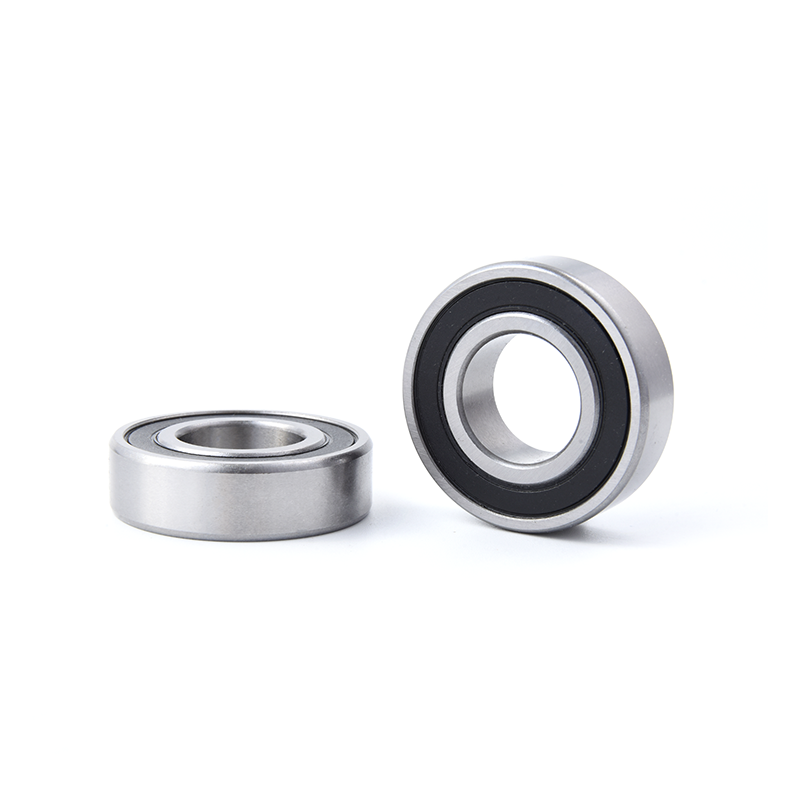
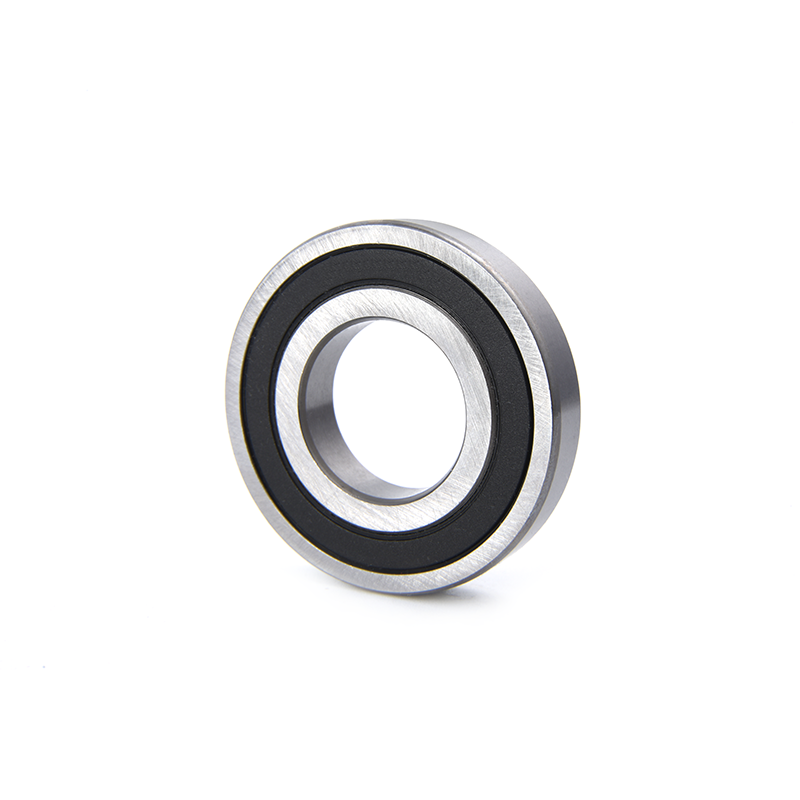
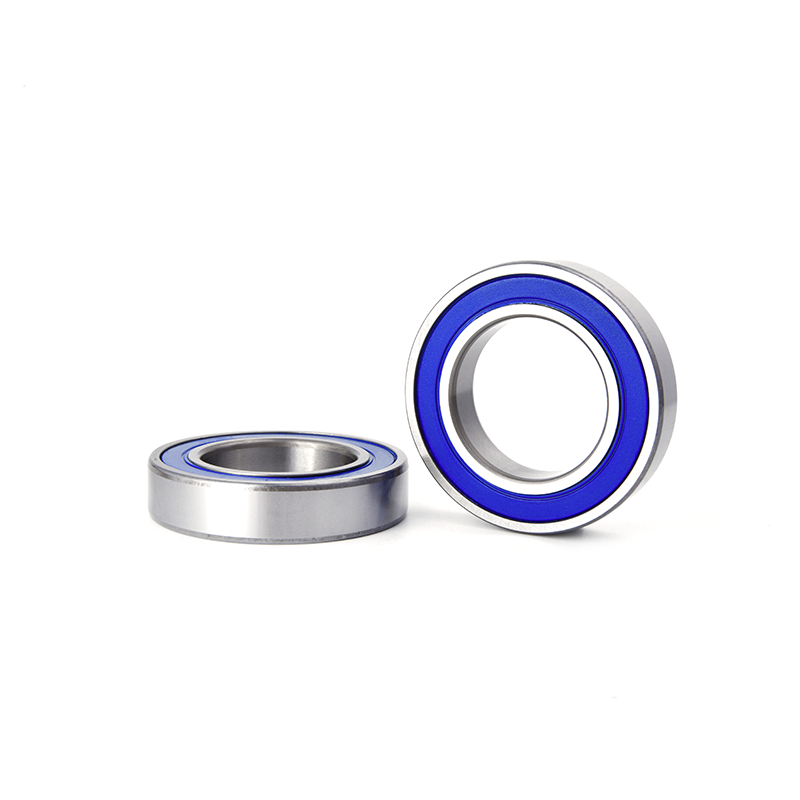
62 Series Deep Groove Ball Bearing with Multiple Seal OptionsWhen axial load is low and cost matters, this 62 series deep groove ball bearing provides simple mounting, various sealing forms, and precision grades suitable for general motor applications.View Product →
For angular contact bearings, consult the manufacturer's technical data page to confirm load ratings, speed limits, and tolerances before finalizing the design. Pay attention to the difference between static and dynamic load ratings, because shock loads can permanently deform the raceways even when the steady-state load appears acceptable.
Where Do Angular Contact Bearings Perform Best?
The combination of axial load capacity, speed capability, and controlled stiffness makes angular contact ball bearings the default choice in equipment that needs precise rotating motion.
- Machine tool spindles and milling heads
- High-speed electric motors and EV traction motors
- Pumps and compressors with unbalanced axial forces
- Automotive wheel hubs and transmission shafts
- Robotics joints and precision reducers
- Textile, packaging, and printing machines
In each case, the bearing is selected not only for load rating, but also for the mounting arrangement that maintains the internal geometry under changing temperatures and speeds. In EV traction motors, for instance, the axial load often alternates direction during regenerative braking, so a matched pair or a double-row design is common.
Installation and Maintenance Tips
Angular contact bearings are sensitive to preload and alignment. A small installation error can change the effective contact angle and cause premature wear.
Key rules to follow:
- Apply axial load only in the direction the bearing is designed to handle.
- Use the correct preload method: torque-controlled locknuts, shims, springs, or a matched set supplied by the manufacturer.
- Check shaft and housing fits to avoid raceway distortion.
- Keep contamination out during installation; even fine debris reduces bearing life.
- Use the recommended grease amount and relubrication schedule.
For step-by-step practices, see our bearing installation guide. Though written for deep groove bearings, the basic handling and fit checks also apply to angular contact designs.
Angular Contact vs. Deep Groove Ball Bearings
The difference between these two bearing families often comes down to the direction of load and the cost of complexity.
| Characteristic | Angular Contact Ball Bearing | Deep Groove Ball Bearing |
|---|---|---|
| Axial load direction | One direction per single-row bearing | Both directions, but limited |
| Combined load capacity | High, especially with paired arrangement | Moderate |
| Speed performance | Excellent with smaller contact angle | Very good |
| Mounting complexity | Needs preload and correct pairing | Simple, forgiving |
| Typical cost at same bore size | Higher | Lower |
| Typical failure mode if misapplied | Overheating due to wrong preload | Axial overload causes raceway brinelling |
Use an angular contact bearing when your load path requires controlled axial thrust. Use a deep groove bearing when simplicity and cost are more important than axial stiffness.
Frequently Asked Questions
Can one angular contact ball bearing handle axial loads in both directions?
No. A single-row angular contact bearing is designed to support axial load in one direction only. For bidirectional thrust, you need a double-row bearing or a matched pair mounted back-to-back or face-to-face.
What is the practical difference between a 15° and a 40° contact angle?
A 15° contact angle gives higher speed capability and retains more radial capacity, while a 40° angle provides a higher axial load rating at the cost of maximum speed and heat generation.
Do angular contact bearings always need preload?
Most precision applications require a defined preload to eliminate play and increase stiffness. Some applications may allow a small clearance, but the bearing manufacturer should validate the arrangement before use.
Can I replace an angular contact bearing with a deep groove ball bearing?
Only if the axial load is negligible and the shaft stiffness requirement is not critical. If the original design relies on the angular contact geometry for positioning, switching to a deep groove bearing will usually reduce precision and service life.
Angular contact ball bearings are not a complicated subject if you start from the load direction and work outward. Define the axial thrust path, select the contact angle that balances speed and stiffness, then confirm the mounting arrangement and preload. A manufacturer with in-house production can also help you match the bearing size and tolerance to your housing and shaft design before you commit to a production run.



Contact Us