


 English
 中文简体
中文简体 Español
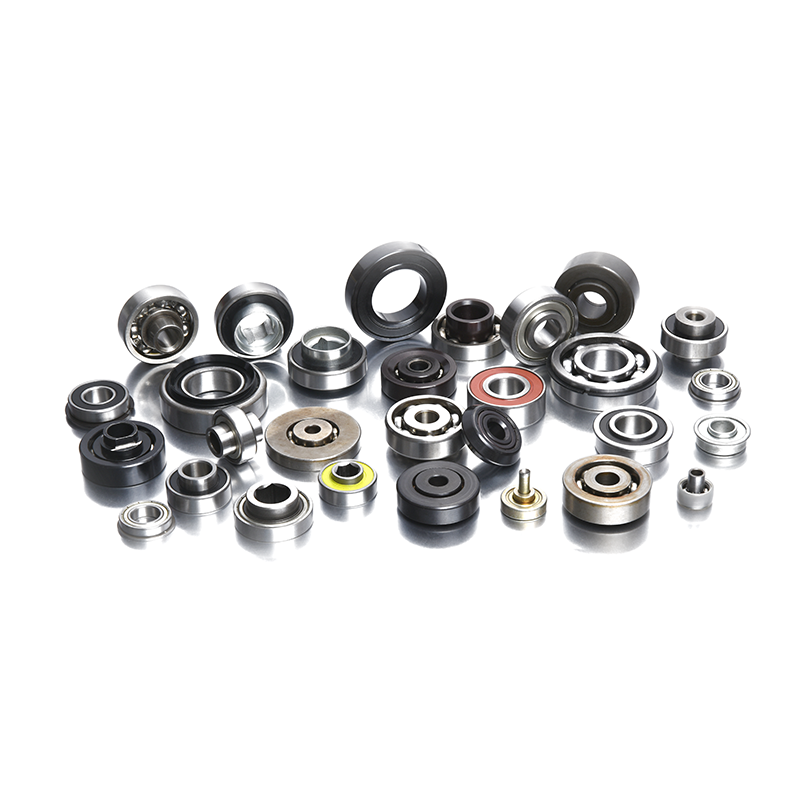
A bearing size calculator turns a bearing number, or a set of raw measurements, into the geometry a drawing needs: bore diameter, outside diameter, width, circumference, cross-sectional volume and an estimated mass. That is the whole job. It will not tell you which tolerance class, internal clearance or load rating your application needs, and it will not warn you when the size you picked is a thin-section series that cannot carry the load you have in mind.
The practical way to use one is a three-step sequence. Establish the size, either from the designation or from a caliper. Run the arithmetic. Then verify the result against the tolerance, clearance and load requirements of the machine. The rest of this page covers each step, including the formulas the tools run and the numbers they quietly leave out.
Content
- What a Bearing Size Calculator Actually Computes
- How to Read a Bearing Size from the Part Number
- The Formulas Behind the Numbers
- Worked Example: a 6205 in Millimetres and Grams
- What the Calculator Cannot Tell You: Tolerance, Clearance and Load
- Inch Sizes and Conversions
- Tight Envelopes and Flange Designs
- Common Sizing Mistakes
- Frequently Asked Questions
What a Bearing Size Calculator Actually Computes
Almost every bearing size calculator on the web does the same short set of operations: three inputs in, six or seven derived values out.
| Quantity | Symbol | Type | Formula or source |
|---|---|---|---|
| Bore diameter | d | Input | Part number or caliper measurement |
| Outside diameter | D | Input | Part number or caliper measurement |
| Width or length | B | Input | Total axial width, or bushing length |
| Inner circumference | πd | Output | 3.1416 × d |
| Outer circumference | πD | Output | 3.1416 × D |
| Cross-sectional volume | V | Output | π/4 × (D² − d²) × B |
| Estimated mass | m | Output | V × 7.85 g/cm³ for bearing steel |
| Mean diameter | dm | Output | (d + D) / 2 |
| Wall thickness, bushings | s | Output | (D − d) / 2 |
Notice what is absent from that list: tolerance grade, internal clearance, cage type, grease fill and load rating. Those five variables decide whether a bearing survives ten years or ten weeks, and none of them can be derived from d, D and B alone.
How to Read a Bearing Size from the Part Number
For metric deep groove ball bearings, the last two digits of the designation multiplied by five give the bore in millimetres, with four familiar exceptions.
The exceptions are 00 (10 mm), 01 (12 mm), 02 (15 mm) and 03 (17 mm). Everything from 04 upward follows the ×5 rule, so a 6205 is 05 × 5 = 25 mm bore. The digits ahead of that identify the dimensional series, and the series fixes the outside diameter and width for a given bore.
| Designation | Bore d | Outside diameter D | Width B | Series character |
|---|---|---|---|---|
| 6000 | 10 mm | 26 mm | 8 mm | 60 series, extra-light |
| 6205 | 25 mm | 52 mm | 15 mm | 62 series, light |
| 6303 | 17 mm | 47 mm | 14 mm | 63 series, medium |
| 6800 | 10 mm | 19 mm | 5 mm | 68 series, thin section |
| 6901 | 12 mm | 24 mm | 6 mm | 69 series, thin section |
| R6 | 9.525 mm | 22.225 mm | 5.558 mm | Inch series, 3/8 in bore |
The table also shows the practical trap. A 6000 and a 6800 share a 10 mm bore, but the 6800 fits that bore into a 19 mm outside diameter instead of 26 mm. The ball set is far smaller, so dynamic capacity drops by well over half. A calculator that checks bore only will happily treat the two as interchangeable.
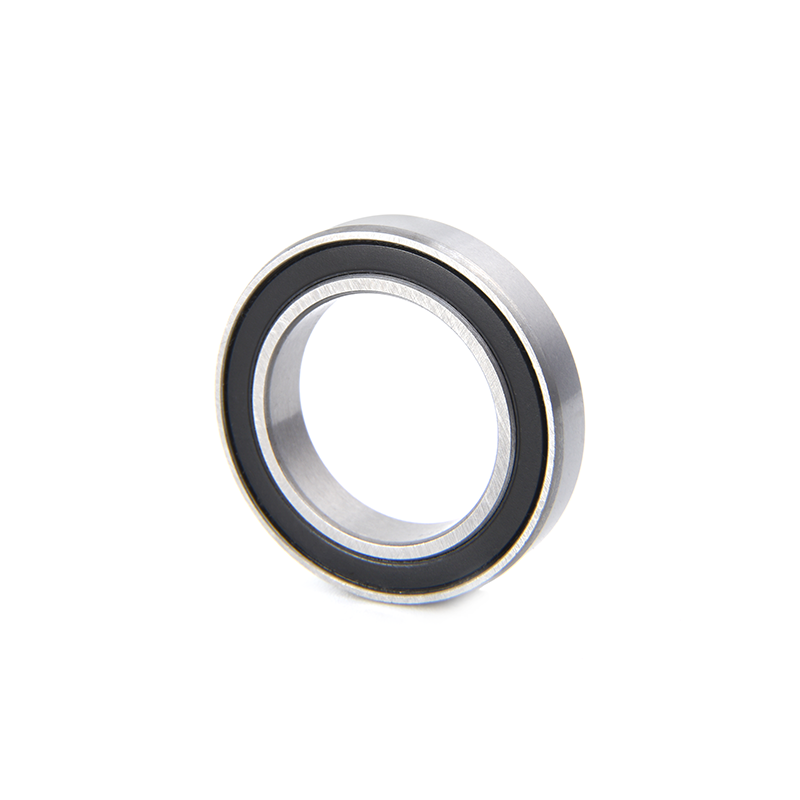
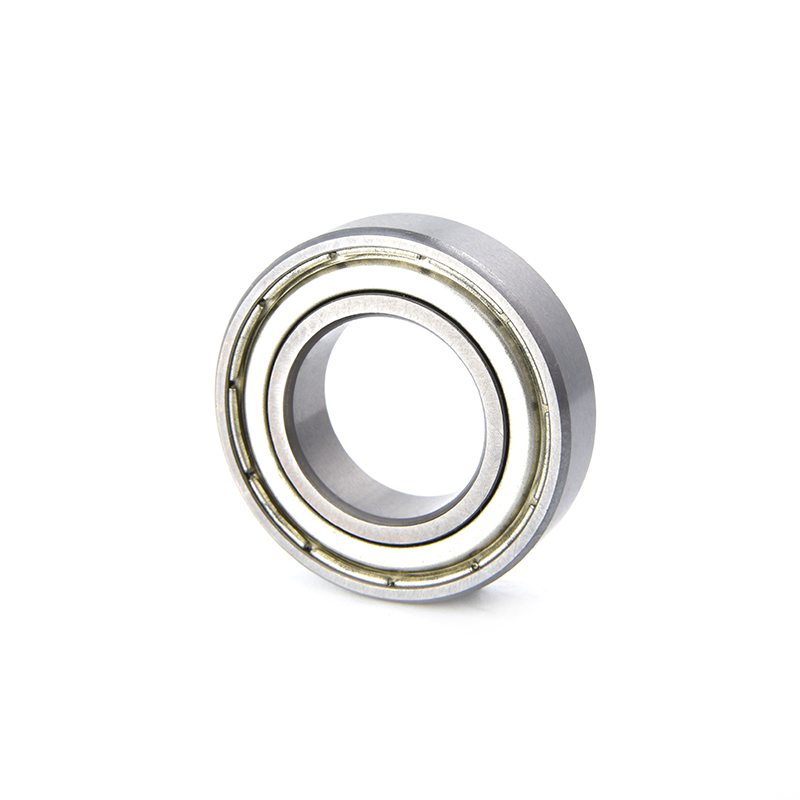
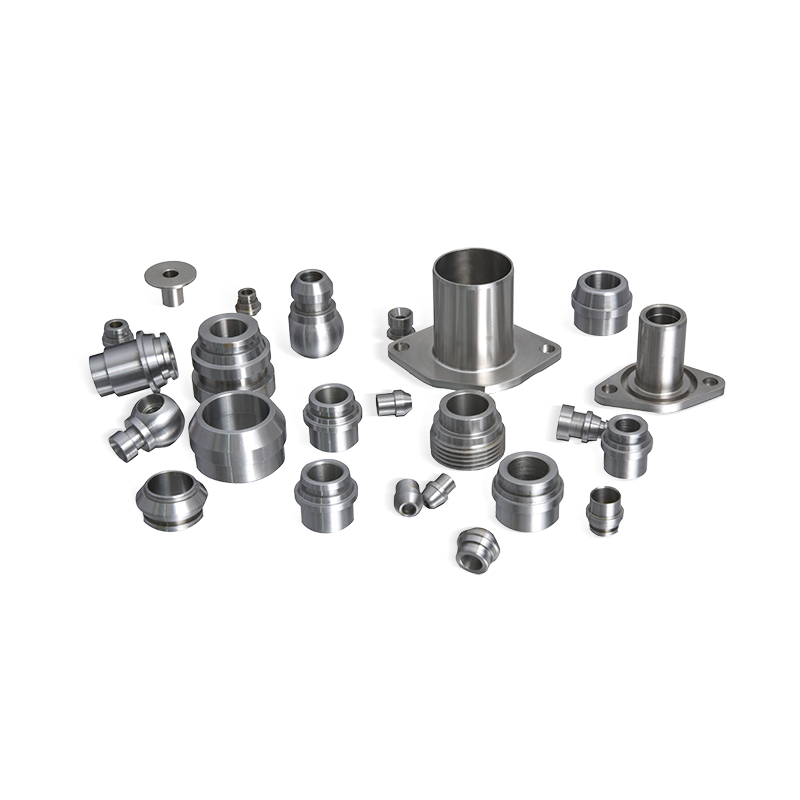 OEM 60 Series Deep Groove Ball BearingsUseful for comparing 6000 and 6800 bore/OD differences, with 60-series models, seals, clearance groups, load ratings, and limiting speeds.View Product →
The Formulas Behind the Numbers
Every tool runs the same handful of formulas, and knowing them means you can audit any answer with a pencil.
- Inner circumference: πd, the reference for surface speed at the shaft.
- Outer circumference: πD, useful when the bearing sits in a housing bore.
- Cross-sectional volume: π/4 × (D² − d²) × B, the volume of a solid steel ring with the same envelope.
- Estimated mass: volume multiplied by 7.85 g/cm³ for through-hardened bearing steel.
- Mean diameter: dm = (d + D) / 2, used in speed and life calculations.
- Basic rating life: L10 = (C / P)³ × 10⁶ revolutions for ball bearings, where C is the dynamic load rating and P the equivalent applied load.
Two of those deserve a caution. The volume formula describes a solid ring, and the life formula assumes you already know C, which the calculator never asked for.
Worked Example: a 6205 in Millimetres and Grams
A 6205 measures 25 mm bore, 52 mm outside diameter and 15 mm width, and a calculator returns the following figures.
- Inner circumference: π × 25 = 78.5 mm
- Outer circumference: π × 52 = 163.4 mm
- Cross-sectional volume: 0.7854 × (52² − 25²) × 15 = 24,490 mm³, or 24.5 cm³
- Solid-ring mass: 24.5 × 7.85 = 192 g
The last figure is the one to treat carefully. A real 6205 weighs roughly 125 to 130 g, depending on manufacturer, cage and grease fill. The calculator overstates it by about 50 percent, because the ring volume counts the space occupied by balls, cage, lubricant and air as if it were steel. Use the volume output for envelope and packaging work; use a catalogue or a scale for shipping weights and freight quotes.
What the Calculator Cannot Tell You: Tolerance, Clearance and Load
Dimension is only one of four specifications that matter, and the other three sit in tables the calculator never touches.
Tolerance class defines how far the bore and outside diameter may deviate from nominal. At a 25 mm bore, ISO 492 sets these limits.
| Class | Common name | Bore deviation | Typical application |
|---|---|---|---|
| Normal | P0 / ABEC-1 | 0 to −10 µm | Conveyors, fans, general machinery |
| Class 6 | P6 / ABEC-3 | 0 to −8 µm | Electric motors, pumps |
| Class 5 | P5 / ABEC-5 | 0 to −6 µm | Machine tool spindles |
| Class 4 | P4 / ABEC-7 | 0 to −5 µm | High-speed spindles, instruments |
| Class 2 | P2 / ABEC-9 | 0 to −4 µm | Precision measuring equipment |
These values are abbreviated; the complete tables, including radial runout, appear in the standard and in our technical data section. A 6 micrometre spread between normal and class 2 sounds trivial until you note that a shrink fit on a 25 mm shaft can move by more than that when the housing temperature rises 20 °C.
Internal clearance is the second blind spot. C2, CN, C3, C4 and C5 describe how much radial play exists before any load is applied. A bearing chosen with normal clearance for a light press fit will run tight, or seize, if the same part is pressed onto a heavier interference. Load rating is the third: a 6205 offers roughly 14 kN dynamic and 7.8 kN static capacity, figures that come from ball size, ball count and raceway geometry rather than from d, D and B.
Inch Sizes and Conversions
If your measured bore lands on 9.525 mm, 12.7 mm, 15.875 mm or 19.05 mm, you are looking at an inch-series bearing and should convert deliberately rather than round.
One inch is exactly 25.4 mm, so 3/8 in is 9.525 mm and 5/8 in is 15.875 mm. Rounding 9.525 to 9.5 mm inside a calculator is harmless; ordering a 9.5 mm bore bearing is not. Inch-series deep groove ball bearings follow inch dimensions in all three directions, so the outside diameter and width will not match the nearest metric equivalent either, and the housing bore has to be machined to the inch figure.
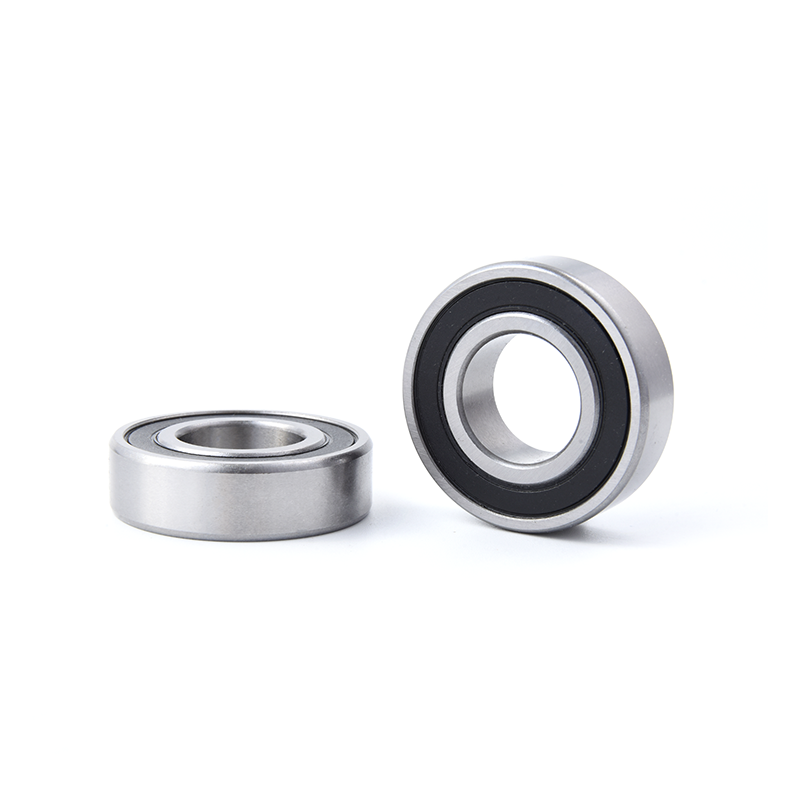
Inch Series Deep Groove Ball Bearings, R and 16 SeriesFor inch-dimension housings, this category covers R and 16 series bearings with model tables for bore, outside diameter, width, loads, and speeds.View Product →Tight Envelopes and Flange Designs
When the standard envelope will not fit, the answer is usually different outer ring geometry rather than a smaller bearing.
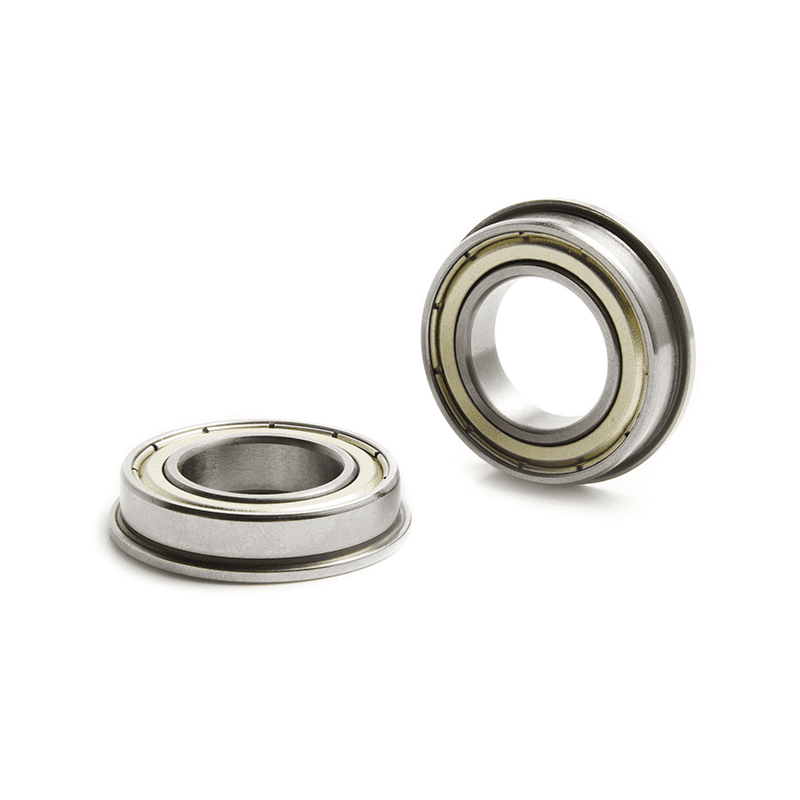
Flange series deep groove ball bearings carry a flange on the outer ring that locates the bearing axially against a machined face. In automation equipment that removes the need for a separate shoulder or retaining feature, which shortens the housing and simplifies assembly. For bores, widths or flange dimensions outside the catalogue, thin-wall and non-standard designs can be produced to drawing; the limiting factor is normally tooling cost against annual volume rather than the geometry itself.
OEM Flange Series Deep Groove Ball BearingsFlanged miniature bearings with locating flange, covering F682–F6907 sizes, open or shielded, with dimensions, loads, speeds, materials, and seal options.View Product →Common Sizing Mistakes
Most sizing errors trace back to one of four habits, and every one of them is avoidable with a caliper and five minutes.
- Matching on bore alone. A 6800 and a 6000 share a 10 mm bore yet differ in outside diameter, width and load capacity by a factor of two or more.
- Rounding inch dimensions. A 0.375 in bore is 9.525 mm, not 9.5 mm, and the difference exceeds a normal-class bore tolerance.
- Trusting the calculated mass. The solid-ring formula overstates a real ball bearing by roughly half, so freight estimates built on it are wrong.
- Ignoring clearance after a tight fit. Interference removes internal clearance, and a hot housing can leave a CN bearing effectively preloaded.
When a bearing is already in service, measured values rather than catalogue values are what count. The approach described in this guide to measuring and evaluating bearing performance covers the practical side of that check.
Frequently Asked Questions
Is bore the same as inside diameter?
Yes, for a finished bearing. Bore diameter d is the inside diameter of the inner ring as supplied, measured across the ring rather than across the shaft seat after fitting.
Does the calculator work for plain bushings?
Partly. Bore, outside diameter and length transfer directly, and wall thickness is simply (D − d) / 2. Volume and mass estimates are less dependable because bushings use bronze, polymer or composite materials with densities from roughly 1.2 to 8.9 g/cm³, so you must enter the correct density instead of the steel default.
How accurate is the mass the tool returns?
Within about 10 percent for a plain bushing with a known density and a solid wall, but 30 to 60 percent too high for a ball bearing, because balls, cage and grease occupy volume the formula counts as steel.
Can I enter inch sizes directly?
Most tools accept either unit, so check which one is active before typing. A 0.5 in bore entered as 0.5 mm returns a bearing roughly the size of a pinhead, and the arithmetic will still look perfectly correct.
Does a bigger outside diameter always mean more load capacity?
At the same bore, almost always. Within the same outside diameter, a wider bearing generally carries more load than a narrower one, but ball size, ball count, cage and raceway curvature decide the final rating.
A bearing size calculator is a good first pass and a poor final answer. Use it to confirm the envelope, the circumference and a rough mass, then confirm the tolerance class, internal clearance and load rating against the drawing or the supplier's data before anything is ordered. Those three numbers decide whether the bearing runs for ten years or ten weeks.



Contact Us