


 English
 中文简体
中文简体 Español
Content
- Angular Contact Ball Bearing Supplier: What Really Matters
- How to Evaluate an Angular Contact Ball Bearing Supplier
- 7-Series Angular Contact Ball Bearings: What You Are Actually Buying
- Contact Angle, Preload, and Mounting Configuration
- Key Specifications to Confirm Before You Order
- Custom Angular Contact Bearing Solutions
- Common Mistakes When Dealing with Angular Contact Ball Bearing Suppliers
- Delivery Reliability and Long-Term Partnership
- Frequently Asked Questions
- What is the difference between an angular contact ball bearing and a deep groove ball bearing?
- What contact angle should I choose for high-speed operation?
- Can single-row angular contact bearings support axial loads in both directions?
- Why is matched pairing important?
- Can a supplier produce a non-standard angular contact bearing design?
- Final Recommendation for Angular Contact Ball Bearing Buyers
Angular Contact Ball Bearing Supplier: What Really Matters
An angular contact ball bearing supplier is accountable for three things: correct bearing design, consistent manufacturing quality, and responsive support when a machine behaves unexpectedly. Before comparing prices, verify the supplier's production method, measurement capability, and ability to deliver a bearing that matches your load, speed, and mounting layout.
Angular contact ball bearings are engineered with raceways inclined relative to the bearing axis. The result is a defined contact angle that lets one direction of axial load transmit through the balls instead of forcing the cage or seal to absorb it. That is why these bearings appear in machine tool spindles, electric motors, pumps, compressors, automotive drivetrains, and precision gearboxes.
The practical implication is straightforward: choose a supplier who can explain the contact angle, internal clearance, preload, and mounting requirements for your application. A supplier who only sends drawings without application context is not reducing your risk.
How to Evaluate an Angular Contact Ball Bearing Supplier
Use manufacturing history, quality system, production scale, and engineering depth as the first filter. A supplier that has been making bearings for decades is more likely to understand material control, heat treatment, raceway grinding, and assembly consistency than one that merely buys and resells finished bearings.
For example, our own production base in Yuyao, Zhejiang Province has been operating since 1993. The company runs two wholly owned factories covering 31,000 square meters, and the annual capacity reaches around 30 million bearing sets. That scale gives OEM buyers a strong signal about delivery dependability.
The table below summarizes the criteria we recommend for any angular contact ball bearing supplier review.
| Criterion | What to verify | Sourcing impact |
|---|---|---|
| Manufacturing experience | Years in bearing production, end-use industries served | Better process control and fewer early-life failures |
| Quality management | ISO9001, ISO14001, final inspection, traceability | Consistent quality across batches |
| Engineering support | Design capability, custom bearing development, special material options | Faster solution when standard dimensions do not fit |
| Production scale | Factory area, annual output, machinery | Stable supply for volume orders |
| Delivery commitment | Lead time, communication process, backup line | Less downtime caused by late arrivals |
| After-sales service | Handling of complaints, technical advice after delivery | Lower total cost of ownership |
You can find more detailed measurement and performance explanations on our technical data page.
To turn this checklist into an action plan, follow a five-step qualification process.
- Define the exact operating envelope: radial load, axial load, speed, temperature, and expected life.
- Compare supplier documents: certificates, inspection records, bearing drawings, and application notes.
- Audit key processes: grinding, heat treatment, cleaning, assembly, lubrication, and final measurement.
- Run a sample order and measure dimensions, vibration, and noise against the agreed specification.
- Check lead time, packaging, order history, and complaint handling before approving volume production.
7-Series Angular Contact Ball Bearings: What You Are Actually Buying
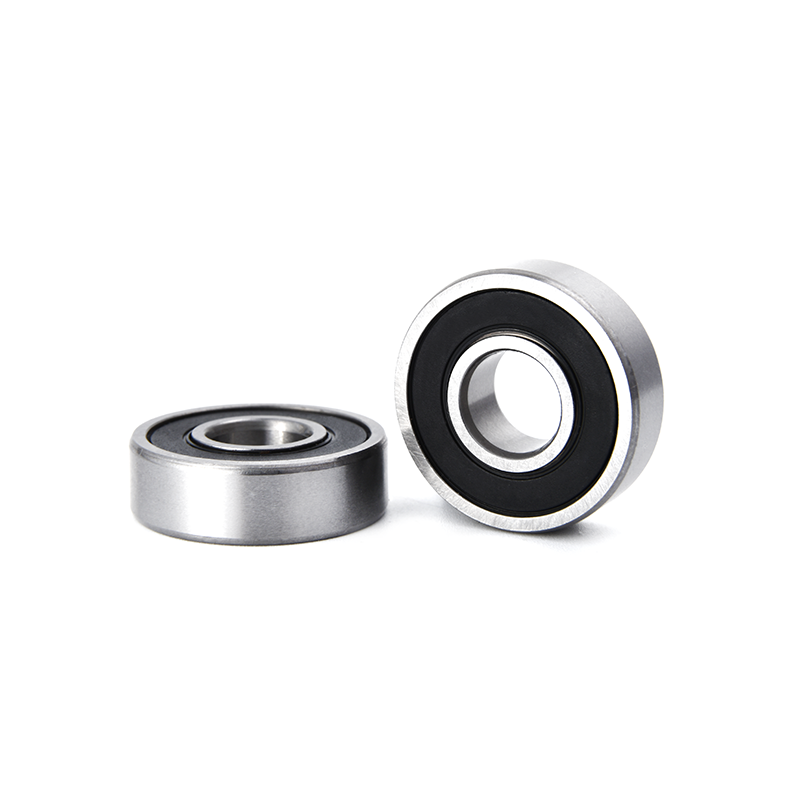
7-series angular contact ball bearings are one of the most common choices in equipment where accuracy and speed are more important than simple load capacity. They are designed with a smaller overall geometry while still providing the angled raceway that carries combined loads.
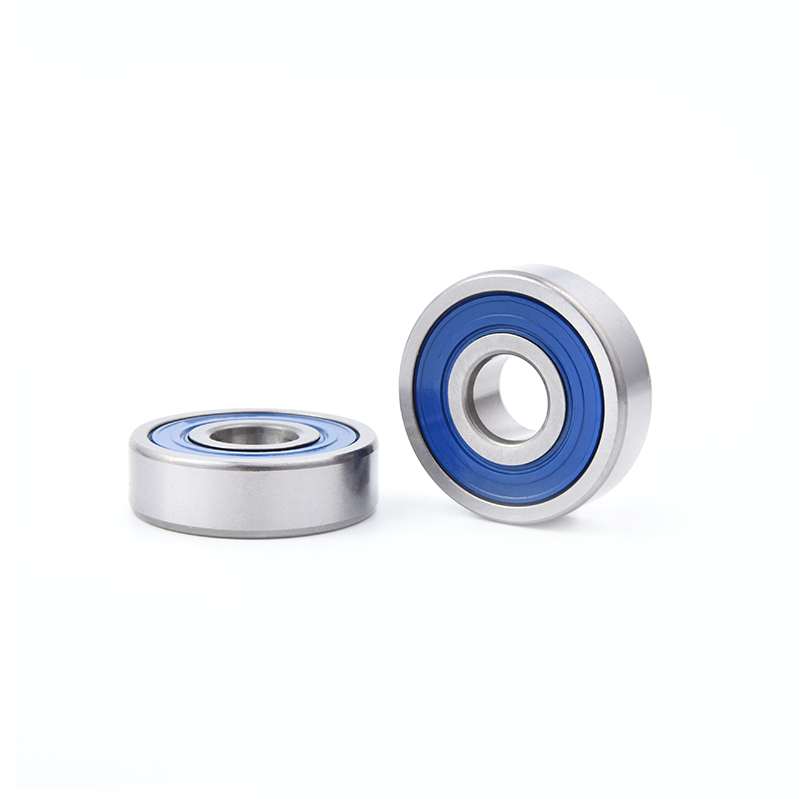
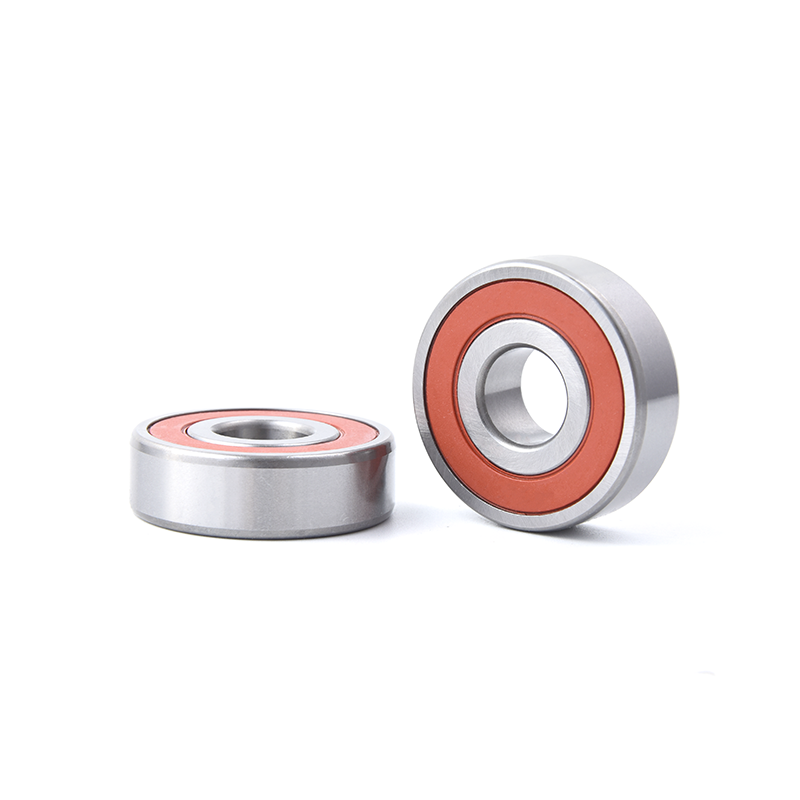
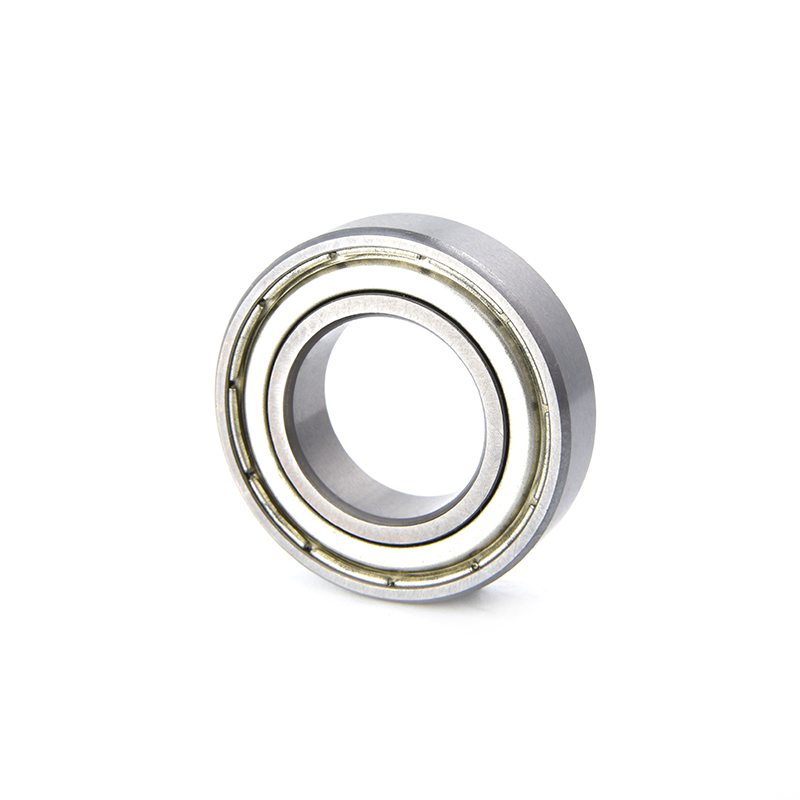
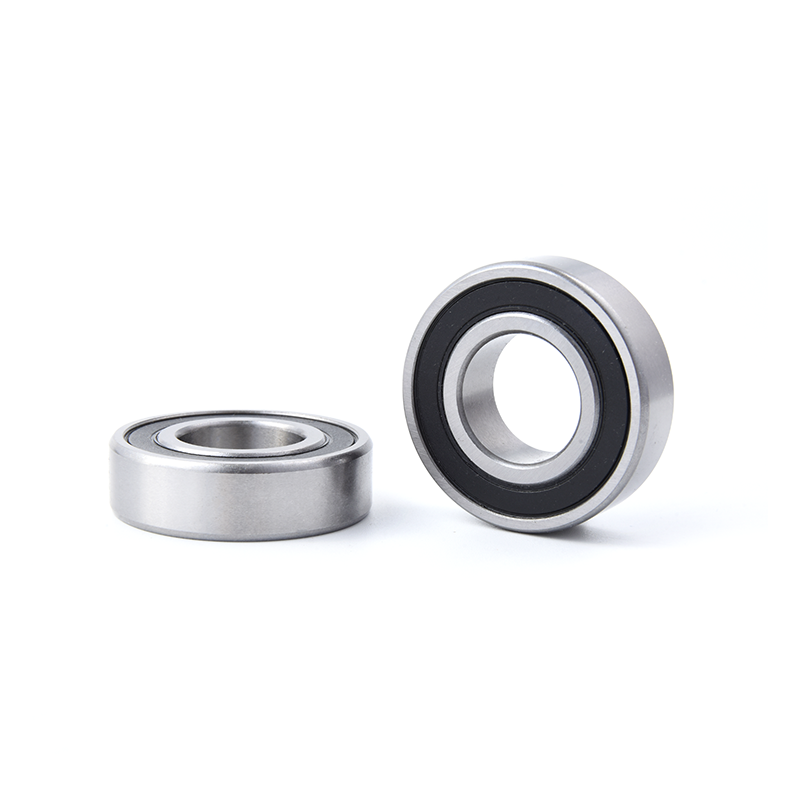
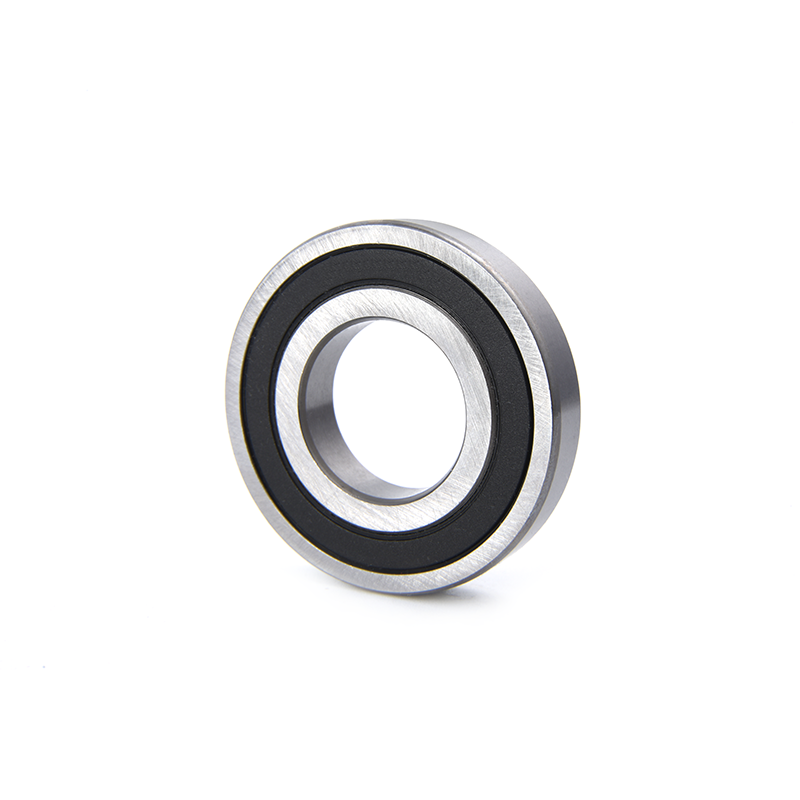
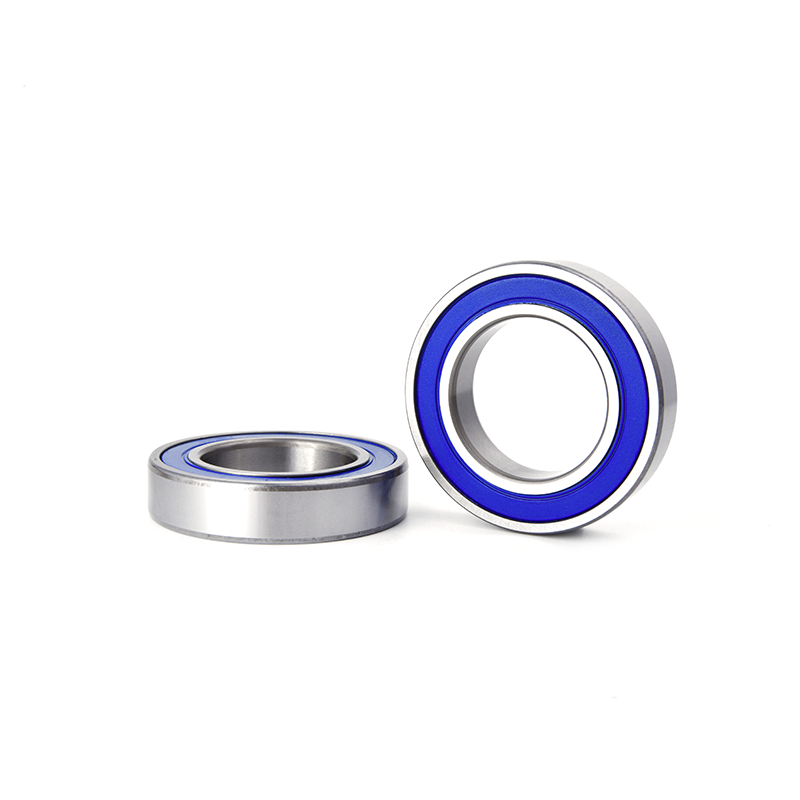
 7 Series Angular Contact Ball Bearings from Kangtian BearingThis supplier manufactures compact angular contact bearings suited for high-accuracy, high-speed applications. With ISO certifications and large production capacity, it offers reliable options for combined-load requirements.View Product →
When you specify this type of bearing, the main variables are bore size, contact angle, precision class, cage type, seals, and lubrication. Do not treat these as independent options. For example, a higher contact angle creates better axial load capacity, but it may reduce the maximum speed at which the bearing can run. A smaller contact angle often supports higher-speed operation with lower heat generation.
Contact Angle, Preload, and Mounting Configuration
The contact angle and mounting layout determine whether the bearing can handle axial load in one direction or both directions. Single-row angular contact ball bearings only carry axial load effectively in one direction, so most industrial applications use two bearings arranged face-to-face, back-to-back, or in tandem.
Back-to-Back
Load centers spread farther apart, giving higher moment rigidity. This arrangement suits machine tool spindles and other applications with tilting moments.
Face-to-Face
More compact and easier to align, but less stiff under moment loads. It works well in gearboxes, small motors, and pumps.
Tandem
Both bearings face the same direction to handle a very high one-way axial load. It must be combined with another pair for reverse loads.
Ask the supplier whether the bearings are delivered as matched pairs. Matched bearings are ground as a set, which controls preload and prevents uneven load sharing. Mixing two individually selected bearings at assembly can increase vibration and shorten service life.
Key Specifications to Confirm Before You Order
Specifications should be written down before contacting any angular contact ball bearing supplier. A clear request prevents both overspecification and hidden cost.
| Parameter | Typical options |
|---|---|
| Bore diameter | Metric and inch series according to bearing number |
| Contact angle | 15°, 25°, 30°, 40° depending on speed and axial load |
| Precision class | P0, P6, P5, P4 for different equipment accuracy |
| Cage material | Steel, brass, polyamide |
| Sealing | Open, shielded, contact seal, non-contact seal |
| Lubrication | Grease, oil, special low-noise grease |
Precision class is often the deciding factor. A lower tolerance grade increases cost, so choose a grade that matches the actual spindle or motor specification rather than the most expensive one.
If you are not sure how to balance these parameters, our guide to choosing the right bearing for industrial machinery walks through the same decision logic.
Custom Angular Contact Bearing Solutions
A capable supplier should be able to move from standard catalog numbers to a special solution when production conditions require it. Our company has devoted years to automotive and motorcycle bearing manufacturing, thin-wall bearings, and special bearing development, which is directly useful for angular contact applications with unusual mounting space, speed, or load constraints.
For custom orders, the supplier needs to know the available space envelope, expected radial and axial loads, operating temperature, lubrication method, and required service life. With these inputs, the design team can decide whether to adjust the contact angle, ring geometry, cage, or steel grade.
A supplier that also controls non-standard bearing production and precision machining can solve problems that a pure distributor cannot. This is especially valuable when the standard 7-series range does not provide the exact bore, width, or sealing detail your equipment needs.
Common Mistakes When Dealing with Angular Contact Ball Bearing Suppliers
Most purchasing problems come from incomplete specifications, not from bearing design itself. Avoid these errors to keep your supply chain stable.
- Choosing only by price: Low-cost bearings may use weaker steel, different heat treatment, or loose dimensional control.
- Ignoring precision class: Equipment that needs P4 cannot be reliably served with a P0 bearing.
- Ordering single bearings when a matched pair is required: The preload and center distance will not match, and vibration can increase.
- Overlooking lubricant compatibility: The same bearing can fail in the same machine if grease type changes.
- Leaving the contact angle unstated: A 15° and a 40° bearing are visually similar but perform completely differently.
Delivery Reliability and Long-Term Partnership
A supplier's delivery record matters just as much as its precision capability. Our production team follows an on-time delivery guarantee backed by two factories and capacity for about 30 million bearing sets per year. We export to more than 20 countries, which means we are used to coordinating packing, documentation, and shipping schedules for industrial buyers.
When you evaluate a supplier, ask for their maintenance plan for their own production machines, because consistent output depends on in-house equipment stability. Long-term partnerships are built on clear lead times, honest capacity statements, and timely communication when schedules change.
Frequently Asked Questions
What is the difference between an angular contact ball bearing and a deep groove ball bearing?
An angular contact ball bearing handles higher one-directional axial loads through an angled raceway, while a deep groove ball bearing handles radial loads and moderate axial loads in both directions.
What contact angle should I choose for high-speed operation?
A smaller contact angle, typically 15°, is preferred for high-speed applications where axial load is not dominant.
Can single-row angular contact bearings support axial loads in both directions?
No. A single-row design supports axial loading in one direction only; a matched pair or double-row arrangement is needed for bidirectional axial load.
Why is matched pairing important?
Matched bearings are manufactured with controlled preload, so combining random single bearings can produce uneven internal load distribution and shorten service life.
Can a supplier produce a non-standard angular contact bearing design?
Yes. A manufacturer with special bearing design experience can adapt contact angle, dimensions, cage, sealing, and materials to fit difficult mounting spaces and operating conditions.
Final Recommendation for Angular Contact Ball Bearing Buyers
Start with technical requirements, then verify the supplier's manufacturing experience, quality system, production scale, customization ability, and delivery record. A supplier with long experience and a mature quality management process will take less risk off your project than a cheaper quote with unnamed bearings.
By choosing a manufacturer with OEM experience and global export routines, you gain better access to 7-series angular contact ball bearings that fit the exact duty of your machine.



Contact Us