


 English
 中文简体
 Español

Single row cylindrical roller bearings are the go-to choice when a rotating shaft must carry heavy radial loads without consuming much axial space. They use one row of cylindrical rollers in line contact with the raceways, which gives them a high radial load rating and high stiffness compared with ball bearings of the same size. The trade-off is equally clear: most designs carry little or no axial load, and they are less forgiving of misalignment. If your application is dominated by radial forces — gearboxes, electric motors, crushers, conveyors, or industrial pumps — a single row cylindrical roller bearing is often the most efficient starting point. This guide explains how they are built, how to select the right rib design and clearance, and where they fit versus deep groove ball bearings.
Content
- What Is a Single Row Cylindrical Roller Bearing?
- How Single Row Cylindrical Roller Bearings Carry Load
- Cage Options and Speed Limits
- Mounting, Fits, and Internal Clearance
- Lubrication and Maintenance
- Single Row Cylindrical Roller Bearings vs Deep Groove Ball Bearings
- Applications and Selection Checklist
- Frequently Asked Questions
What Is a Single Row Cylindrical Roller Bearing?
A single row cylindrical roller bearing is a radial bearing with one row of short cylindrical rollers guided between an inner ring and an outer ring. The rollers contact the raceways along a line rather than at a point, so the bearing can support very high radial loads and resist deflection under load. The design is usually separable: the inner ring with rollers and cage can be removed from the outer ring, which simplifies mounting and inspection. Standard boundary dimensions follow ISO 15 and DIN 616, so a given bore and outside diameter can be swapped across manufacturers when the internal design and tolerance class match.
Key components are the inner ring, outer ring, cylindrical rollers, and cage. The rings may have one or two ribs (flanges) depending on the design. The cage keeps the rollers evenly spaced and prevents them from skewing. Because the rollers are cylindrical, the bearing allows only limited axial displacement unless the ribs are configured to locate the shaft. That rib configuration is the main reason several variants exist.
How Single Row Cylindrical Roller Bearings Carry Load
Single row cylindrical roller bearings carry high radial loads because the line contact spreads stress over a larger area than the point contact of a ball bearing. The static and dynamic load ratings are typically 1.5 to 3 times higher than a deep groove ball bearing of similar dimensions, depending on series and internal geometry. Radial stiffness is also higher, which helps maintain shaft position in gear meshes and precision drives.
Axial load capacity depends almost entirely on the rib design. The table below summarizes the common single row variants and what each can do.
| Design | Inner ring ribs | Outer ring ribs | Axial location | Typical use |
|---|---|---|---|---|
| N | Two ribs | None | Axial displacement in both directions | Floating bearing positions, gearbox shafts with thermal growth |
| NU | None | Two ribs | Axial displacement in both directions | Floating bearings, electric motors, conveyors |
| NJ | One rib | Two ribs | Axial location in one direction | Fixed bearing positions with moderate axial loads |
| NUP | One rib plus loose rib | Two ribs | Axial location in both directions | Fixed bearing positions, reversing axial loads |
Selecting N or NU is common when the shaft must float axially, such as in a gearbox where thermal expansion would otherwise load the bearings. NJ and NUP are used where the bearing must also locate the shaft axially, but the axial load should still be modest. For pure axial loads, a thrust bearing or an angular contact bearing is usually the better choice.
Cage Options and Speed Limits
Cage material and design set the practical speed limit as much as the bearing's internal geometry. Stamped steel cages are the standard choice for general industrial duty and offer a good balance of strength and cost. Machined brass cages are preferred for high load, high temperature, or applications with shock loads because they resist deformation and wear. Polyamide cages (PA66) reduce weight and friction in high-speed applications, but they are limited by temperature and lubricant compatibility. PEEK cages are used where chemical resistance and high temperature are required.
Speed limits for single row cylindrical roller bearings are generally lower than for deep groove ball bearings of the same size because the line contact generates more heat. However, with oil lubrication, a precision cage, and controlled clearance, they can run at high speeds in machine tool spindles and high-speed motors. The catalogue speed rating is only a starting point; the actual limit depends on lubrication method, cooling, load, and alignment. As a rule, grease lubrication suits moderate speeds and sealed or maintenance-free arrangements, while oil circulation or oil-air lubrication is used for high-speed or high-load duty.
Mounting, Fits, and Internal Clearance
Correct fits and clearance are critical because cylindrical roller bearings have less internal clearance than ball bearings of similar size and are more sensitive to interference. For a rotating inner ring under normal radial load, a shaft fit of k5 or m5 is common; heavier loads or shock loads may call for n6. Housing fits are usually H7 or J7 for a stationary outer ring, with K7 used when the outer ring must be located more tightly. These are starting values only. The actual fit depends on load direction, temperature, shaft material, and whether the bearing is used as a fixed or floating position.
Internal clearance is selected from CN (normal), C3 (greater than normal), or C4 (greater than C3). C3 is often specified for applications where the inner ring heats faster than the housing, such as electric motors or gearboxes, because thermal expansion consumes clearance. Too little clearance causes overheating and premature failure; too much clearance reduces load capacity and can increase vibration. For a floating bearing arrangement, the clearance and fit must allow axial displacement without fretting. Our technical data section provides tolerance and fit reference tables that help confirm the final selection.
Lubrication and Maintenance
Lubrication determines life more than any other maintenance factor in single row cylindrical roller bearings. Grease is suitable for moderate speeds and sealed or shielded arrangements, but the grease must match the operating temperature and load. Oil lubrication is preferred for high speed, high load, or high temperature because it removes heat as well as reduces friction. In oil-circulation systems, flow rate and oil cleanliness matter as much as viscosity. A common mistake is to overfill a bearing housing with grease; the resulting churning raises temperature and can shorten grease life.
Watch for these failure signs during maintenance:
- Discoloration or varnish on the rollers, indicating overheating or lubricant breakdown.
- Smearing or scuffing on the raceways, often caused by inadequate oil film during startup or high load.
- False brinelling as evenly spaced marks, common in idle equipment with vibration.
- Cage wear or fracture, often linked to poor alignment, high speed, or inadequate lubrication.
- Axial wear marks on ribs, indicating that the bearing is carrying more axial load than the rib design allows.
Inspect the cage and rib contact surfaces at every major overhaul. If the bearing is separable, remove the inner ring and check the roller path for uneven wear. Replace the bearing if the clearance has grown beyond the manufacturer's limit or if any roller shows pitting or spalling.
Single Row Cylindrical Roller Bearings vs Deep Groove Ball Bearings
Single row cylindrical roller bearings win on radial load capacity and stiffness, while deep groove ball bearings win on axial load capacity, speed, and misalignment tolerance. If the application combines heavy radial loads with moderate axial loads, a cylindrical roller bearing plus a separate axial locating bearing is often the best arrangement. If the radial load is moderate and the shaft must also carry axial loads in both directions, a deep groove ball bearing is usually simpler and more economical.
| Factor | Single row cylindrical roller bearing | Deep groove ball bearing |
|---|---|---|
| Radial load capacity | High to very high | Moderate |
| Axial load capacity | None to limited, depending on rib design | Moderate in both directions |
| Speed capability | Moderate to high with oil lubrication | High |
| Misalignment tolerance | Low | Moderate |
| Mounting | Separable, easy to inspect | Non-separable, simple |
| Relative cost | Higher for precision grades | Lower for standard grades |
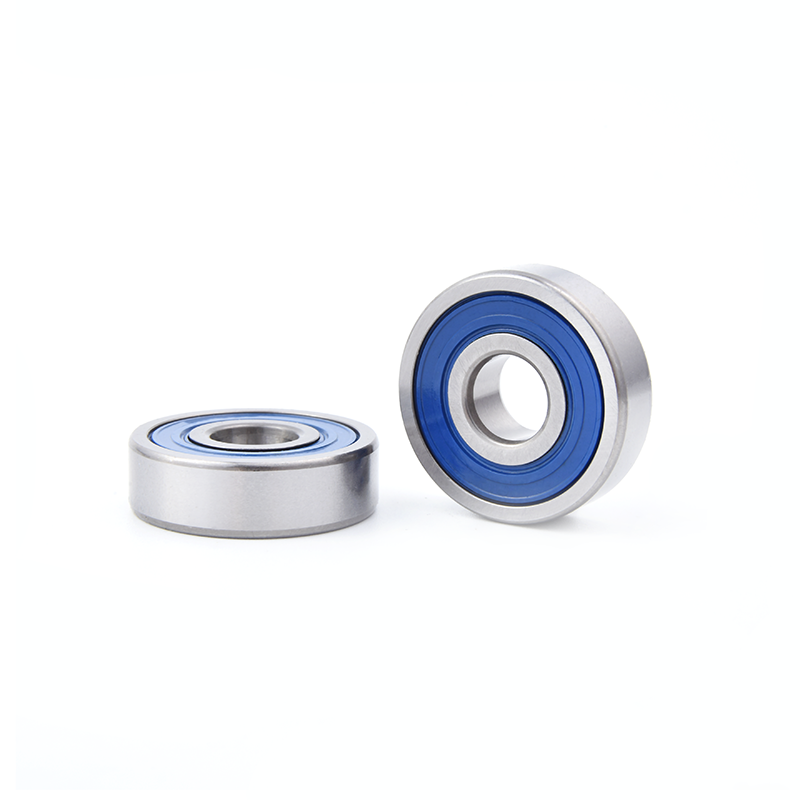
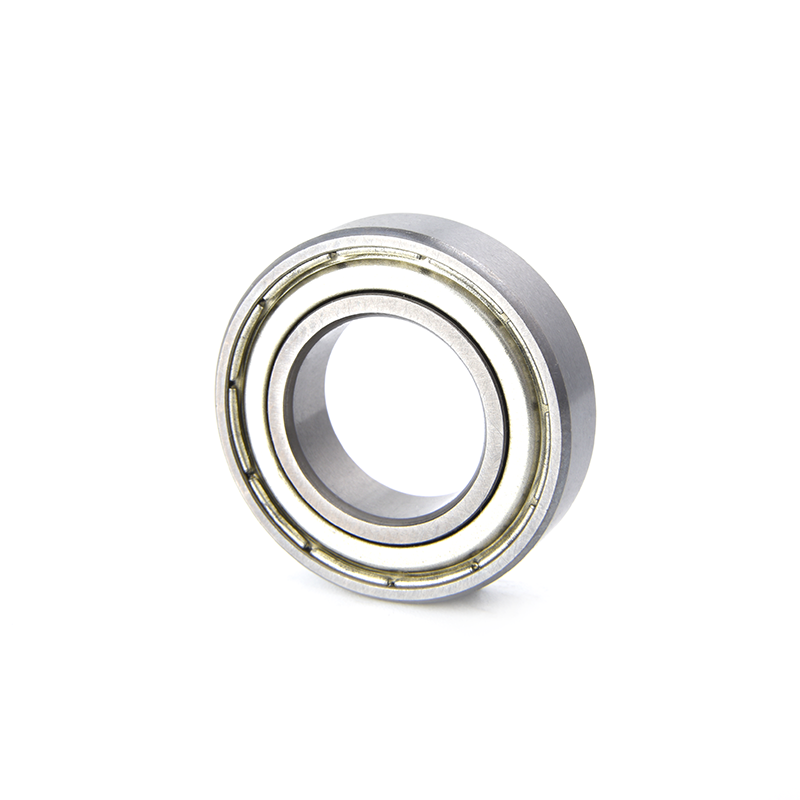
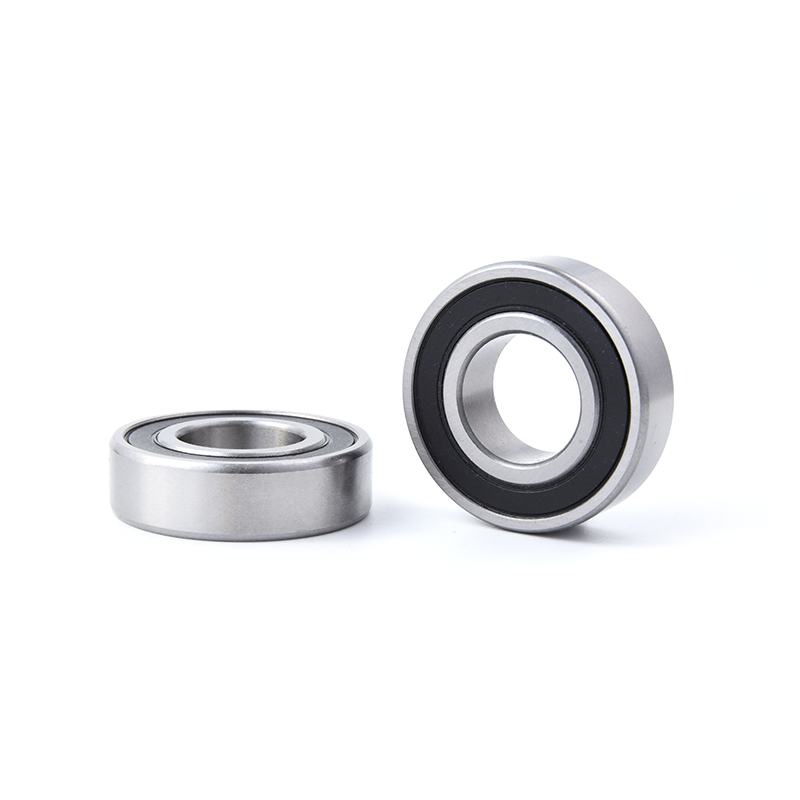
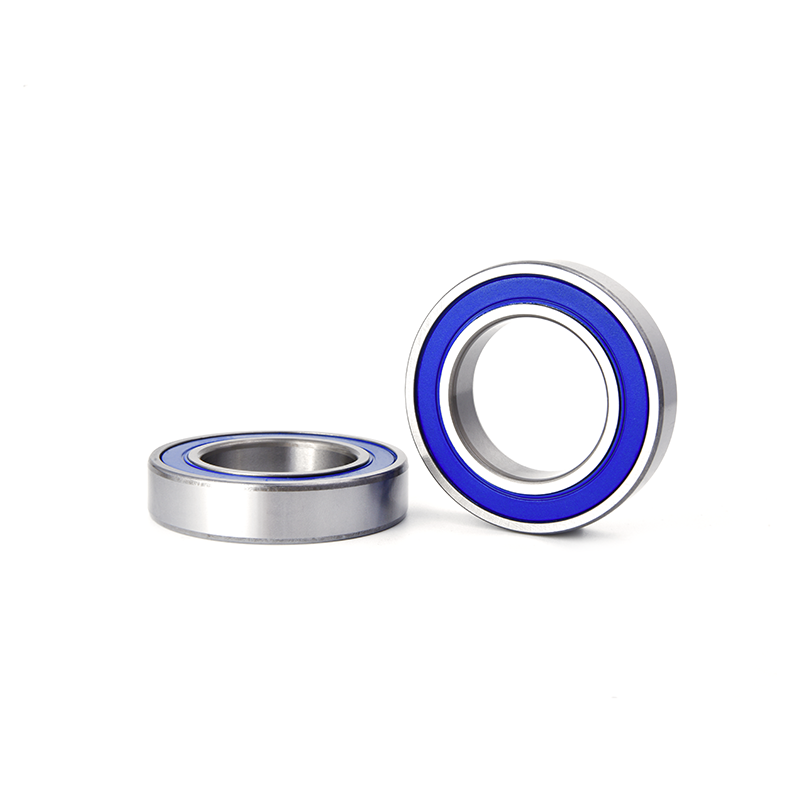
For lighter radial loads, our 62 series deep groove ball bearings offer a compact alternative with moderate axial capability.
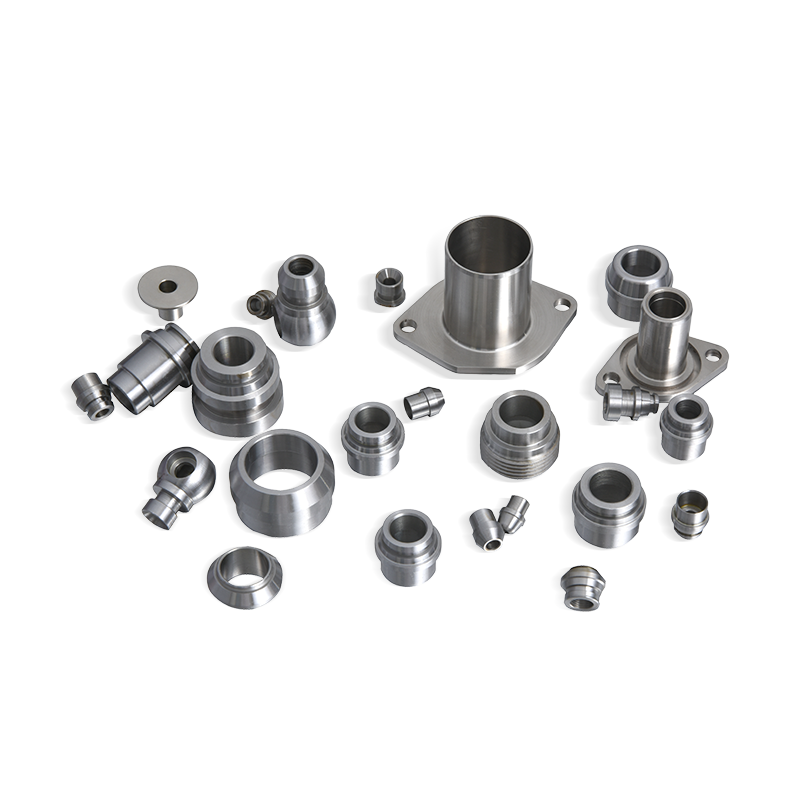 Deep Groove Ball Bearing 62 Series SuppliersTTBC and HMD brand bearing rings and steel balls are made of GCr15, and different materials can also be used according to customer actual needs; The cage is usually ma...View Product →
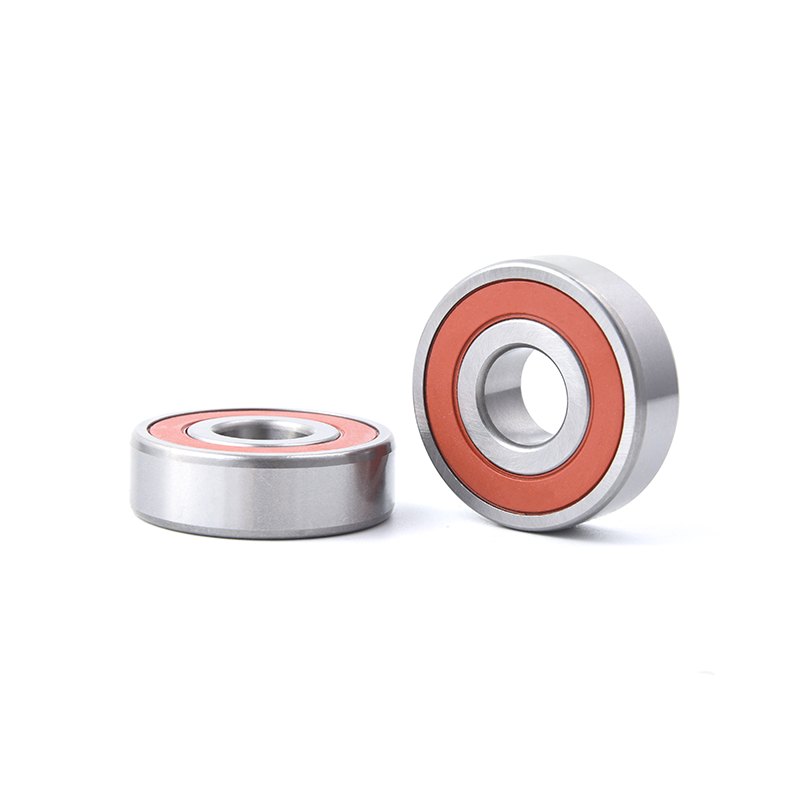
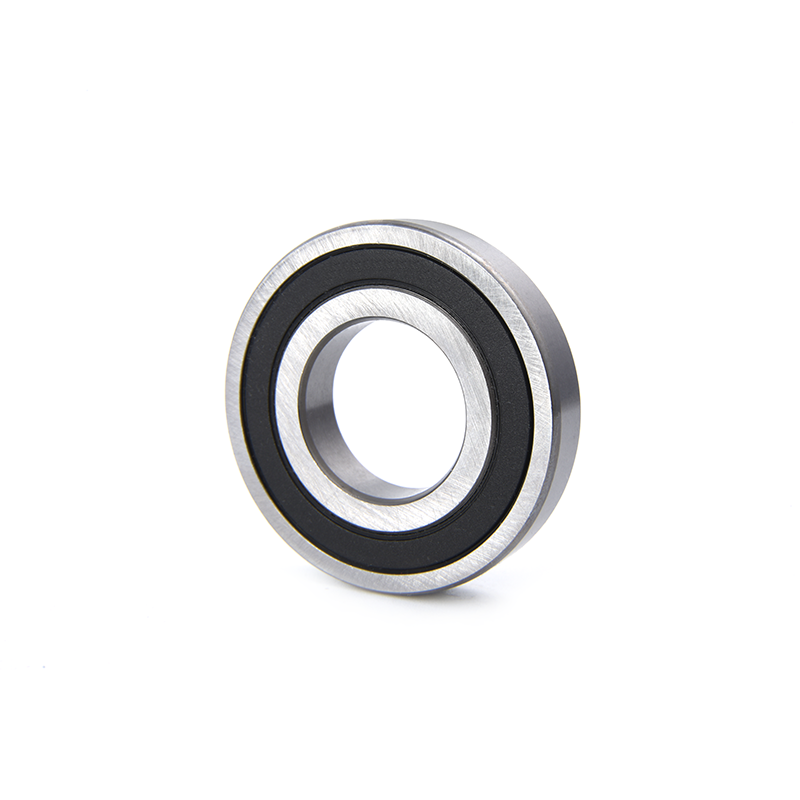
For heavier radial loads in a ball bearing format, the 63 series provides higher load ratings in the same bore size. These are not replacements for cylindrical roller bearings in high-radial-load positions, but they are often the right choice for fan shafts, small reducers, and general machinery where cost and simplicity matter.
63 Series Deep Groove Ball Bearings for General MachineryHigher-load ball bearings in the same bore size, suited to fan shafts, small reducers, and general machinery where cost and simplicity matter.View Product →Applications and Selection Checklist
Single row cylindrical roller bearings are common in industrial gearboxes, electric motors, crushers, conveyors, pumps, compressors, machine tool spindles, and paper machinery. They are especially useful where the shaft must be located radially with high stiffness and where thermal growth must be accommodated by a floating bearing position. They are less suitable for applications with significant shaft misalignment or where axial loads dominate.
Use this checklist when selecting a bearing for a new design or a replacement:
- Define the radial load magnitude and direction, including shock loads and duty cycle.
- Confirm whether the bearing must locate the shaft axially or allow float. Choose N, NU, NJ, or NUP accordingly.
- Calculate the required life and compare it with the dynamic load rating at the actual speed.
- Check the speed limit for the chosen cage, lubrication method, and clearance.
- Specify shaft and housing fits based on load, temperature, and rotating ring.
- Select CN, C3, or C4 clearance after estimating thermal growth and fit interference.
- Verify lubrication supply, oil cleanliness, and maintenance access.
- Review misalignment tolerance and consider self-aligning alternatives if shaft deflection is high.
Yuyao Kangtian Bearing Co., Ltd. has been manufacturing bearings in Yuyao, Ningbo, since 1993. The company operates two wholly owned factories on a 31,000 m² site and produces roughly 30 million bearing sets per year. Its core products are deep groove ball bearings in the 60, 62, 63, 67, 68, 69, MR, flange, inch, and nonstandard series, along with CNC machined parts. For projects that need a single row cylindrical roller bearing, the engineering team can review the load case and recommend whether a deep groove ball bearing alternative or a custom solution is more appropriate. Send your drawing and duty cycle through our service page.
Frequently Asked Questions
What is the difference between N, NU, NJ, and NUP cylindrical roller bearings?
N and NU bearings allow axial displacement in both directions, making them suitable for floating positions. NJ bearings locate the shaft in one direction, and NUP bearings locate it in both directions. The difference is the rib arrangement on the inner and outer rings.
Can single row cylindrical roller bearings take axial load?
Only limited axial load, and only in designs with ribs such as NJ or NUP. The primary load direction is radial. For continuous axial loads, use a thrust bearing or an angular contact bearing.
Why are cylindrical roller bearings separable?
The inner ring, rollers, and cage can be separated from the outer ring. This makes mounting easier, allows inspection of the roller path, and simplifies replacement in confined spaces.
What is the maximum speed of a single row cylindrical roller bearing?
It depends on cage material, lubrication, clearance, and load. Grease lubrication suits moderate speeds, while oil circulation or oil-air lubrication supports higher speeds. Always check the manufacturer's speed rating for the exact part number.
Should I choose CN or C3 clearance?
Choose CN for normal operating conditions with moderate temperature rise. Choose C3 when the inner ring runs hotter than the housing, or when interference fits reduce internal clearance. C4 is used for severe thermal gradients or high-speed applications.


Contact Us