

 English
 中文简体
中文简体 Español
Call us
0086-574-62812860
0086-574-62811929

Our team is proud to offer on time guarantee and product guarantee to customer satisfaction.
Read MoreA ball bearing unit is a ready-to-mount assembly that combines a deep groove ball bearing insert, a housing, seals, and a locking mechanism. It is the quickest way to support a rotating shaft in industrial machinery because the alignment, fitting, and sealing work are already done at the factory. For maintenance teams and OEM buyers, the practical question is not only what a unit can do, but which configuration will hold up in their particular load and contamination conditions.
Content
A ball bearing unit, also called an insert ball bearing or housed bearing, consists of an inner bearing whose outer ring is spherical, pressed into a rigid housing. The spherical outer surface allows the insert to self-align slightly inside the housing, compensating for minor shaft deflection and mounting inaccuracies.
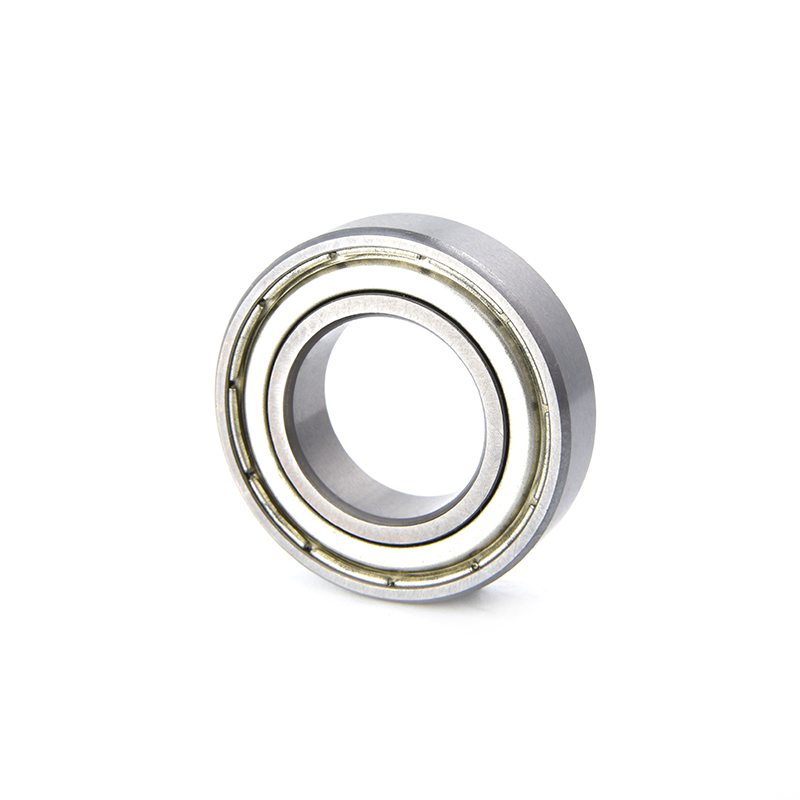
 Deep Groove Ball Bearing Units with Self-Aligning HousingsThese insert ball bearings feature a spherical outer ring that self-aligns inside the housing, compensating for shaft deflection. Ideal for various industrial applications, they come in multiple sealing forms and are built to reduce friction and enhance durability.View Product →
The complete unit typically includes the following components:
Choose the housing style first because it determines how the unit mounts to the machine structure. Then choose the locking mechanism based on shaft finish and load direction.
| Housing Style | Mounting Plane | Typical Applications |
|---|---|---|
| Pillow block (plummer block) | Base parallel to the shaft | Conveyors, fans, agitators, line shafts |
| Flanged | Perpendicular to the shaft | Blowers, small conveyors, food machinery, end supports |
| Take-up | Slides within a tension frame | Belt conveyors, chain tensioners |
| Cartridge | Cylindrical fit inside a machine bore | Textile machines, packaging lines |
Flanged units are especially common in automation and food processing lines where the bearing must bolt onto a flat plate or frame. The flange series achieves this with a compact radial footprint and precise bolt spacing.
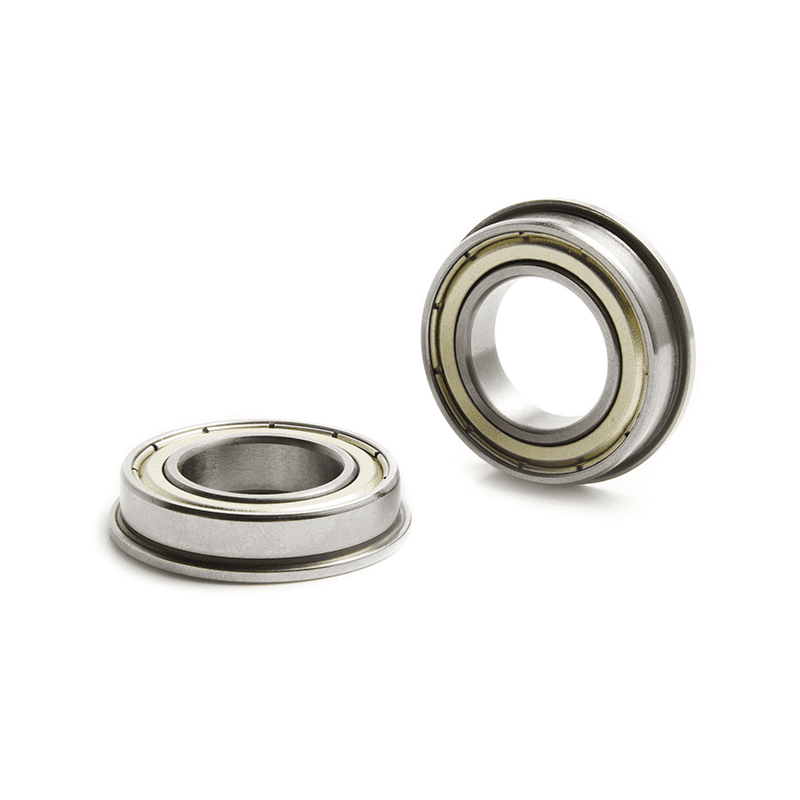
Flange Mounted Deep Groove Ball Bearings for AutomationDesigned to bolt onto flat plates or frames, these flanged units offer compact radial footprint and precise bolt spacing. Suitable for food processing and automation lines, with set-screw or eccentric collar locking options for reliable shaft retention.View Product →
Set-screw locking is the standard choice for moderate loads in one direction. Eccentric collar locking gives a firmer grip for reversing or lightly vibrating loads. Adapter sleeves suit larger shafts and permit axial positioning on plain shafts.
Because the insert is a deep groove ball bearing, a ball bearing unit can support radial loads very well and axial loads only moderately. Pure thrust loads above about 50–70% of the bearing's radial capacity usually require a different bearing type or a larger unit.
| Load Direction | Relative Capacity | Practical Notes |
|---|---|---|
| Radial (perpendicular to shaft) | High | Dominant load in conveyors, fans, and gearboxes |
| Axial (parallel to shaft) | Moderate | Acceptable for light and short-duration thrust loads |
| Combined radial + axial | Depends on load ratio | Use equivalent load P = X·Fr + Y·Fa from rating tables |
In practice, the applied load must stay below the dynamic load rating (C) with an appropriate service factor for shock loads. A unit sized for steady radial load will still fail quickly if exposed to repeated impact loads.
Contamination and lubricant breakdown cause more field failures than metal fatigue. The seal arrangement and grease quality therefore deserve more attention than the load rating in many real installations.
Common sealing options include:
For detailed selection guidance, refer to the comparison of seal and dustproof options. For relubrication, most units are factory-filled with lithium-complex grease; regreasing intervals depend on speed, temperature, and contamination level.
Work through four parameters in order: shaft size, load, speed, and environment. Only after those are fixed do you choose the housing style and locking method.
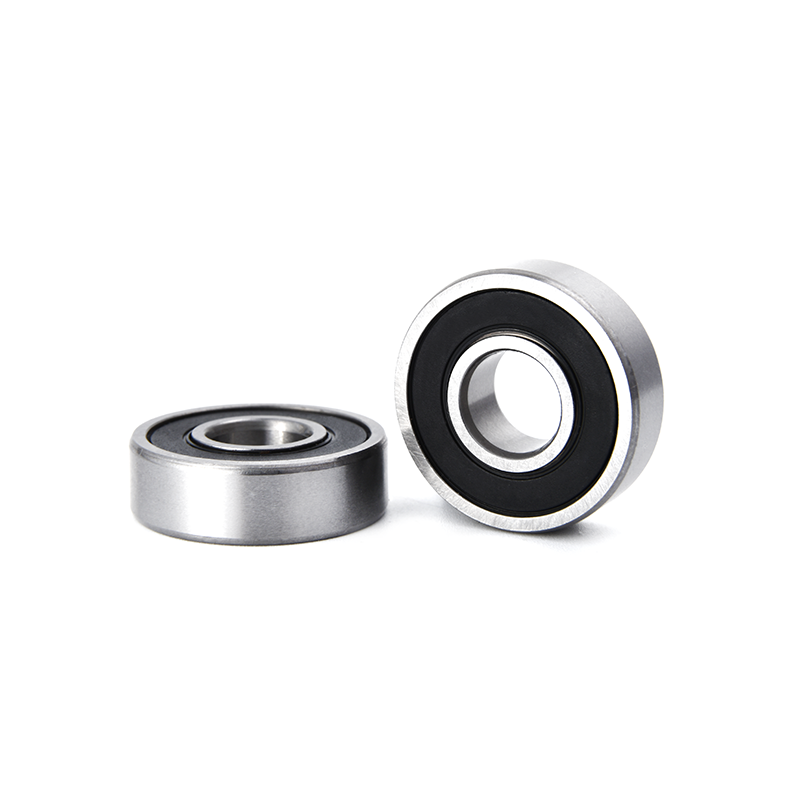
For medium-load machinery such as compact gearboxes, agricultural equipment, and light conveyors, a 62-series insert provides a balanced combination of bore size, radial capacity, and speed capability. The technical specifications of each series are summarized in the technical data section.
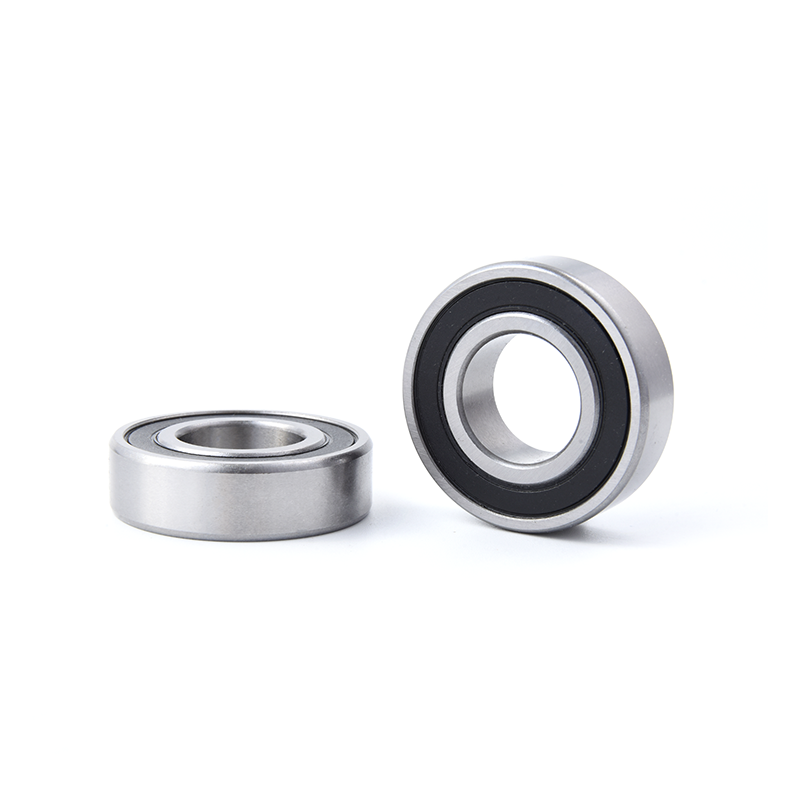
62 Series Insert Ball Bearings for Medium-Duty MachineryThe 62-series insert provides balanced bore size, radial capacity, and speed capability for compact gearboxes, agricultural equipment, and light conveyors. Built with GCr15 steel and available in various sealing forms, these bearings ensure long service life and dependable performance.View Product →Ball bearing units are the default support component for rotating shafts in industries that value simplicity and fast replacement.
In each case, the housing material should match the washdown or chemical environment, and the seal should match the particle or moisture exposure.
Yes, but only moderate ones. The deep groove ball bearing insert accepts thrust loads in both directions up to roughly half of its radial capacity in pure axial operation; higher axial loads need a different bearing class.
For standard sealed units, relubrication at 3,000–10,000 operating hours is a common starting point, but the interval drops with higher speed, higher temperature, and dusty environments. Always follow the manufacturer's recommendation.
Pillow blocks mount with their base parallel to the shaft and are ideal for shaft spans. Flanged units mount perpendicular to the shaft, typically on a vertical plate or frame end, saving axial space.
Set-screw locking is simpler, cheaper, and sufficient for uniform one-direction loads. Eccentric collar locking grips more firmly and handles reversing loads and moderate vibration better.
Specifying a ball bearing unit comes down to understanding the operating envelope: shaft size, load direction, speed, sealing, and mounting orientation. Keep the spare-part requirement in mind as well; a unit with a standard insert and housing footprint will simplify future replacement and keep downtime short.

0086-574-62812860
0086-574-62811929


West of Zhangting Industrial Zone, Yuyao, Ningbo City, Zhejiang Province, 315411, China
On weekdays, we will reply to you or call us within 12 hours of receiving the inquiry.

Contact Us